
The interior design industry has undergone a dramatic transformation with the rise of remote services. As technology enables seamless virtual collaboration, homeowners and businesses are discovering significant advantages in working with designers remotely. This comprehensive analysis explores how remote interior design saves time and costs, providing a data-driven breakdown of the benefits for clients seeking professional design services.
Introduction: The Remote Design Revolution
Traditional interior design required multiple in-person meetings, site visits, and physical material presentations. While this approach served the industry for decades, it also created inefficiencies that added unnecessary time and expense to projects. Remote interior design leverages digital tools to streamline the process, delivering professional results while eliminating many of the traditional bottlenecks.
The shift toward remote design has accelerated dramatically, driven by technological advancement and changing client expectations. Today’s clients expect convenience, transparency, and efficiency—qualities that remote design delivers in abundance.
Understanding Remote Interior Design
Remote interior design, also known as virtual design or e-design, is a service model where designers work with clients entirely through digital channels. Rather than visiting spaces in person, designers use photographs, measurements, video calls, and specialized software to create comprehensive design plans.
The process typically involves:
- Initial consultation via video call
- Client-provided photos and measurements
- Digital mood boards and concept presentations
- 3D renderings and floor plans
- Online shopping lists with purchase links
- Virtual installation guidance
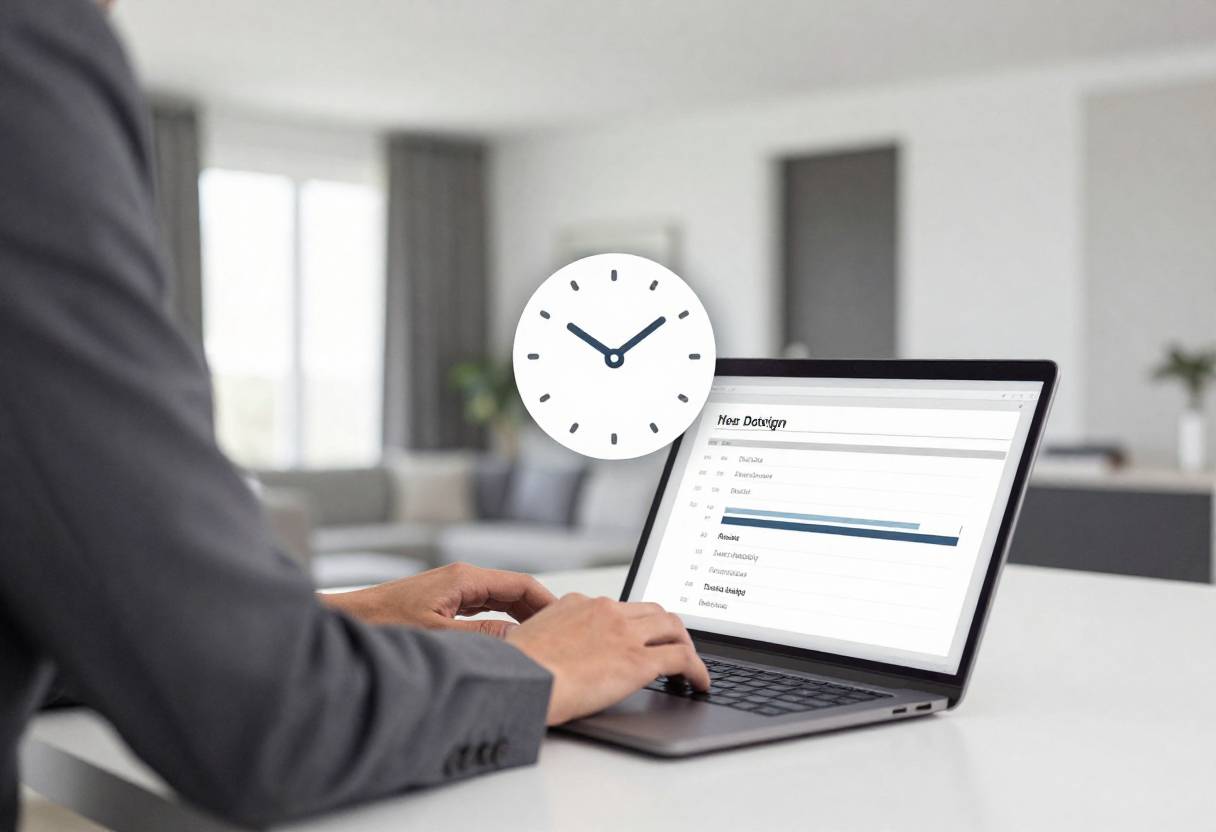
Time Savings: A Detailed Analysis
Elimination of Travel Time
Traditional design requires extensive travel for both designers and clients. Initial consultations, site visits, shopping trips, and installation oversight all demand physical presence. Remote design eliminates this overhead entirely.
Typical time savings:
- Initial consultation: 2-3 hours saved (no travel)
- Site visits: 4-6 hours per project saved
- Shopping trips: 8-12 hours saved
- Follow-up meetings: 3-4 hours saved
Total time saved: 17-25 hours per project
Accelerated Project Timelines
Remote design enables parallel workflows that compress project schedules. While traditional designers might visit a showroom for material selection, remote designers can simultaneously present multiple options digitally.
Timeline comparison:
- Traditional design: 12-16 weeks average
- Remote design: 6-10 weeks average
Time reduction: 30-50% faster completion
24/7 Access and Communication
Digital platforms enable asynchronous communication, allowing clients to review designs and provide feedback on their own schedules. This eliminates the scheduling delays inherent in coordinating in-person meetings.
Communication efficiency:
- Traditional: Limited to business hours, meeting coordination delays
- Remote: Continuous access, immediate feedback capability
Cost Savings: Comprehensive Breakdown
Reduced Service Fees
Remote designers typically operate with lower overhead costs, allowing them to offer competitive pricing while maintaining profitability.
Typical fee structures:
- Traditional full-service design: 15-30% of project cost
- Remote design packages: $500-$3,000 flat fee or 10-20% of project cost
Client savings: 20-40% on design fees
Elimination of Travel Expenses
Traditional design often includes travel expenses passed to clients, especially for projects outside major metropolitan areas.
Typical travel-related costs eliminated:
- Mileage and transportation: $100-$500
- Parking fees: $50-$200
- Travel time charges: $200-$800
Total travel savings: $350-$1,500 per project
Optimized Material Procurement
Remote designers leverage online resources to find competitive pricing on furnishings and materials. Digital tools enable rapid price comparison across multiple vendors.
Procurement savings:
- Access to online-only discounts: 10-20% savings
- Price comparison efficiency: 5-15% savings
- Elimination of designer markup on products: 10-20% savings
Total procurement savings: 15-35% on furnishings
Reduced Project Delays
Time is money in any renovation project. Accelerated timelines reduce the carrying costs of ongoing projects and enable faster space utilization.
Cost of delays (for commercial projects):
- Extended rent on temporary space: $500-$2,000/week
- Delayed revenue generation: Variable
- Extended construction loan interest: Variable
Typical delay savings: $2,000-$8,000 for commercial projects
Quality and Value Considerations
Access to Specialized Expertise
Remote design enables clients to work with specialists regardless of geographic location. A client in Chiang Mai can collaborate with a Bangkok-based specialist in sustainable design or smart home technology.
Expertise benefits:
- Access to niche specialists
- Broader designer selection
- Cultural and style expertise
Digital Tools Enhancing Design Quality
Remote design relies on sophisticated digital tools that often provide superior visualization capabilities compared to traditional methods.
Technology advantages:
- 3D photorealistic renderings
- Virtual reality space walkthroughs
- Accurate digital floor plans
- Real-time material visualization
Measuring ROI: Real Project Examples
Residential Project Case Study
Project parameters:
- 3-bedroom condominium renovation
- Budget: 800,000 THB
- Timeline: 8 weeks
Traditional approach estimates:
- Design fees: 160,000 THB (20%)
- Timeline: 14 weeks
- Additional travel costs: 15,000 THB
Remote design actual:
- Design fees: 96,000 THB (12%)
- Timeline: 8 weeks
- Travel costs: 0 THB
Total savings: 79,000 THB (10% of total budget)
Commercial Office Project Case Study
Project parameters:
- 500 sqm office renovation
- Budget: 2,500,000 THB
- Timeline: 12 weeks
Traditional approach estimates:
- Design fees: 500,000 THB (20%)
- Timeline: 18 weeks
- Delay costs: 120,000 THB (6 weeks × 20,000 THB/week)
Remote design actual:
- Design fees: 300,000 THB (12%)
- Timeline: 12 weeks
- Delay costs: 0 THB
Total savings: 320,000 THB (13% of total budget)
Addressing Common Concerns
“Will the design quality suffer without in-person visits?”
Quality depends on designer skill and communication, not presence. Remote designers use detailed questionnaires, video walkthroughs, and precise measurements to understand spaces comprehensively.
“How can designers understand my space without seeing it?”
Modern technology enables accurate spatial understanding:
- 360-degree photography
- Video walkthroughs
- Client-provided measurements
- Floor plan analysis
“What if I need hands-on assistance during installation?”
Remote designers provide:
- Detailed installation guides
- Video call support during installation
- Contractor coordination
- Local vendor partnerships for physical support
Who Benefits Most from Remote Design?
Ideal Clients for Remote Design
Busy professionals who value efficiency and can’t accommodate multiple in-person meetings
Budget-conscious clients seeking professional design within constrained budgets
Remote location clients in areas with limited local design expertise
Tech-comfortable clients who are comfortable with digital communication and tools
Repeat clients who have established relationships with designers and don’t require extensive in-person interaction
When Traditional Design May Be Preferable
Complex structural renovations requiring extensive on-site coordination
Ultra-high-end projects where budget is not a primary concern and clients expect white-glove service
Clients uncomfortable with technology who prefer traditional communication methods
The Future of Remote Interior Design
Emerging Technologies
Augmented reality enabling clients to visualize designs in their actual spaces
Artificial intelligence assisting with space planning and material selection
Virtual reality providing immersive design presentations
Smart home integration enabling remote designers to specify and configure connected devices
Market Trends
Remote interior design is projected to capture an increasing share of the market as:
- Technology continues improving
- Client comfort with virtual services increases
- Cost and time pressures intensify
- Geographic barriers dissolve
Conclusion: Making the Right Choice
Remote interior design offers compelling advantages in time savings, cost efficiency, and access to expertise. While not suitable for every project, it represents an excellent option for a growing segment of design clients.
The key to success lies in:
- Choosing experienced remote designers
- Providing comprehensive project information
- Maintaining clear communication
- Leveraging available technology tools
For most residential projects and many commercial projects, remote design delivers professional results while saving significant time and money. As the industry continues evolving, remote design will likely become the default choice for an increasing range of projects.
Ready to experience the benefits of remote interior design? Contact Instyle Deco Paris to learn how our virtual design services can save you time and money while delivering exceptional results. Explore our virtual design services to get started.
*Discover why more Bangkok homeowners and businesses are choosing remote design for their interior projects.*