
Bangkok has emerged as Southeast Asia’s coworking capital, with over 150 spaces serving a market growing 15% annually. As the global coworking industry expands from $22.01 billion in 2024 to a projected $93.68 billion by 2035, Bangkok operators face both unprecedented opportunity and intensifying competition.
Design has become the primary differentiator in this crowded market. Research shows that wellness-focused design increases member retention by 25%, while premium design aesthetics justify 20-30% higher pricing. For operators and developers entering or expanding in Bangkok, understanding the 12 essential coworking design concepts—and how to implement them cost-effectively—is critical to success.
This guide covers the complete design framework for Bangkok coworking spaces, from market context through implementation, with cost breakdowns, ROI metrics, and Bangkok-specific considerations.
The Bangkok Coworking Market: Opportunities and Landscape
Market Size and Growth Statistics
Bangkok’s coworking market reflects global trends while offering unique regional advantages:
- 150+ operational coworking spaces across the metropolitan area [^1^]
- 15% annual growth rate driven by SME expansion and foreign investment
- 59% of companies now choosing flexible workspace over traditional offices [^4^]
- Average space size: 3,000–8,000 square meters for major operators
- Pricing range: ฿3,500–15,000 per month depending on location and amenities
The market spans from global brands like WeWork and JustCo to local success stories like Common Ground, creating a diverse ecosystem with room for differentiated positioning.
Key Operators and Positioning
Understanding the competitive landscape helps identify white space opportunities:
| Operator | Positioning | Locations | Differentiation |
|---|---|---|---|
| The Great Room | Ultra-premium | 2 Bangkok | Hotel-like hospitality, designer interiors |
| JustCo | Regional scale | 5+ Bangkok | Enterprise focus, consistent quality |
| Common Ground | Local champion | 8+ Thailand | Community programming, Thai sensibility |
| WeWork | Global brand | 4 Bangkok | Network effects, brand recognition |
| Spaces | Business professional | 3 Bangkok | Professional services focus |
White Space Opportunities:
- Wellness-focused spaces (limited current supply)
- Industry-specific verticals (tech, creative, wellness)
- Suburban locations near residential areas
- Hybrid work-optimized designs
TCDC and the Design Ecosystem
The Thailand Creative & Design Center (TCDC) in the Emporium shopping complex serves as Bangkok’s design hub, offering:
- Design resource library and materials samples
- Networking events for creative professionals
- Design thinking workshops
- Exposure to international design trends
For coworking operators, TCDC provides both design inspiration and potential partnership opportunities for member programming.
Why Bangkok Leads Southeast Asia
Several factors position Bangkok as the region’s coworking leader:
- Infrastructure: Modern office stock, reliable internet, and central business district density
- Cost Efficiency: Lower fit-out and operating costs than Singapore or Hong Kong
- Tropical Climate: Enables year-round outdoor workspace utilization—a significant design advantage
- Creative Culture: Strong design community and growing startup ecosystem
- Connectivity: Regional hub status attracts international members and operators
Introduction: The Rise of Coworking in Bangkok
Bangkok’s coworking scene has exploded over the past decade, evolving from simple shared desk arrangements to sophisticated ecosystems that foster collaboration, creativity, and community. With increasing numbers of digital nomads, remote workers, and flexible companies calling Bangkok home, the demand for thoughtfully designed coworking spaces continues to grow.
Concept 1: Tropical Biophilic Oases
Bangkok’s natural environment offers rich inspiration for coworking spaces that blur the boundaries between indoor and outdoor work. Tropical biophilic design integrates lush greenery, natural materials, and organic forms to create refreshing environments.
Implementation Strategies:
- Install vertical gardens and living walls throughout the space
- Utilize locally-sourced bamboo, rattan, and teak materials
- Incorporate water features for tranquility
- Optimize daylight while controlling heat gain
Concept 2: Neighborhood Micro-Communities
Large coworking spaces can feel impersonal. The neighborhood micro-community concept breaks down expansive floors into smaller, intimate districts that foster stronger connections.
Implementation Strategies:
- Divide space into distinct neighborhoods with unique character
- Place shared amenities at the heart of each neighborhood
- Create visual connectivity between areas
- Allow companies to personalize their spaces
Concept 3: Activity-Based Work Ecosystems
Different tasks require different environments. Activity-based working creates a diverse ecosystem of spaces, each optimized for specific work modes.
Implementation Strategies:
- Design focus pods for concentrated individual work
- Create collaboration studios for team activities
- Install phone booths for private calls
- Designate library zones for quiet work
Concept 4: Thai Cultural Fusion
Successful coworking spaces in Bangkok honor local culture while maintaining international standards. This concept integrates Thai design elements and cultural practices.
Implementation Strategies:
- Commission local artisans for custom elements
- Draw from Thai cultural color associations
- Designate spaces for spiritual practices
- Rotate exhibitions of Thai contemporary art
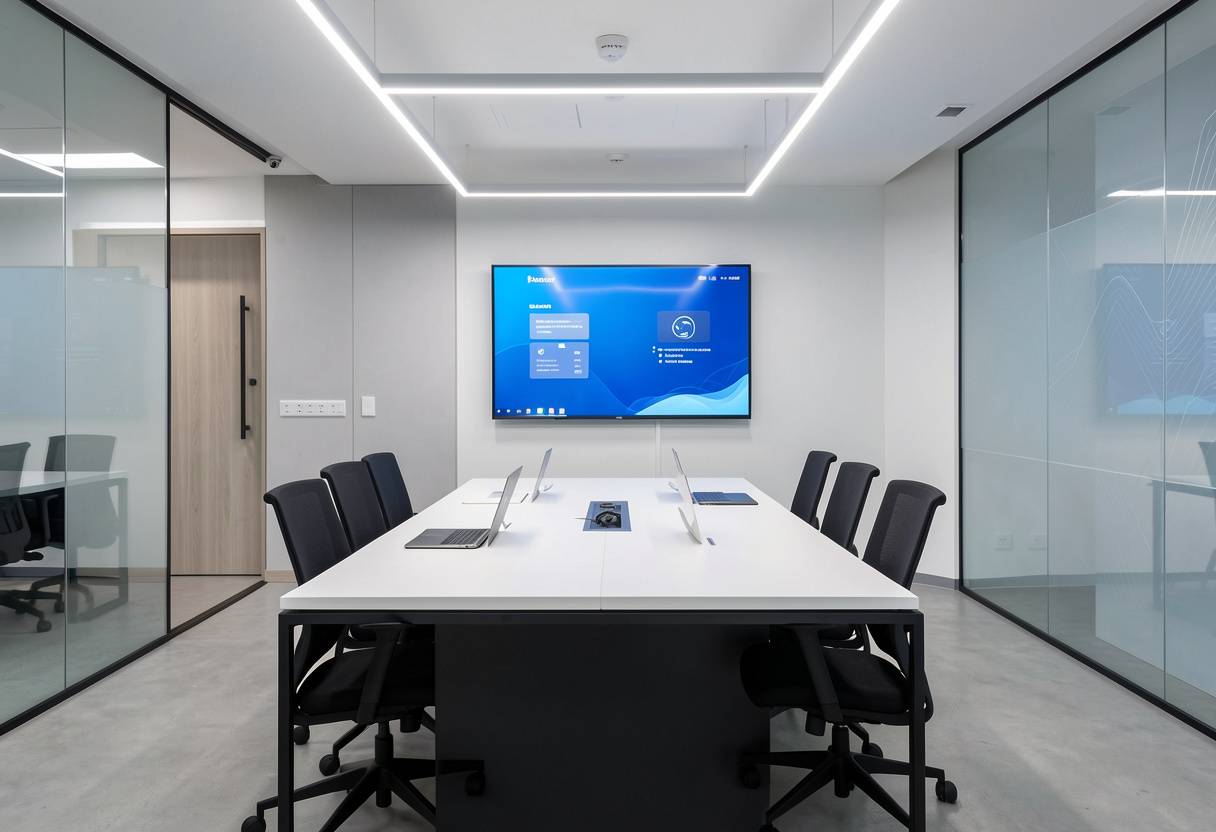
Concept 5: Tech-Enabled Flexibility
Modern coworking requires infrastructure that seamlessly supports diverse technologies and working styles.
Implementation Strategies:
- Provide abundant power outlets and USB charging
- Invest in enterprise-grade Wi-Fi
- Equip meeting rooms with wireless presentation systems
- Implement IoT sensors for space optimization
Concept 6: Hybrid Event Venues
Coworking spaces serve increasingly as community hubs for events, workshops, and networking.
Implementation Strategies:
- Invest in reconfigurable furniture systems
- Install broadcast-quality AV systems
- Design spaces that accommodate food service
- Ensure branding flexibility for events
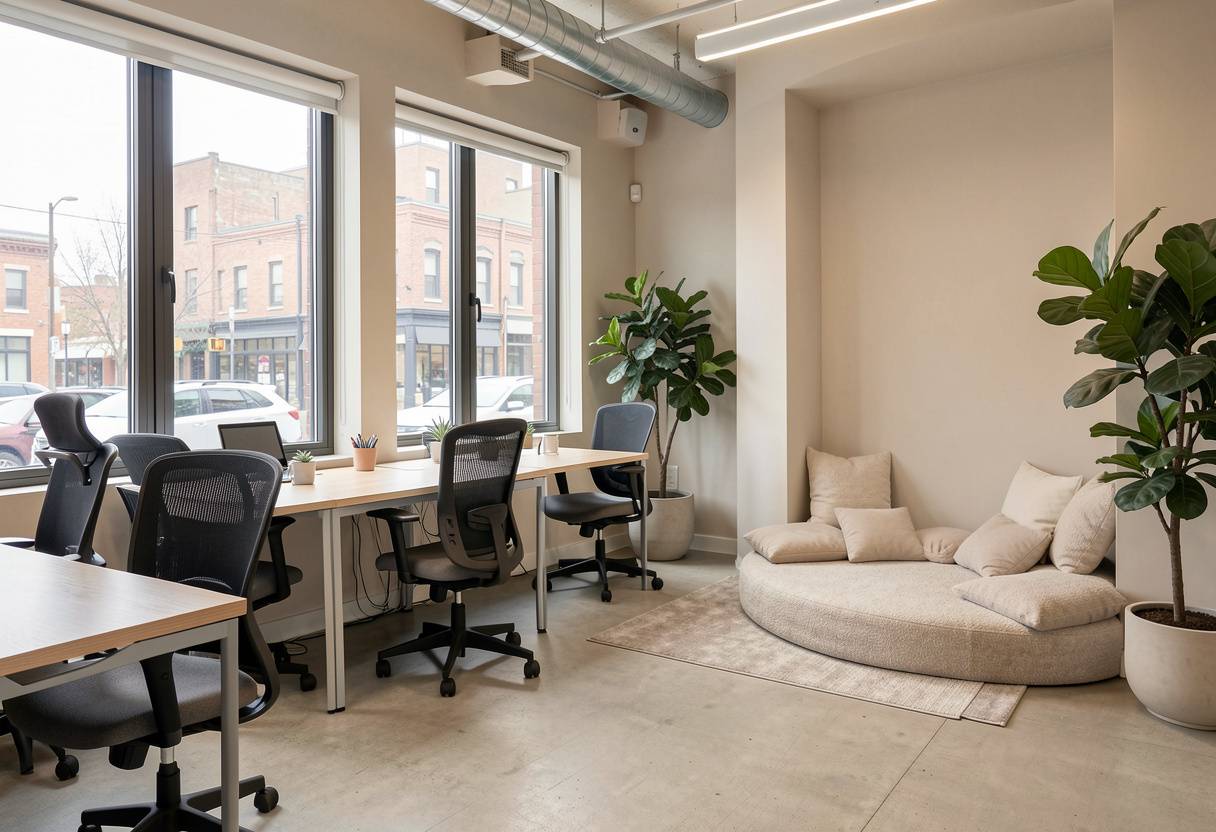
Concept 7: Wellness-Centric Design
Coworking spaces that prioritize member health gain competitive advantage.
Implementation Strategies:
- Provide ergonomic furniture options
- Include fitness facilities or partnerships
- Install circadian lighting systems
- Create mindfulness spaces for meditation
Concept 8: Creative Industry Incubators
Bangkok’s creative industries need spaces designed specifically for designers, artists, and photographers.
Implementation Strategies:
- Include makerspaces with 3D printers and laser cutters
- Design rentable photo studios
- Provide high-performance computing workstations
- Create exhibition galleries for member work
Concept 9: Sustainable and Circular Design
Environmental responsibility is increasingly important to Bangkok businesses.
Implementation Strategies:
- Incorporate reclaimed and upcycled materials
- Design for maximum energy efficiency
- Install low-flow fixtures and capture rainwater
- Prioritize local sourcing of materials
Concept 10: Corporate Satellite Offices
Large companies seek satellite locations closer to where employees live.
Implementation Strategies:
- Offer enclosed, lockable private office suites
- Allow corporate branding within dedicated spaces
- Implement enterprise-grade security
- Provide professional meeting facilities
Concept 11: Nighttime Economy Integration
Bangkok’s coworking spaces can extend utility beyond traditional business hours.
Implementation Strategies:
- Partner with quality food and beverage establishments
- Plan for evening events and networking
- Design atmospheric lighting systems
- Include entertainment facilities
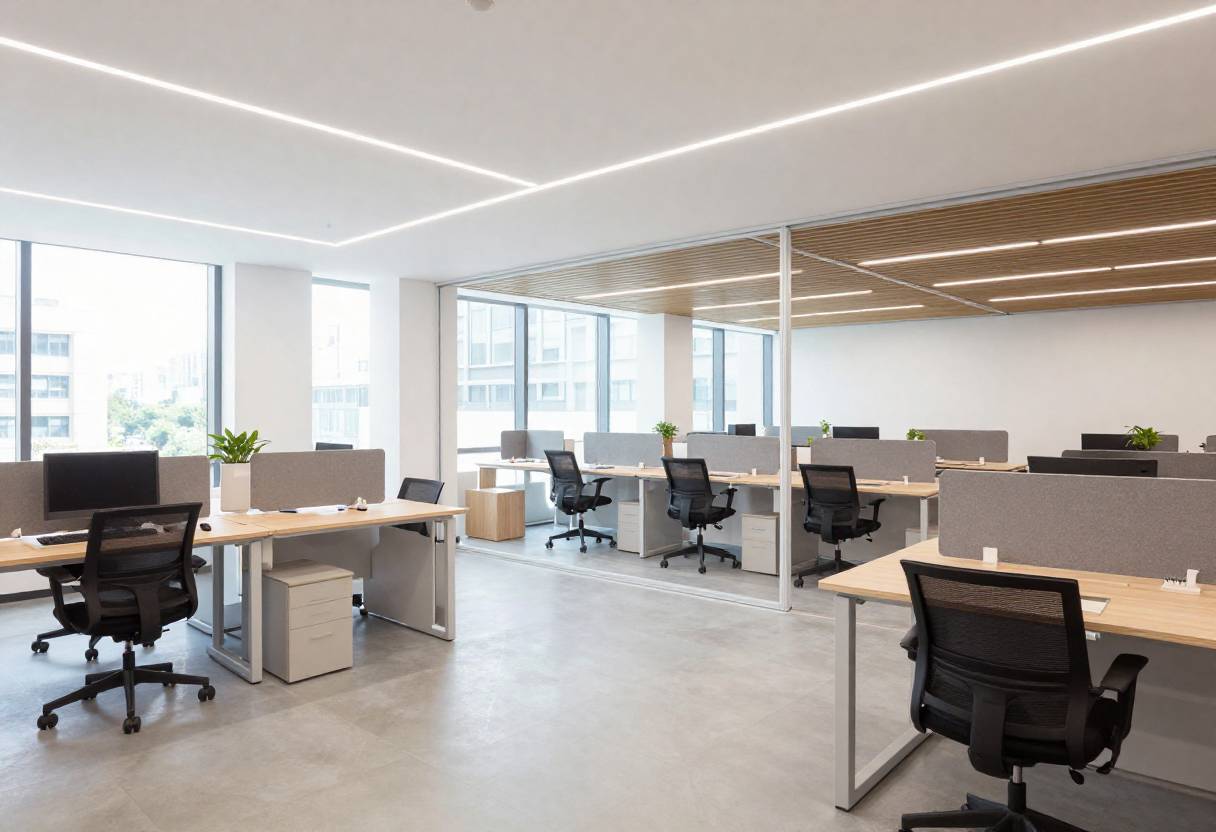
Concept 12: Future-Proof Modular Systems
The only constant in coworking is change. This concept embraces extreme flexibility.
Implementation Strategies:
- Use movable wall systems for reconfiguration
- Install infrastructure grids for easy relocation of services
- Invest in modular furniture platforms
- Design with long-term adaptability in mind
Cost Breakdown: Investment by Concept
Understanding costs helps prioritize investments based on target market and budget constraints.
Economy Implementation
Target: Basic functionality, startup budgets
| Concept | Cost per Unit | Notes |
|---|---|---|
| Hot Desking | $200-400/desk | Standard desks, basic chairs |
| Focus Pods | $3,000-5,000/unit | Prefabricated units, basic finish |
| Collaboration | $150-300/person | Simple tables, basic chairs |
| Lounge | $500-1,000/seat | Standard sofas, basic tables |
| Wellness Room | $5,000-10,000 | Basic finish, minimal equipment |
| Outdoor | $50-100/sqft | Basic furniture, minimal infrastructure |
| Private Office | $80-120/sqft | Standard finish, basic HVAC |
| Cafe | $30,000-50,000 | Basic equipment, simple layout |
Total Economy Fit-Out: $80-120 per square foot
Mid-Market Specification
Target: Professional quality, balanced cost-quality
| Concept | Cost per Unit | Notes |
|---|---|---|
| Hot Desking | $600-1,000/desk | Sit-stand desks, ergonomic chairs |
| Focus Pods | $8,000-15,000/unit | Quality acoustics, integrated tech |
| Collaboration | $400-700/person | Modular furniture, presentation tech |
| Lounge | $1,200-2,500/seat | Designer furniture, quality materials |
| Wellness Room | $15,000-30,000 | Premium finish, specialized equipment |
| Outdoor | $150-250/sqft | Quality furniture, infrastructure |
| Private Office | $120-180/sqft | Quality finish, good HVAC |
| Cafe | $60,000-100,000 | Professional equipment, designed layout |
Total Mid-Market Fit-Out: $120-180 per square foot
Premium Execution
Target: Luxury positioning, maximum differentiation
| Concept | Cost per Unit | Notes |
|---|---|---|
| Hot Desking | $1,200-2,000/desk | Premium desks, designer chairs |
| Focus Pods | $20,000-35,000/unit | Custom design, premium acoustics |
| Collaboration | $800-1,500/person | Designer furniture, advanced tech |
| Lounge | $3,000-6,000/seat | Luxury furniture, art, accessories |
| Wellness Room | $40,000-80,000 | Spa-quality finish, full equipment |
| Outdoor | $300-500/sqft | Custom design, premium materials |
| Private Office | $200-350/sqft | Luxury finish, premium HVAC |
| Cafe | $150,000-300,000 | High-end equipment, chef partnership |
Total Premium Fit-Out: $200-350 per square foot
Bangkok Cost Context
Bangkok offers cost advantages compared to regional competitors:
| Market | Mid-Market Fit-Out Cost | Labor Cost Index |
|---|---|---|
| Bangkok | $120-180/sqft | 100 (baseline) |
| Singapore | $180-250/sqft | 180 (+80%) |
| Hong Kong | $200-300/sqft | 200 (+100%) |
| Kuala Lumpur | $100-150/sqft | 90 (-10%) |
These savings allow Bangkok operators to achieve premium aesthetics at mid-market budgets.
ROI Metrics: Design Investment Returns
Design investments generate measurable returns through retention, pricing power, and operational efficiency.
Member Retention Impact
| Design Element | Retention Improvement | Annual Value* |
|---|---|---|
| Wellness Features | +25% | $150-300/member |
| Premium Aesthetics | +15% | $90-180/member |
| Outdoor Spaces | +20% | $120-240/member |
| Community Programming | +18% | $108-216/member |
| Technology Integration | +10% | $60-120/membe |
*Based on 100 members, $500 average monthly membership, 12-month retention improvement
Premium Pricing Justification
Quality design supports higher pricing:
| Design Tier | Premium vs Basic | Monthly Difference |
|---|---|---|
| Economy | Baseline | ฿3,500-5,000 |
| Mid-Market | +20-30% | ฿4,500-7,000 |
| Premium | +50-100% | ฿7,000-12,000 |
Example: A 200-member space achieving 25% premium pricing generates an additional ฿500,000-1,000,000 monthly revenue.
Occupancy Rate Improvements
Well-designed spaces achieve higher occupancy:
- Basic design: 65–75% average occupancy
- Mid-market design: 75–85% average occupancy
- Premium design: 85–95% average occupancy
At 200 seats and ฿5,000 average monthly membership, 10% occupancy improvement equals ฿1,000,000 additional monthly revenue.
Payback Period Analysis
| Investment Level | Additional Investment | Annual Additional Revenue | Payback Period |
|---|---|---|---|
| Economy to Mid-Market | $200,000-400,000 | $600,000-1,200,000 | 4-8 months |
| Mid-Market to Premium | $400,000-800,000 | $1,200,000-2,400,000 | 4-8 months |
Design investments typically pay back within 12-18 months through improved retention and pricing.
Technology Integration for Hybrid Work
Modern coworking requires robust technology supporting distributed teams and flexible work patterns.
Booking Systems and Space Management
Essential Features:
- Real-time desk and room availability
- Mobile app for reservations
- Check-in/check-out tracking
- Usage analytics and reporting
- Integration with member management systems
Leading Platforms:
- Nexudus (comprehensive coworking management)
- OfficeRnD (flexible workspace platform)
- Cobot (simplified coworking software)
- Andcards (mobile-first approach)
AV and Video Conferencing
Meeting Room Requirements:
- 4K displays or projectors (minimum 65″ for 6-person rooms)
- Professional cameras with wide-angle lenses
- Beamforming microphone arrays
- Acoustic treatments for sound quality
- Wireless presentation capability
Phone Booth Tech:
- Integrated displays for video calls
- Quality webcams and microphones
- Acoustic echo cancellation
IoT and Smart Building Systems
Smart Features:
- Occupancy sensors for space utilization tracking
- Automated lighting based on occupancy and daylight
- Climate control optimization
- Energy management systems
- Predictive maintenance alerts
Benefits:
- 15-25% energy cost reduction
- Space utilization optimization
- Proactive maintenance reducing downtime
High-Speed Connectivity Infrastructure
Bangkok-Specific Considerations:
- Dual ISP connections for redundancy
- Minimum 1Gbps symmetric internet
- Enterprise-grade WiFi 6/6E coverage
- Dedicated bandwidth for private offices
- Backup power (UPS) for network equipment
Technical Specifications:
- 100Mbps per simultaneous user minimum
- Mesh network for seamless roaming
- VLAN segmentation for security
- 24/7 network monitoring
Bangkok-Specific Design Considerations
Tropical Climate Adaptations
Bangkok’s hot, humid climate requires specific design responses:
Air Conditioning:
- Oversized HVAC capacity (calculate for 35°C+ outside temperature)
- Zoned controls allowing temperature variation by area
- Regular maintenance schedules (monthly filter cleaning)
- Backup cooling for critical areas
Humidity Management:
- Dehumidification systems for enclosed spaces
- Mold-resistant materials (avoid untreated natural fibers)
- Regular deep cleaning protocols
- Moisture barriers in wall construction
Natural Ventilation:
- Maximize cross-ventilation in outdoor areas
- Use ceiling fans to enhance comfort
- Orient seating to capture prevailing breezes
- Consider misting systems for outdoor zones
Thai Cultural Elements
Incorporating local culture enhances member connection:
Design References:
- Thai silk accent pillows and textiles
- Local art and photography
- Natural materials (rattan, bamboo, teak)
- References to Thai architecture (without pastiche)
Cultural Considerations:
- Provide prayer room or meditation space
- Respect hierarchical seating preferences
- Accommodate group-oriented work styles
- Consider Thai concepts of “sanuk” (fun) in social spaces
Local Material Sourcing
Bangkok offers excellent local sourcing opportunities:
Available Locally:
- Teak and hardwood furniture
- Rattan and wicker pieces
- Thai silk textiles
- Ceramic and pottery
- Natural stone
Benefits:
- Lower costs than imports
- Support for local craftspeople
- Reduced shipping environmental impact
- Unique differentiation from international chains
Regulatory and Compliance Notes
Building Codes:
- Fire safety compliance (sprinklers, alarms, exits)
- Accessibility requirements (ramps, elevators, restrooms)
- Electrical safety standards
- Food service licensing (for cafes)
Work Permits:
- Ensure contractors have proper licensing
- Verify foreign worker documentation
- Understand BOI incentives for creative industries
Implementation Timeline and Process
Phase 1: Strategy and Design (Weeks 1-8)
Weeks 1-2: Requirements Definition
- Market research and competitive analysis
- Target member profile definition
- Space program development (sqm by function)
- Budget establishment
Weeks 3-5: Design Development
- Concept design and mood boards
- Space planning and zoning
- Material and finish selection
- MEP (mechanical, electrical, plumbing) planning
Weeks 6-8: Documentation
- Construction documentation
- Permit applications
- Contractor tendering
- Technology infrastructure planning
Phase 2: Construction and Fit-Out (Weeks 9-24)
Weeks 9-12: Pre-Construction
- Contractor mobilization
- Material procurement
- Site preparation
- Existing condition strip-out (if applicable)
Weeks 13-20: Construction
- MEP rough-in
- Partition and drywall
- Flooring and ceiling installation
- Joinery and built-ins
Weeks 21-24: Finishing
- Painting and wall finishes
- Fixture and fitting installation
- Testing and commissioning
- Defect rectification
Phase 3: Technology and Furnishing (Weeks 22-28)
Weeks 22-24: Technology Installation
- Network infrastructure
- AV systems
- Access control and security
- Booking system setup
Weeks 25-28: Furniture and Equipment
- Furniture delivery and installation
- Equipment commissioning
- Artwork and accessories
- Final cleaning
Phase 4: Launch and Optimization (Weeks 29-32)
Weeks 29-30: Soft Launch
- Staff training
- Systems testing
- Limited member access
- Issue identification and resolution
Weeks 31-32: Grand Opening
- Marketing launch
- Community programming begins
- Full operations
- Post-occupancy evaluation planning
Total Timeline: 7-8 months from concept to full operation
Case Studies: Bangkok Success Stories
The Great Room: Ultra-Premium Positioning
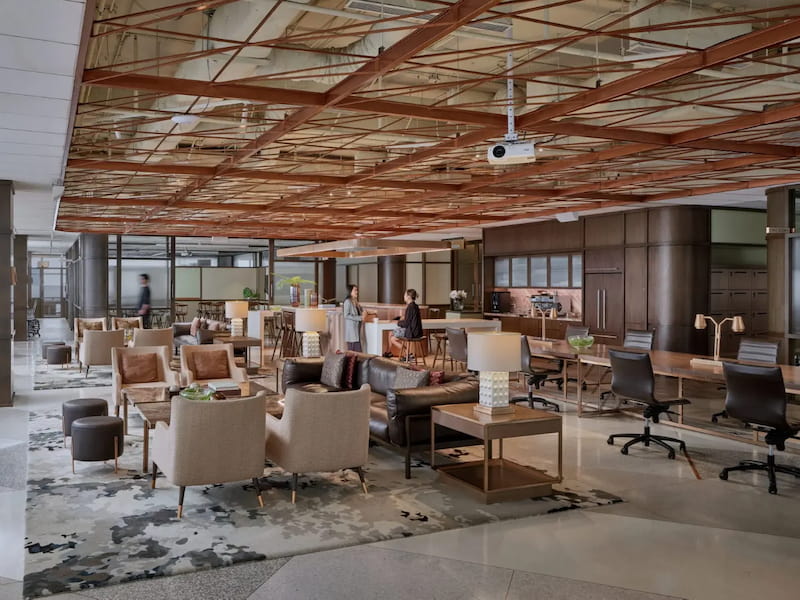
Concept: Hotel-like hospitality in coworking format
Design Highlights:
- Residential-style interiors with designer furniture
- Art collection curated for each location
- Hospitality-trained community managers
- Premium F&B offerings
Results:
- Commands 50-100% premium over market
- 90%+ occupancy rates
- Strong enterprise client base
Key Learning: Premium design justifies premium pricing when execution matches promise.
JustCo: Regional Scale with Local Adaptation
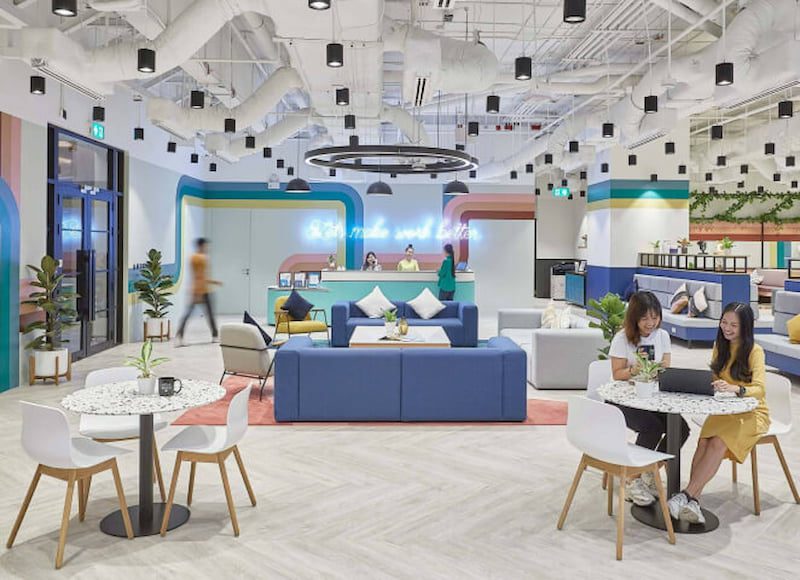
Concept: Consistent quality across regional network
Design Highlights:
- Recognizable brand aesthetic
- Scalable design system
- Technology-forward approach
- Flexible space configurations
Results:
- Rapid expansion across Bangkok
- Strong appeal to regional enterprises
- Efficient operations through standardization
Key Learning: Scalable design systems enable rapid expansion while maintaining quality.
Common Ground: Local Success Through Community
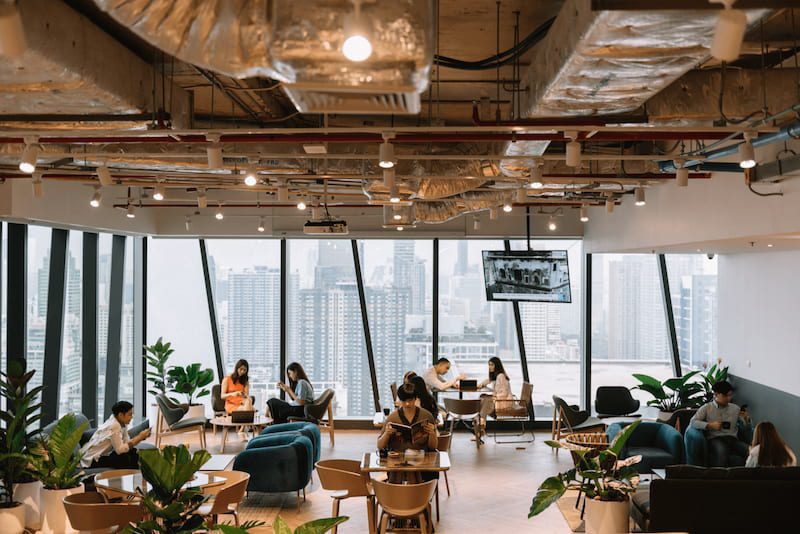
Concept: Thai-operated, community-focused coworking
Design Highlights:
- Locally relevant design aesthetic
- Strong community programming
- Flexible membership options
- Thai cultural integration
Results:
- 8+ locations across Thailand
- Strong local SME membership
- High member satisfaction scores
Key Learning: Local cultural understanding and community focus differentiate against global competitors.
TCDC: Creative Community Hub
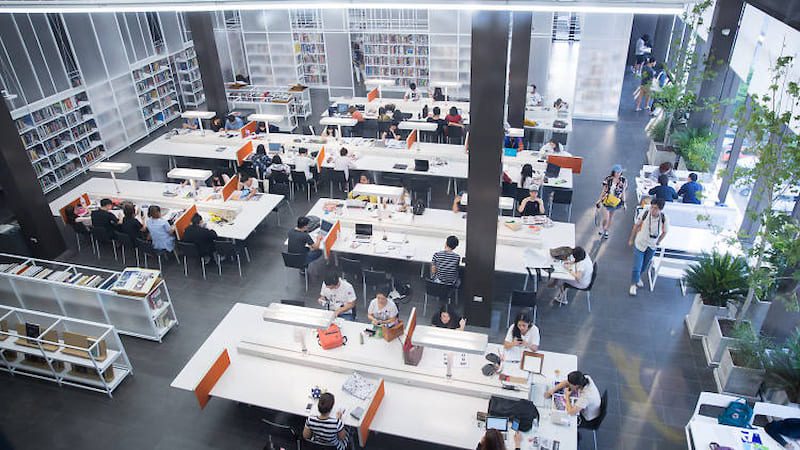
Concept: Design-focused coworking integrated with creative resources
Design Highlights:
- Direct connection to design library and materials
- Programming focused on creative industries
- Exhibition and event spaces
- Collaboration with design institutions
Results:
- Unique positioning in market
- Strong creative professional membership
- Partnership opportunities with design brands
Key Learning: Vertical specialization creates defensible market position.
Future Trends: Coworking Design 2026+
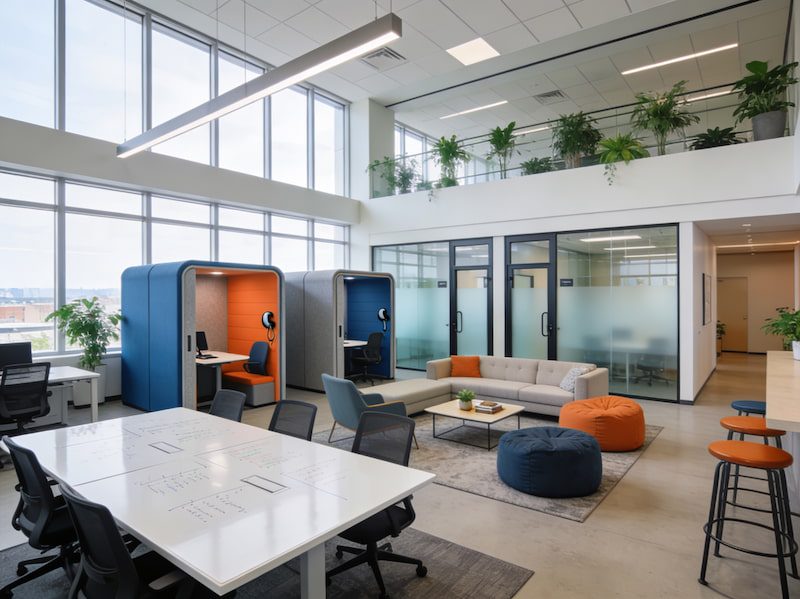
Wellness and Mental Health Focus
Post-pandemic, wellness has moved from amenity to necessity:
- Mental health rooms: Dedicated spaces for decompression
- Fitness integration: On-site gyms and movement spaces
- Nutrition focus: Healthy F&B options
- Biophilic design: Nature integration throughout spaces
- Market Data: Wellness-focused spaces show 25% higher retention [^3^].
Sustainability Certifications
Environmental credentials increasingly influence member choice:
- LEED/WELL certification: Formal sustainability recognition
- Carbon neutrality: Offset programs and renewable energy
- Circular design: Reused and recycled materials
- Local sourcing: Reduced transportation impact
Trend: 40% of enterprise clients now require sustainability credentials in RFPs.
Community Programming Spaces
Design increasingly supports programming that builds community:
- Event spaces: Regular workshops and networking
- Maker spaces: Hands-on creation and learning
- Gallery walls: Member artwork and exhibitions
- Performance areas: Small-scale events and presentations
Insight: Community programming drives 30% higher member satisfaction.
AI-Enabled Space Optimization
Artificial intelligence optimizes space utilization and member experience:
- Predictive analytics: Anticipate space demand patterns
- Dynamic pricing: Adjust rates based on utilization
- Personalized recommendations: Suggest spaces based on work patterns
- Automated climate control: Optimize comfort and efficiency
Timeline: Mainstream adoption expected 2026-2027.
Conclusion: Designing Coworking Success in Bangkok
These 12 coworking space interior design Bangkok concepts provide a framework for creating flexible workspaces that meet diverse needs while reflecting Bangkok’s unique character. The most successful spaces will combine multiple concepts, tailored to their specific location, target market, and business model.
Key success factors include deep local understanding, member-centric approach, operational integration, community cultivation, and financial sustainability.
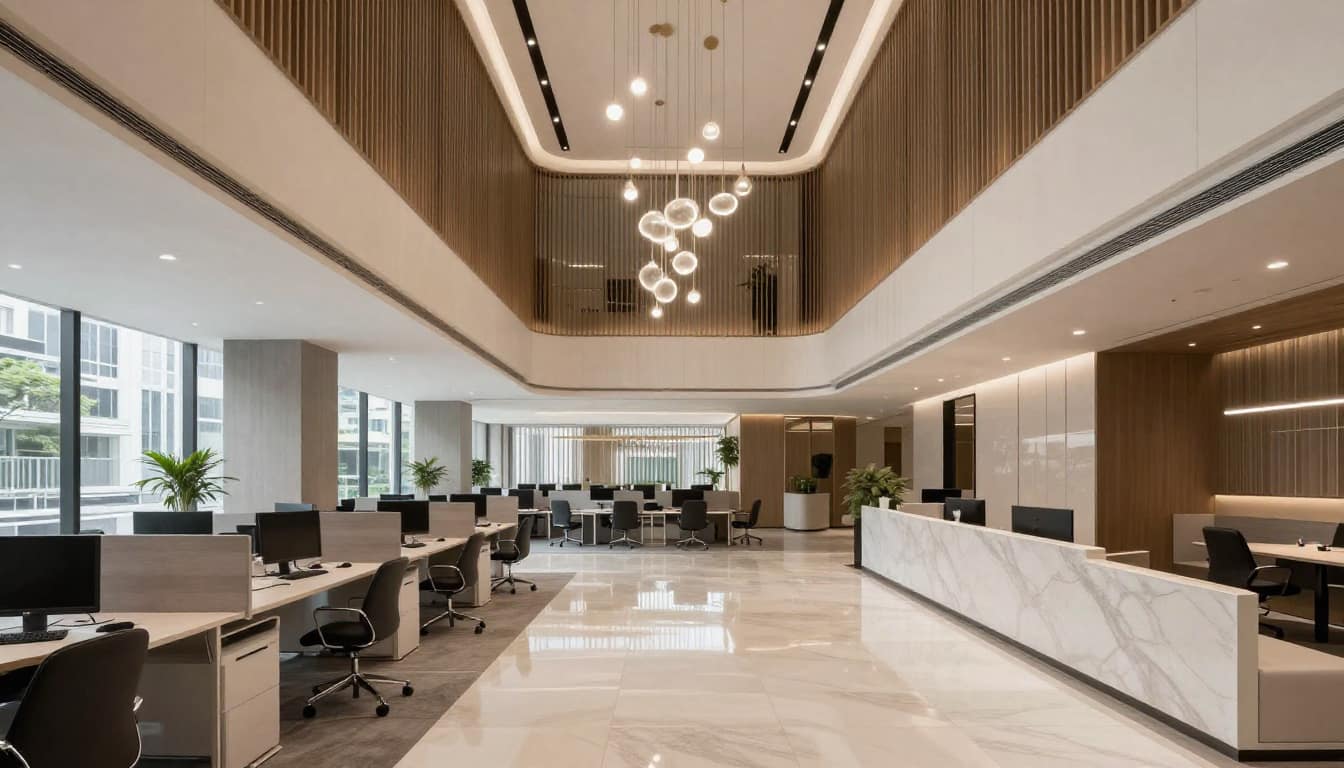
Ready to design your coworking space? Explore our commercial interior design services to learn how we create exceptional coworking environments. For insights on avoiding design pitfalls, read our guide on office design mistakes to avoid.
*Contact Instyle Deco Paris today to discuss your coworking space interior design Bangkok project.*
Frequently Asked Questions
What is coworking space interior design?
Coworking space interior design creates flexible, shared work environments that serve diverse professionals and companies. Unlike traditional office design serving a single organization, coworking design must accommodate varied work styles, company cultures, and privacy needs within shared space. Key elements include activity-based zoning (focus, collaboration, social), scalable furniture systems, robust technology infrastructure, and community-building amenities.
How much does coworking space design cost in Bangkok?
Bangkok coworking fit-out costs range from $80-120 per square foot for economy implementations, $120-180 for mid-market specifications, and $200-350 for premium executions. These costs are 20-40% lower than Singapore or Hong Kong. A 5,000 square foot mid-market space would require approximately $600,000-900,000 for complete fit-out including furniture and technology.
What are the essential zones in a coworking space?
Essential zones include: (1) Hot desking areas for flexible work, (2) Focus pods for private calls, (3) Open collaboration zones for teamwork, (4) Lounge areas for informal interaction, (5) Private offices for teams requiring confidentiality, (6) Meeting rooms for presentations, (7) Phone booths for calls, and (8) Social spaces (cafe, events). The typical ratio is 70% open/shared space to 30% enclosed/private space.
How do I balance open collaboration with privacy needs?
Successful coworking design provides choice through activity-based zoning. Offer varied environments: open desks for collaborative work, focus pods for concentrated tasks, phone booths for calls, and quiet zones for silent work. Clear visual and acoustic cues help members select appropriate spaces. Survey members regularly to understand evolving needs and adjust ratios accordingly.
What makes a coworking space successful in Bangkok?
Successful Bangkok coworking spaces combine: (1) Prime or accessible location near BTS/MRT, (2) Reliable high-speed internet and technology, (3) Quality design appropriate to target market, (4) Strong community programming and events, (5) Responsive community management, (6) Competitive pricing for the value offered, and (7) Differentiation through specialization (industry vertical, luxury positioning, or unique amenities).
How important is technology integration in coworking design?
Technology infrastructure is critical—members choose coworking partly to avoid managing office technology themselves. Essential systems include: booking platforms for desks and rooms, high-speed redundant internet, professional AV in meeting rooms, access control, and member management software. Budget 10-15% of total fit-out costs for technology infrastructure.
What is activity-based working (ABW)?
Activity-based working (ABW) organizes office space by activity type rather than department or hierarchy. Members choose environments matching their current task: focus zones for concentrated work, collaboration areas for teamwork, social spaces for networking, and quiet zones for reflection. ABW increases space efficiency and employee satisfaction by providing appropriate environments for varied work modes.
How do I differentiate my coworking space in a saturated market?
Differentiation strategies include: (1) Vertical specialization (focus on specific industries), (2) Premium hospitality experience, (3) Unique amenities (wellness, maker spaces, outdoor terraces), (4) Community programming strength, (5) Location advantages, (6) Design differentiation, and (7) Pricing strategy. Bangkok’s market still has white space in wellness-focused spaces, industry verticals, and suburban locations.
What ROI can I expect from design investments?
Design investments typically generate 15-25% improvements in member retention and support 20-50% pricing premiums depending on quality level. Wellness-focused amenities show 25% retention improvement. Premium design aesthetics justify 20-30% higher pricing. Payback periods for design upgrades range from 4-18 months through improved retention, pricing power, and occupancy rates.
How do tropical climates affect coworking design?
Tropical climates like Bangkok require: enhanced HVAC capacity (size for 35°C+ temperatures), humidity management systems, mold-resistant materials, and outdoor workspace design. The tropical climate advantage is year-round outdoor terrace utilization—design covered outdoor areas with fans and misting systems. Regular maintenance schedules are critical for managing humidity-related wear.
What cultural considerations matter for Thai coworking spaces?
Thai coworking design should accommodate: hierarchical seating preferences (some members prefer positions reflecting status), group-oriented work styles, prayer/meditation space needs, and concepts of “sanuk” (fun) in social areas. Incorporating Thai materials (silk, teak, rattan) and artwork shows cultural respect. Understanding Thai business culture helps design spaces supporting local work patterns.
How do I design for hybrid work trends?
Hybrid work design emphasizes: (1) Hot desking and hoteling systems rather than assigned desks, (2) Enhanced video conferencing in all meeting spaces, (3) Technology supporting seamless remote collaboration, (4) Flexible furniture allowing rapid reconfiguration, (5) Spaces supporting both focused individual work and team collaboration, and (6) Booking systems managing fluctuating daily occupancy. Design for 60-70% of peak membership present on any given day.