
Bathroom waterproofing is one of the most important parts of any bathroom renovation or construction project in Bangkok. Tiles, fittings, lighting, and cabinets may be the visible parts of the bathroom, but the waterproofing underneath is what protects the space from leaks, mould, and long-term moisture damage.
This is especially important in Bangkok homes, condos, hotels, serviced apartments, and commercial properties because the city’s humidity, heavy rain, and regular use of air-conditioning can increase moisture problems. If waterproofing is poorly planned, water can damage floors, walls, ceilings, and even neighbouring units. This guide explains the key bathroom waterproofing standards, materials, and best practices needed to create bathrooms that are safe, durable, and suitable for Bangkok conditions.
Bathroom Waterproofing Fundamentals
Waterproofing is the protective layer that stops water from passing into bathroom walls, floors, and structural areas. It is different from water-resistant materials, which only slow moisture down. A proper waterproofing system creates a barrier that blocks water from entering areas where it can cause hidden damage.
In Bangkok bathrooms, this matters because moisture can build up quickly from daily showers, humid air, condensation, and enclosed spaces with limited ventilation. A bathroom may look complete on the surface, but without proper waterproofing underneath, leaks and mould can slowly develop behind the finishes.
Why Do Conventional Bathroom Waterproofing Fail?
Bathroom waterproofing usually fails because of poor surface preparation, unsuitable materials, weak detailing, or rushed installation. The problem often starts in small areas such as corners, drains, shower curbs, and pipe penetrations, where water can easily find a path through the structure.
Common causes include:
- Poor surface preparation before applying the membrane
- Using the wrong waterproofing system for the area
- Weak detailing around drains, corners, curbs, and pipes
- Tiling before the membrane has fully cured
- Skipping flood testing before finishes are installed
In Bangkok renovation projects, tight schedules can make these problems worse. Humid or rainy weather can slow drying and curing, so rushing the waterproofing stage may lead to hidden problems later.
The Cost of Poor Waterproofing
Waterproofing failure is expensive because the damage is often hidden until it becomes serious. By the time stains, mould, loose tiles, or ceiling leaks appear, water may already have spread behind the finishes.
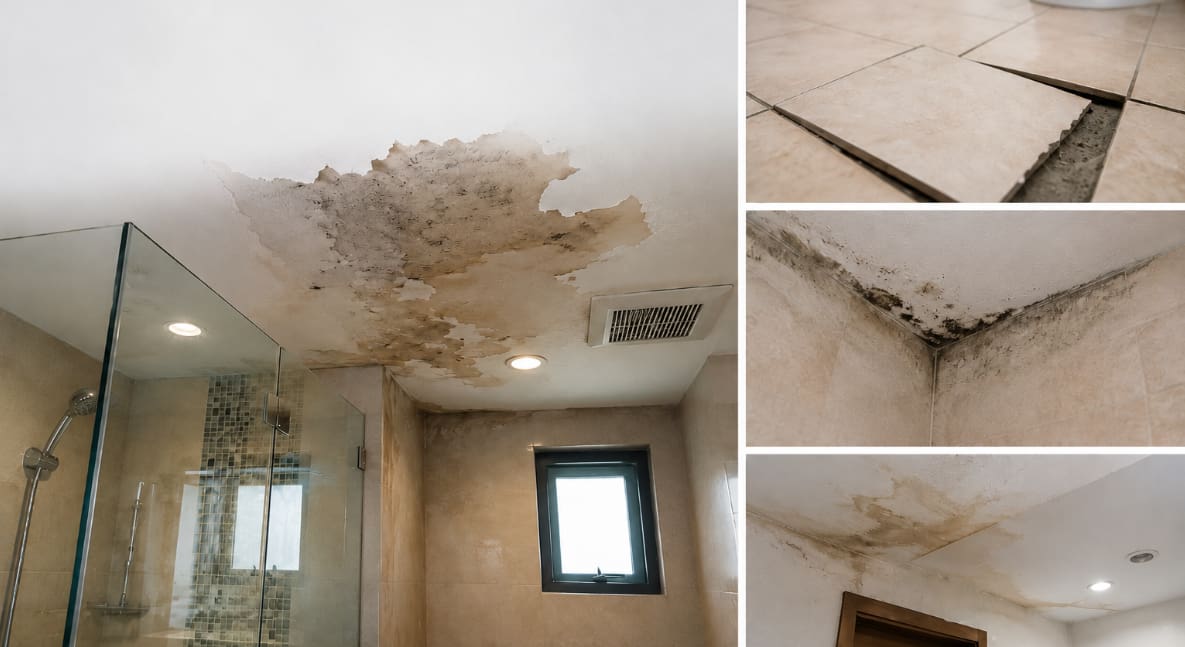
In condos, apartments, hotels, and commercial bathrooms, leaks can also affect the unit or room below. This can lead to repair costs, complaints, delays, and disputes with building management. That is why waterproofing should be treated as a long-term investment, not a step to rush through.
What Bathroom Waterproofing Standards Should You Follow?
Bathroom waterproofing requirements depend on the country, building type, and construction method. Following recognised standards helps reduce defects and ensures the selected system is suitable for wet areas.
For Bangkok and Southeast Asian projects, standards such as Thai Industrial Standards, Singapore Standard SS CP 82, and Malaysian Standard MS 758 are useful references for waterproofing membranes and wet-area protection. International references such as ISO and ASTM standards are also commonly used to check material quality and performance.
The most important point is to choose a waterproofing system that matches the bathroom’s exposure level, substrate, and intended use. Shower areas, floors, walls, drains, and pipe penetrations all need suitable protection, not just a basic surface coating.
Common Bathroom Waterproofing Materials
Different waterproofing materials suit different types of bathrooms. The right choice depends on the substrate, exposure level, finish material, budget, and how the bathroom will be used.
Liquid-Applied Membranes
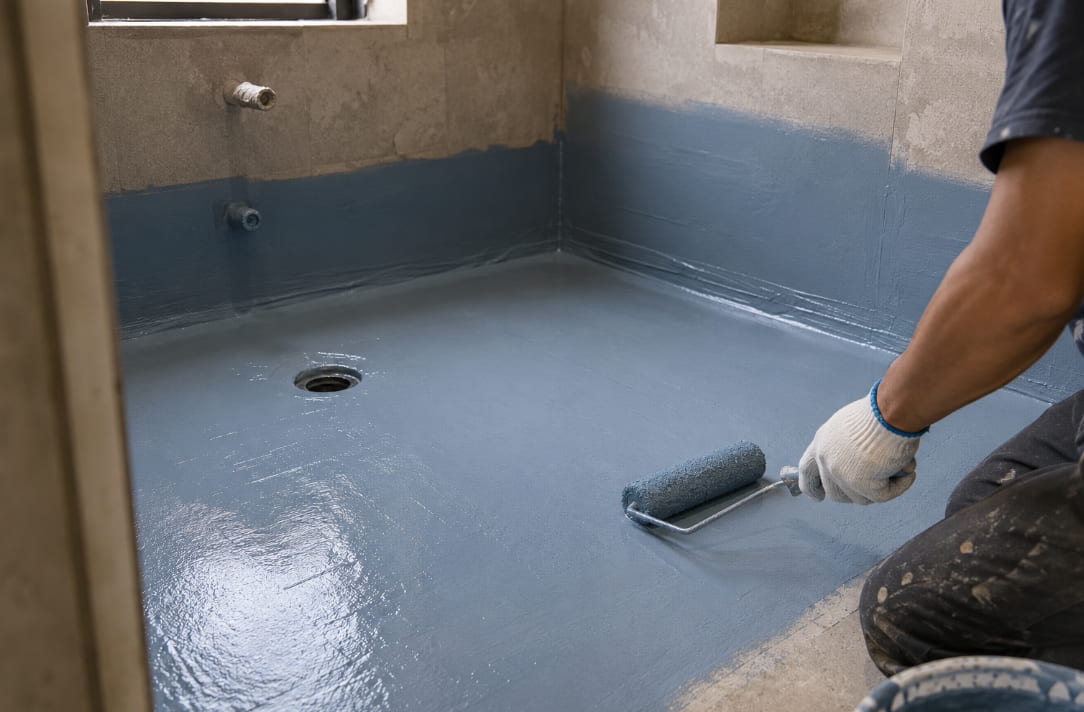
Liquid-applied membranes are commonly used in bathrooms because they form a seamless layer around corners, drains, pipe penetrations, and irregular surfaces. This makes them practical for many Bangkok bathrooms, especially where layouts are compact or detailed.
Cementitious waterproofing works well with concrete and can tolerate damp conditions, making it useful in humid climates. Polyurethane membranes are more flexible and better for areas where movement and durability matter. Epoxy membranes offer strong chemical resistance, making them suitable for hotels, spas, and commercial bathrooms. Acrylic systems are easier to apply but may not provide the same long-term performance as premium options.
Sheet Membranes
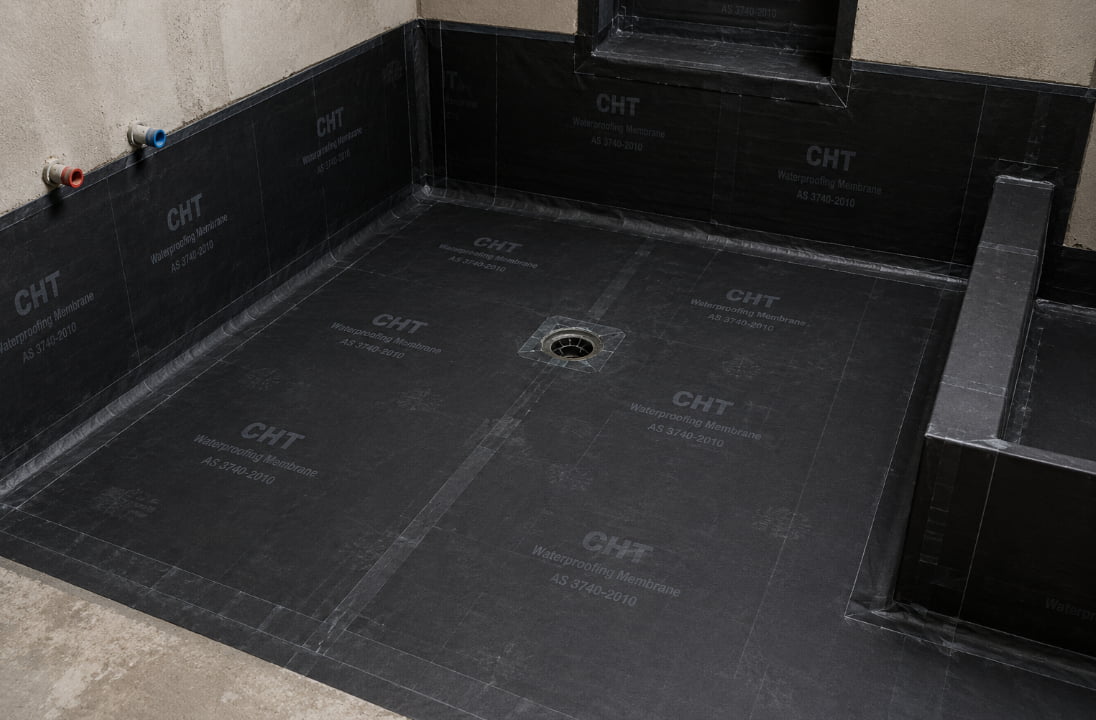
Sheet membranes are pre-formed waterproofing layers with consistent thickness. They can perform well when seams, corners, and overlaps are installed correctly.
Bituminous sheets are cost-effective, PVC membranes offer strong chemical resistance, and composite sheet systems combine different layers for better performance. These systems are often used in larger bathrooms or critical wet areas where consistent coverage is important.
Integral Waterproofing
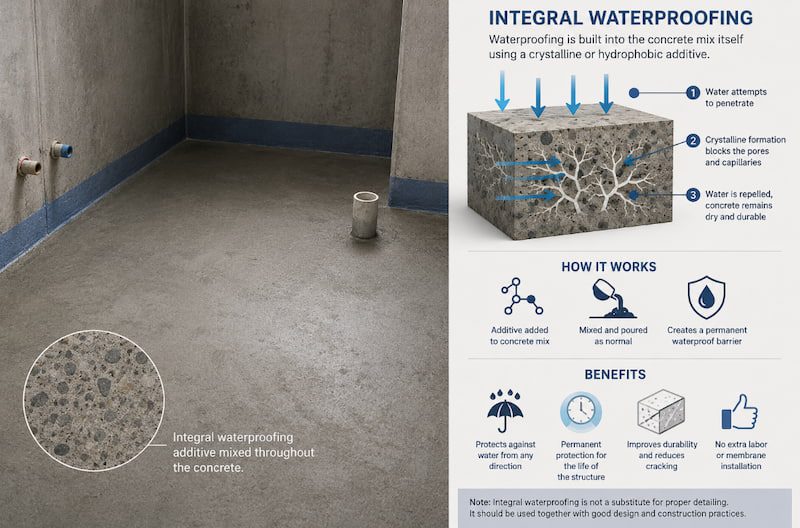
Integral waterproofing is added into concrete or mortar instead of being applied as a surface layer. Crystalline systems help block water pathways inside concrete, while densifiers reduce porosity and strengthen the surface.
These systems are useful as part of a broader waterproofing strategy, especially for concrete substrates. However, they are usually not a replacement for proper wet-area membranes in showers and bathroom floors.
How Should a Whole Bathroom Be Waterproofed?
A good waterproofing plan should protect the whole bathroom, not just the shower. This is especially important in Bangkok condos and compact bathrooms, where water can easily spread beyond the shower zone.
Direct wet areas such as shower floors, shower walls, tub surrounds, and steam rooms need the strongest waterproofing. Bathroom floors, vanity walls, and areas near bathtubs also need moisture protection because they are exposed to splashes. Walls and ceilings may not always need full waterproofing, but they should still use moisture-resistant materials and proper ventilation.
Critical Areas That Need Extra Attention
Small details often decide whether a waterproofing system succeeds or fails. Even when the main membrane is installed correctly, leaks can still happen at weak points.
The most important areas include:
- Shower curbs
- Floor drains
- Pipe penetrations
- Wall-to-floor junctions
- Corners
- Control joints
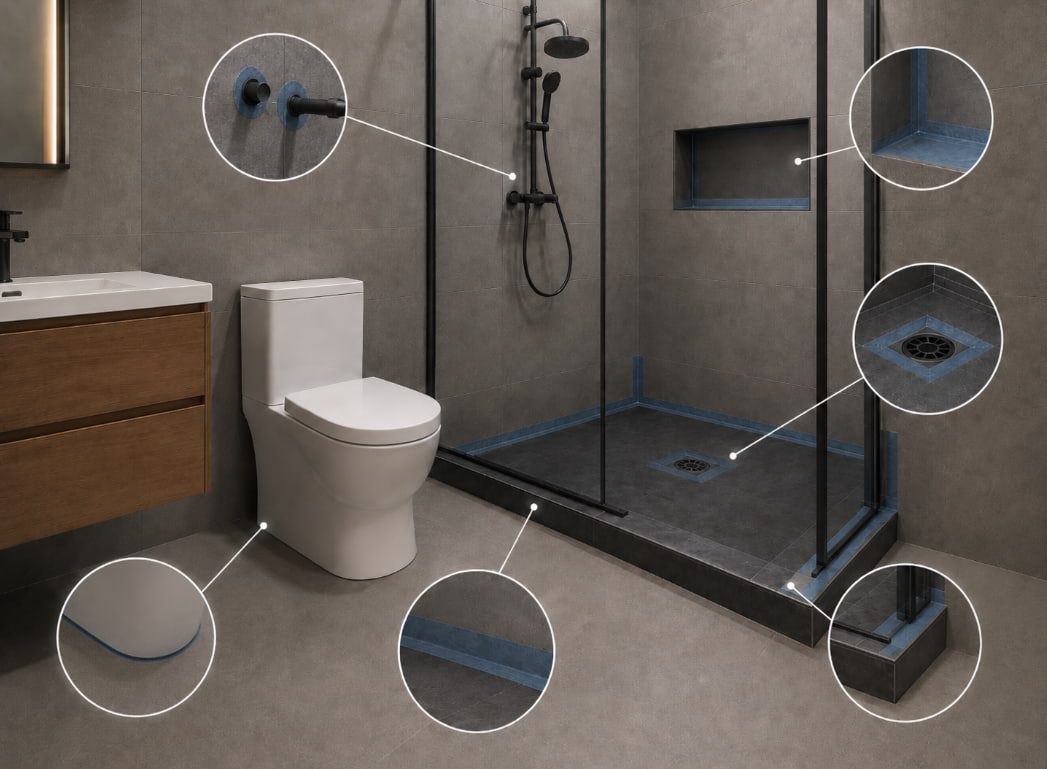
Shower curbs should be solid, fully wrapped with membrane, and sloped toward the drain. Drains must connect securely to the waterproofing layer. Pipe penetrations need flexible sealing because rigid seals can crack when pipes expand and contract. Wall-to-floor junctions and corners should also be reinforced because they experience movement and regular water exposure.
Why Does Bangkok’s Climate Make Waterproofing More Important?
Bangkok’s climate creates extra challenges for bathroom waterproofing. High humidity can slow curing, affect adhesion, and increase the risk of mold. Concrete and masonry may also take longer to dry, which can affect how well the membrane bonds.
Condensation is another common issue. Many Bangkok interiors rely heavily on air-conditioning. When cool bathroom surfaces meet warm humid air, water droplets can form. This may look like a leak even when the waterproofing system is working properly.
Good ventilation, moisture-tolerant materials, and mould-resistant formulations can help reduce these risks. In Bangkok, waterproofing should always be planned with humidity and daily moisture exposure in mind.
Monsoon Season and Construction Timing
Bangkok’s rainy season can affect material storage, installation, and curing time. Waterproofing products should be protected from rain before use, and schedules should allow extra curing time during humid periods.
Even if the surface looks dry, the membrane may still need more time to cure. Rushing this stage can cause problems later, especially in bathrooms used every day. For renovation projects, it is better to allow enough time for preparation, application, curing, and testing before tiling begins.
How Do You Choose the Right Waterproofing Material?
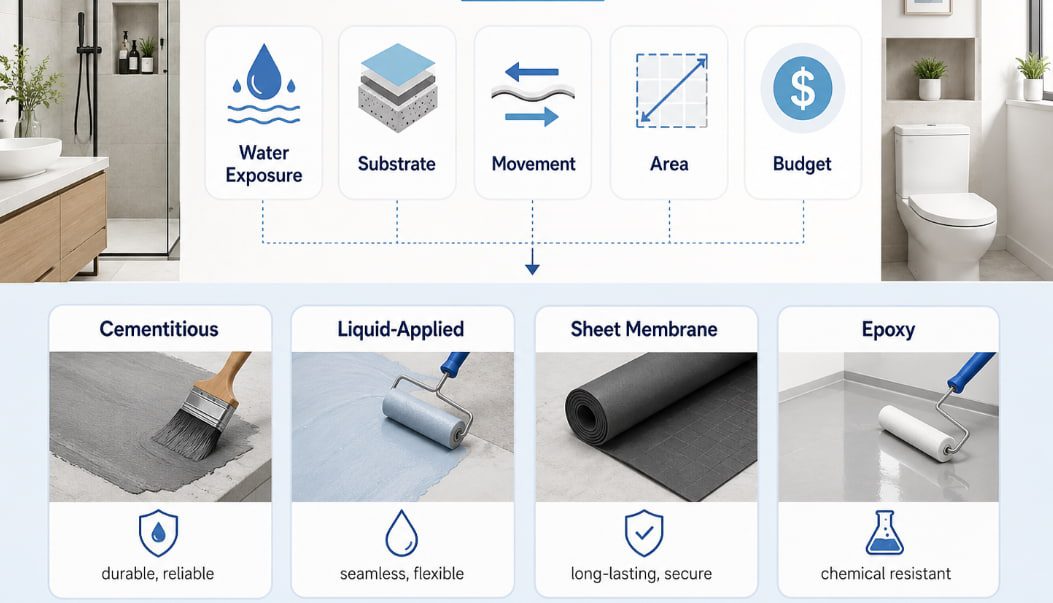
The right waterproofing material depends on the bathroom’s condition, substrate, water exposure, and project requirements. A system that works well in a dry climate may not always perform the same way in Bangkok’s humid environment.
For Bangkok bathrooms, waterproofing materials should be chosen for:
- Humidity resistance
- Heat tolerance
- Mold resistance
- Daily wet-area use
- Compatibility with tiles, stone, or other finishes
- Ability to handle movement and small cracks
Cementitious systems may be suitable for general wet areas and concrete substrates. Polyurethane membranes may be better where flexibility is needed. Epoxy systems may suit commercial bathrooms exposed to frequent cleaning chemicals. Sheet membranes may be useful for larger or higher-risk areas that need consistent membrane thickness.
Installation Best Practices
Proper installation is just as important as choosing the right material. The substrate should be clean, sound, dry enough, and free from oils, loose material, or surface damage.
New concrete usually needs enough curing time before waterproofing. Cracks should also be repaired before the membrane is applied. In Bangkok’s humid conditions, moisture testing can help confirm whether the surface is ready.
Installers should follow the manufacturer’s instructions closely, especially for primer use, membrane thickness, reinforcement, curing time, and compatibility with tile adhesives or finishes.
Membrane Application and Curing
Waterproofing membranes must be applied at the correct thickness. If the layer is too thin, it may not protect properly. If it is too thick, it may cure poorly or waste material.
Reinforcement fabric should be used at corners, joints, and pipe penetrations. These are the areas most likely to move, crack, or allow water through. Fresh membranes should also be protected from rain, dust, foot traffic, and construction damage while curing.
Curing time should not be rushed. In Bangkok’s humid climate, some systems may need longer than usual before they are ready for flood testing or tiling.
Why Is Flood Testing Important Before Tiling?
Flood testing checks whether the waterproofing works before tiles, stone, or other finishes are installed. This step is especially important in Bangkok condos, apartments, hotels, and commercial buildings, where one leak can affect the floor below.
A proper flood test usually lasts at least 24 hours, with 48 to 72 hours preferred for critical areas. The area is filled with water, monitored for water loss, and checked for leaks below. Photos of the test are also useful for warranty or building management records.
Skipping flood testing may save time at first, but it can create much bigger problems if a leak is discovered after tiling.
Waterproofing for Bathroom Finishes
Bathroom finishes such as tiles, stone, vinyl, cabinetry, and fixtures all depend on proper moisture control. If the waterproofing fails, even durable finishes can loosen, stain, swell, or deteriorate over time.
Large tiles need a flat and stable surface. Natural stone can stain or darken if moisture reaches the setting bed. Wall-hung fixtures, freestanding tubs, and linear drains also need precise waterproofing around drains, mounting points, and concealed penetrations.
In Bangkok bathrooms, finish selection should also consider humidity, ventilation, and daily use. Moisture-sensitive materials should be protected with the right waterproofing and installation method.
Quality Assurance and Warranty Protection
Quality checks help reduce the risk of future waterproofing problems. Materials should be checked when they arrive on site, and installers should follow the manufacturer’s instructions.
For larger projects, mockups and documentation are useful. Records should include material certificates, installation details, flood test photos, and warranty information. These records can help if questions or claims arise later.
Good documentation is especially useful for condos, hotels, and commercial properties because building management may require proof that waterproofing was completed and tested properly.
Common Warranty Exclusions
Waterproofing warranties usually have limits. They may not cover damage caused by structural movement, later trade damage, unsuitable cleaners, poor drainage maintenance, or modifications after completion.
In Bangkok renovation projects, this is important because several contractors may work in the same bathroom. Plumbing, tiling, cabinetry, lighting, and finishing work should be coordinated so the waterproofing layer is not damaged after installation.
Maintenance and Long-Term Performance
Good waterproofing should last for many years, but basic maintenance still matters. Grout, sealants, and drains should be checked regularly. Cracks, gaps, or blocked drains should be fixed before water enters the bathroom assembly.
Ventilation is also important in Bangkok bathrooms. If mirrors, walls, or ceilings often collect moisture, better airflow may be needed. During renovation, old waterproofing should also be assessed instead of assuming it is still reliable.
Comparing Bathroom Waterproofing Systems
| System Type | Cost per m² | Durability | Best For |
| Cementitious | ฿490–฿820 ($15–25) | 10–15 years | General wet areas, Bangkok condos, budget-conscious renovations |
| Polyurethane | ฿820–฿1,470 ($25–45) | 15–25 years | Homes, hotels, and high-use bathrooms |
| Sheet Membrane | ฿980–฿1,640 ($30–50) | 20–30 years | Large commercial bathrooms and critical wet areas |
| Epoxy | ฿1,140–฿1,800 ($35–55) | 20+ years | Hotels, spas, and commercial bathrooms exposed to chemicals |
| Crystalline | ฿330–฿650 ($10–20) | Permanent* | Concrete substrates and structural waterproofing support |
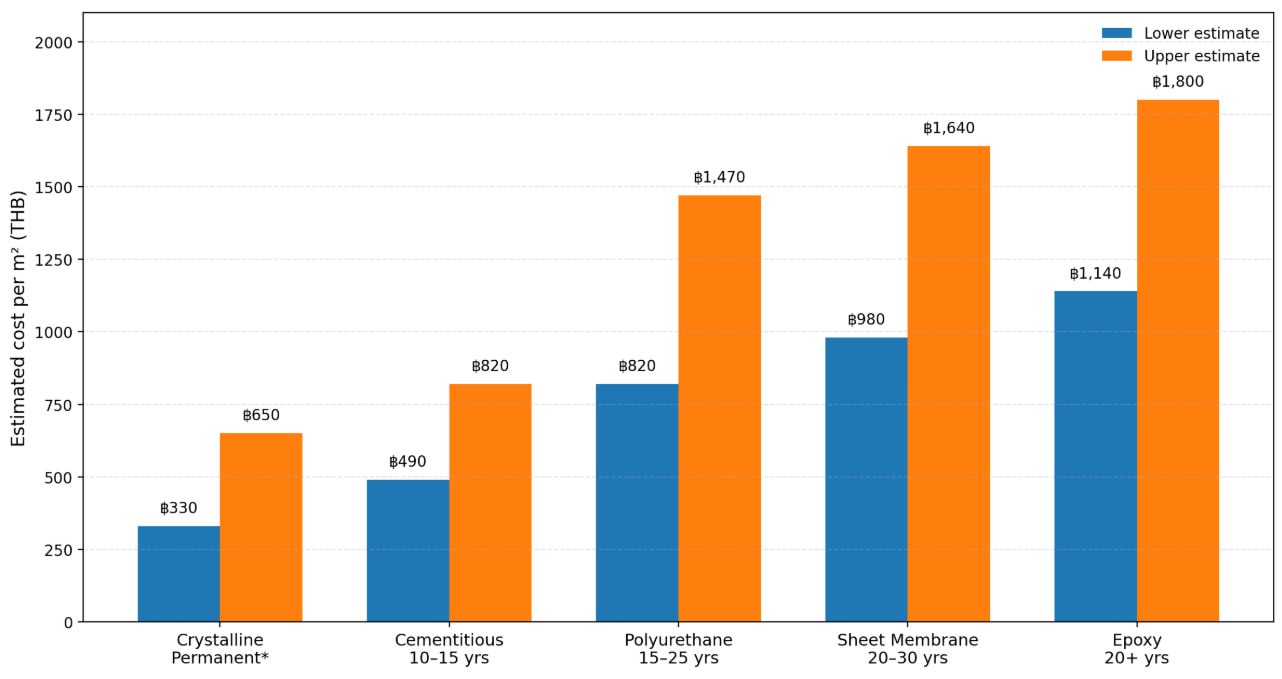
*Crystalline systems become part of the concrete but may require treatment if cracks develop.
Conclusion
Bathroom waterproofing is a critical part of any luxury interior project in Bangkok. It protects premium finishes, reduces the risk of costly water damage, and helps the bathroom remain reliable, comfortable, and visually refined over time.
In Bangkok’s humid climate, waterproofing becomes even more important because moisture, condensation, monsoon weather, and daily water exposure can quickly affect the condition of a bathroom. Proper material selection, careful detailing, and correct installation all help prevent hidden problems before they become expensive repairs.
At Instyle Deco Paris, we design bathrooms with both beauty and performance in mind. As part of our various Bangkok Interior design Services, we consider waterproofing, layout planning, material choices, ventilation, and finishing details as one complete system. This helps us create bathroom interiors that feel luxurious, function well in daily use, and remain durable in Bangkok’s tropical climate.
FAQ
What is the minimum waterproofing requirement for shower floors?
Shower floors need strong waterproofing with flood testing capability. This usually means a liquid-applied membrane with proper dry film thickness or an approved sheet membrane with sealed seams. The waterproofing should extend up the walls and fully cover the shower curb.
How long should bathroom waterproofing cure before tile installation in Bangkok?
Most waterproofing systems need 24 to 72 hours to cure. In Bangkok, high humidity can slow curing, so it is safer to allow extra time before tiling.
Can waterproofing be applied over existing tiles?
It is usually not recommended. Waterproofing needs a clean and properly prepared substrate. Existing tiles can create bonding problems and movement issues.
Why do Bangkok bathrooms need strong waterproofing?
Bangkok bathrooms face humidity, heavy rain seasons, daily water use, and frequent air-conditioning. These conditions can increase condensation, slow curing, and create moisture problems if waterproofing is not done properly.
What causes waterproofing to fail at shower curbs?
Shower curbs often fail because of poor construction, incomplete membrane wrapping, missing reinforcement, or incorrect slope. A solid curb with full membrane coverage and slope toward the drain helps prevent leaks.
Is cementitious waterproofing suitable for luxury bathrooms in Bangkok?
Cementitious waterproofing can work well in Bangkok because it tolerates damp conditions. However, premium polyurethane or epoxy systems are often better for luxury bathrooms because they offer better flexibility, crack bridging, and durability.
What is flood testing?
Flood testing involves filling the waterproofed area with water for 24 to 72 hours to check for leaks before tiles or finishes are installed.
Can damaged bathroom waterproofing be repaired?
Small damaged areas may sometimes be patched with compatible materials. However, major damage or failure in critical areas usually requires full replacement.