
Here’s the thing about designing for pets in Bangkok: you’re not just battling claws and shedding. You’re fighting humidity that warps hardwood, monsoons that turn balconies into swamps, and the eternal truth that a Great Dane in a Thonglor condo doesn’t care about your vintage Aubusson rug.
The numbers back up what we already know. Grand View Research projects the global pet furniture market will hit $4.08 billion by 2031 (2023 Industry Report). But this isn’t just about commerce. It’s about the fact that our animals aren’t livestock anymore, they’re family. And in Bangkok, where European aesthetic sensibilities crash headfirst into tropical reality, designing for that family gets complicated.
This isn’t theoretical for us. Last year, we watched a client’s Balinese cat, Mochi, systematically destroy a $12,000 silk wall panel because we forgot to account for vertical territory. The panel was gorgeous. Mochi didn’t care. That disaster taught us more about feline ethology than any design textbook.
So here’s how we actually do it from the behavioral science, the material specs, to the bespoke tricks that keep both pets and design purists happy.
Designing for Instinct, Not Just Instagram
Effective pet-integrated design goes way beyond scratch-resistant surfaces. You have to understand what animals actually need. Not what looks good in a portfolio.
Cats require vertical territory. It’s non-negotiable. Deprive them of appropriate scratching substrates and they’ll redirect those behaviors to your upholstery. It’s nothing to do with spite, it’s biology. When they scratch, they’re depositing pheromones from interdigital glands while removing claw sheaths.
So we specify sisal-wrapped posts. Minimum 3-inch diameter for grip stability. Position them near resting areas, not banished to utility corners. And we add horizontal scratchers for geriatric cats with reduced spinal flexibility. Mochi has one now. She’s much happier. So is her owner.
Dogs are different. They need observation points. Pack surveillance instincts are real. Plus den-like enclosures for security. We map circulation patterns carefully, which are predictable pathways between entry points, feeding stations, and resting zones. Hard flooring in these corridors prevents carpet degradation. And we maintain 24-inch minimum hallway widths. Critical in Bangkok’s compact luxury condos where space efficiency dominates.
Oh, and unneutered males? They mark vertical surfaces. It’s not optional behavior it’s hard wired into their being. We specify washable, semi-gloss paint formulations (satin or eggshell, scrub class 3 minimum) to prevent urine penetration into drywall. Enzymatic cleaning accessibility should inform flooring seam specifications. Trust us on this one.
The best Flooring for pets in your Designs
Flooring is where most pet-friendly designs live or die. We’re looking at Mohs hardness, water absorption coefficients, and dimensional stability under 70-90% humidity. Bangkok’s climate doesn’t negotiate.
Luxury Vinyl Tile (LVT): The Chameleon
For high-traffic pet households, we specify LVT with 20-mil wear layers and SPC (Stone Plastic Composite) cores. Skip the WPC simply put it can’t handle concentrated nail pressure.
The good news? Premium options replicate point de Hongrie (herringbone) oak or Versailles parquet patterns. Classic Parisian motifs. Waterproof. Essential for monsoon seasons and accidental spills.
Rigid core LVT withstands 1,000+ psi indentation resistance and maintains dimensional stability under 0.5% expansion/contraction. This matters when air conditioning creates rapid humidity shifts. We specify groutless click-lock systems because they show no accumulation vectors for biological matter.
Porcelain Tile: Haussmann Toughness
Full-body porcelain (Mohs hardness 7-8) laughs at canine nails (Mohs 2.5). You can get tomette (terracotta) aesthetics or Carrara marble veining without porosity concerns.
We like large-format tiles (24×48 inches) to minimize grout joints. Specify epoxy grout (water absorption <0.5%), not cementitious alternatives. In tropical heat, cementitious grout harbors stains and bacteria. It’s gross. Don’t do it.
One caveat: tile’s thermal mass creates cold surfaces. Pets avoid them. We integrate radiant heating or cork underlayment beneath savonnerie-inspired area rugs. Thermal breaks without compromising durability.
Alternatives to Classic Parquet
Traditional parquet de Versailles suffers under pet traffic. We use alternatives:
- Stranded Bamboo: 3,000+ Janka rating. Vertical grain construction conceals scratches better than horizontal grain. Perfect for atelier-inspired lofts.
- Engineered Hickory: 1,820 Janka rating with 4mm+ wear layers. You can refinish it. The patina aesthetic which is so valued in French design philosophy remains achievable.
- Matte Finishes: Satin polyurethane (40-50 gloss units) hides micro-abrasions. High-gloss (80+ units) shows everything.
Avoid: Solid pine (sapin, Janka 380) and carbonized bamboo (1,180). They’re too soft for active households. We learned this the hard way with a Labrador named Pierre. Never again.
Upholstery That Survives Pets in Real Life
The durability-versus-luxury debate? It’s over. Molecular textile engineering gives us performance fabrics with Parisian hand-feel.
Crypton uses fluorine-free barrier technology integrated within fiber structure and not surface coatings. It exceeds 50,000 double rubs (Wyzenbeek method) and provides permanent fluid barriers (AATCC 127). The encapsulation prevents odor absorption while maintaining the soft hand-feel required for canapé styling.
Sunbrella uses solution-dyed acrylic. It resists UV degradation (1,000+ lightfastness hours) – essential for Bangkok’s intense solar exposure through floor-to-ceiling condo windows. Martindale abrasion testing exceeds 40,000 cycles.
Microfiber creates mechanical barriers against claw penetration with tightly woven structures (0.5 denier). Vacuum extraction removes embedded hair easily. It maintains the pristine lines essential to modern Parisian minimalism.
Leather and Pets
Full-grain aniline leather absorbs fluids and scratches permanently. Don’t use it with untrained animals. We specify corrected-grain or pigmented leather (0.9-1.1mm thickness) with protective topcoats. It withstands nail contact while developing usure noble (noble wear) – that prized patina of French antiques.
Silicone leather alternatives (PSi) offer 300,000+ Martindale rubs and hydrolysis resistance. They outperform PVC, which cracks within 18 months of tropical UV exposure.
Avoid: Velvet (velours), silk (soie), and loose-weave linens. They trap fur and show abrasion. Beautiful in pet-free hôtels particuliers. Impractical for family life.
Bespoke Integration: When Millwork Hides the Mess
Off-the-shelf pet accommodations disrupt visual continuity. Menuiserie (custom woodworking) integrates animal needs into the architectural fabric itself.
Window Perches as Architecture
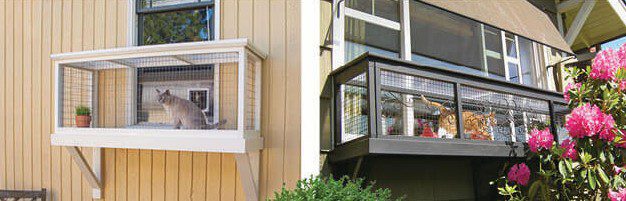
Cats need 18-inch minimum perch depths for comfortable reclining. We fabricate wall-mounted systems from marine-grade plywood with zero-VOC sealants, wrapped in outdoor-rated fabrics. They handle 50+ lbs dynamic load. They read as intentional shelving.
In Bangkok’s high-rises, south-facing installations need UV-filtering films. Prevent thermal injury. Preserve views.
Parisian apartments feature appui de fenêtre (window ledges) as architectural heritage. In Bangkok condos, we create cantilevered perches in bleached oak or lacquered finish. They match existing millwork. They look intentional.
Cat Highways That Actually Look Good
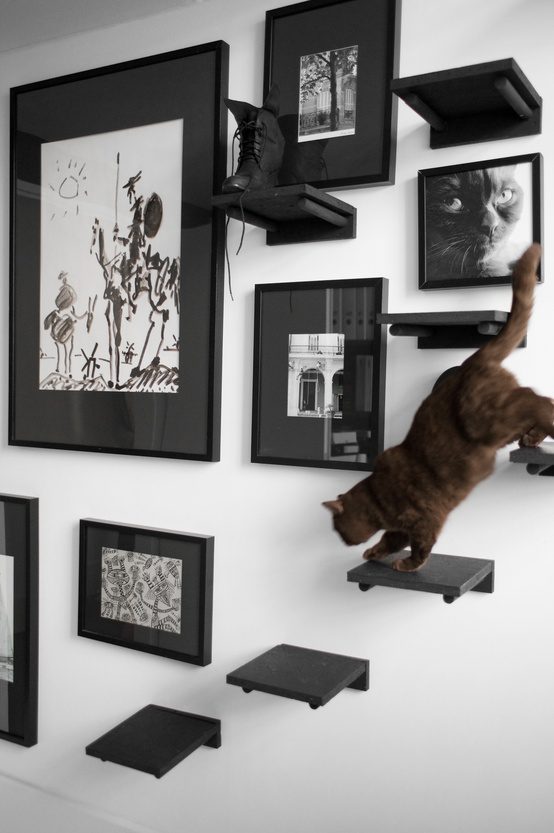
Wall-mounted shelf systems creating continuous pathways reduce furniture scratching by 60-70% (Journal of Feline Medicine and Surgery, 2017). We implement 12-inch minimum corridor widths and textured sisal surfaces. These installations function as sculptural wall art. They echo the asymmetrical compositions of French modernism.
Plus, they work. Mochi uses hers constantly. The silk panels are safe.
The Art of Hiding Everything
French interior design values rangement (storage) that eliminates visual clutter. Pet paraphernalia needs the same architectural discretion.
Concealed Feeding Stations
Visible pet bowls disrupt the clean lines of minimalist kitchens and living spaces. Bespoke millwork conceals these necessities through several menuiserie strategies:
Pull-Drawer Systems: Kitchen islands or base cabinets incorporate pull-out drawers at toe-kick level (4-6 inches high) or standard cabinet height, fitted with removable stainless steel bowls integrated into the drawer face. When closed, the facade reads as continuous cabinetry—bleached oak, lacquered MDF, or stone veneer matching surrounding surfaces. Soft-close drawer slides prevent paw-pinching, while silicone gaskets contain water spills during monsoon humidity.
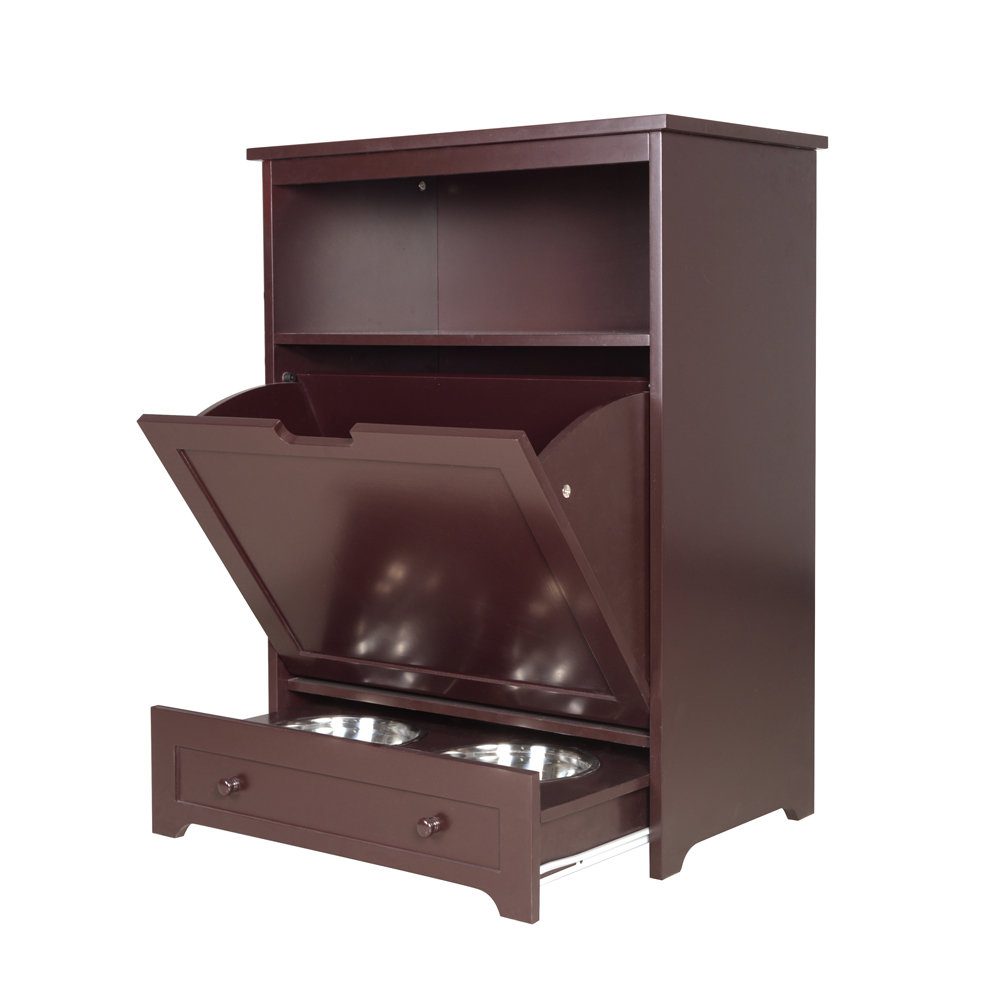
Fold-Down Murphy Stations: Wall-mounted cabinetry in mudrooms or utility corridors features fold-down doors that transform into feeding platforms. The interior houses collapsible silicone or ceramic bowls; when raised, the unit appears as architectural paneling or a framed mirror. This solution suits compact Bangkok condos where floor space commands premium value, eliminating tripping hazards while maintaining enfilade sight lines.
Sliding Panel Niches: Custom sideboards (buffets) or credenzas incorporate sliding tambour or barn-style panels that reveal feeding stations when open, artwork or display surfaces when closed. Interior waterproofing—marine-grade plywood sealed with epoxy resin or solid-surface (Corian) liners—prevents moisture penetration into joinery, critical in Bangkok’s climate where humidity accelerates substrate degradation.
Elevation Strategy: For large breeds or geriatric animals requiring elevated feeding (reducing gastric torsion risk and joint strain), custom banquettes with integrated bowl cutouts at 12-18 inches height serve dual purposes—seating for humans, dining for pets. Removable inserts allow sanitization, while upholstery in performance fabrics coordinates with surrounding soft goods.
Material Specifications: Bamboo ply construction resists moisture absorption (>5% swelling in MDF) while providing the joinery quality expected in bespoke ébénisterie. Ventilation gaps (discrete CNC-cut slots matching room moldings) prevent bacterial proliferation in enclosed feeding zones, addressing tropical humidity concerns without visible compromise.
Litter Box Architecture (Yes, Really)
Concealed waste management requires interior dimensions of 1.5x the cat’s body length. We add activated carbon filtration or direct venting. Entry openings at 7 inches. This wooden piece with cat scratchers on the front seamlessly fits the design.
Surfaces in non-porous quartz or solid-surface materials (Corian) prevent ammonia odor absorption. Critical in Bangkok’s humidity where volatile compounds proliferate. Your nose will thank you.

What Not to Do: Expensive Lessons
Sophisticated pet-proofing requires acknowledging what not to do, here are 3 key points to consider for your pets.
The White Sofa Fallacy: Performance fabrics resist staining, sure. But light values show sebaceous oils from pet coats within 6-12 months regardless of maintenance. French design embraces gris, taupe, and beige tones – medium values with textured weaves. They conceal reality better than pristine whites.
Inadequate Entry Sequencing: Homes lacking vestibule or airlock-style entries track 80% of outdoor contaminants into living spaces (International Journal of Environmental Health Research, 2019). We specify grate systems (3/8-inch grid openings), elevation changes that interrupt momentum, and utility wash stations for large-breed paw cleaning. We translate the French sas d’entrée concept to tropical urban contexts.
Toxic Materials: Treated lumber, xylitol-containing sealants, and mothballs create ingestion risks. We use untreated hardwoods, low-VOC finishes, and physical pest control. This aligns with pet safety and the sustainable material ethos prevalent in contemporary European design.
Budget Reality: Where to Spend in Bangkok
Priority allocation follows damage potential and replacement costs. European furnishings carry premium pricing here.
Tier 1 – Foundation: Flooring (30-40% of budget) and climate control integration (10-15%). Bangkok’s humidity necessitates moisture barriers and mold-resistant substrates. Prevent cascade failures.
Tier 2 – Interface: Upholstery (20-25%) and custom millwork (15-20%). Bespoke pet furniture and integrated storage add initial cost but preserve visual coherence. Retail pet products look like… retail pet products.
Tier 3 – Refinement: Decorative elements and accessory storage (10-15%). These complete the narrative but allow phased implementation.
Don’t buy: Antique Aubusson or Savonnerie rugs before behavioral training completion. Custom built-ins before documenting individual pet behavioral patterns. Patience pays off.
The Parisian-Tropical Synthesis
Bangkok’s design landscape presents a specific challenge: merging European sophistication with tropical pragmatism. Parisian interiors rely on patina, material depth, and architectural detail (moulures, corniches) that seem incompatible with pet wear.
The resolution? Material selection that ages beautifully rather than degrades. Leather that develops character. Stone that wears evenly. Textiles that resist odor absorption.
Humidity Management: French design emphasizes heavy drapery. In Bangkok, we translate this to performance linens with antimicrobial treatments and motorized shading. These protect interiors from UV damage while accommodating pets’ need for visual access to territorial perimeters.
Spatial Flow: Haussmann apartments feature enfilade room sequences. Bangkok condos often lack this connectivity. We address this through visual continuity – matching custom pet bed upholstery to primary furniture, creating banquettes with integrated pet zones that maintain sight lines across open plans.
For Our International Clients
We work with expatriate pet owners in Hong Kong, Singapore, Dubai, and New York who want Bangkok-quality craftsmanship or Parisian aesthetic direction. Virtual design services enable specification of pet-integrated interiors without geographical constraint.
This works particularly well for:
- Pre-arrival fit-outs where pets join households after completion
- Renovation planning incorporating pet accommodations into structural modifications
- Custom furniture for specific breed requirements (giant breed feeding stations, multi-cat vertical systems)
Documentation Protocols: Remote projects require detailed behavioral questionnaires and video documentation of pet movement patterns. We don’t do generic standards. We measure your actual animal.
Conclusion: Reality Meets Refinement
Pet-proof luxury design succeeds when technical specification serves aesthetic vision – not compromises it. At Instyle Deco Paris, we follow a methodology: rigorous material selection, bespoke menuiserie concealing functional requirements, and spatial planning that respects both human and animal behavioral patterns.
From engineered oak flooring that references parquet traditions while resisting tropical humidity, to custom hydraulic feeding stations hidden within kitchen islands – we treat pet accommodations as architectural elements. Not afterthoughts.
The final measure isn’t just durability. It’s effortlessness. That’s the signature of Parisian design: nothing appears defended against life, yet everything withstands it. Even Mochi’s claws.