
The modern home is undergoing a quiet revolution. As Internet of Things (IoT) devices become increasingly prevalent, homeowners face a unique challenge: how to embrace smart technology without sacrificing the beauty and comfort of their living spaces. This comprehensive guide explores the art and science of smart home interior design, revealing strategies to seamlessly integrate connected devices while maintaining, or even enhancing, your home’s aesthetic appeal.
Introduction: The Design-First Approach to Smart Homes
For years, smart home technology has been dominated by an engineering-first mentality. Devices were designed for functionality, with aesthetics treated as an afterthought. The result? Homes filled with glaring black plastic rectangles, blinking LED lights, and obvious tech that disrupted carefully curated interiors.
Today’s sophisticated homeowners demand more. They want the convenience of automated lighting, climate control, and security systems without the visual clutter. They seek spaces that feel both technologically advanced and warmly inviting, a balance that requires intentional design thinking from the ground up.
This guide introduces a design-first approach to smart home integration, prioritizing aesthetics while delivering the full benefits of IoT technology.
Understanding the Smart Home Aesthetic Challenge
The Visual Pollution Problem
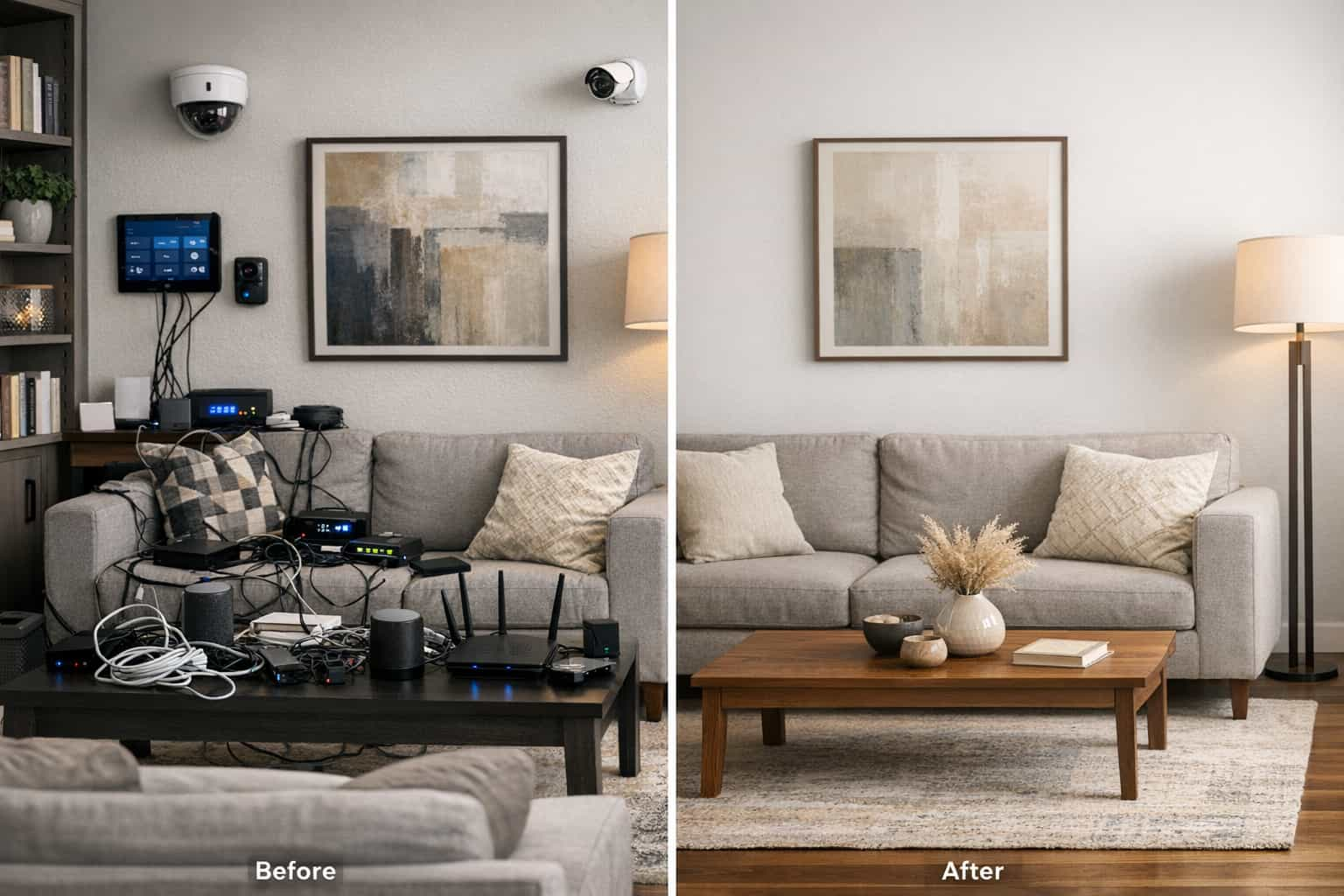
Traditional smart home installations often create “visual pollution” elements that draw unwanted attention and disrupt spatial harmony:
Obvious Technology Markers
- Visible sensors and cameras with harsh industrial designs
- Wall-mounted tablets that resemble commercial installations
- Exposed wiring and bulky power adapters
- Devices with bright, always-on status lights
Clutter Accumulation
- Multiple apps and control interfaces
- Charging stations for numerous devices
- Additional furniture to accommodate tech (server racks, equipment shelves)
- Competing design languages from different manufacturers
Architectural Disruption
- Wall modifications for device mounting
- Unsightly conduit runs for new wiring
- Inconsistent switch plates and outlet covers
- Retrofitted installations that appear tacked-on rather than integrated
The Psychological Impact
Research in environmental psychology reveals that visual clutter significantly impacts wellbeing. Spaces filled with obvious technology can:
- Increase stress and cognitive load
- Reduce feelings of relaxation and sanctuary
- Create subconscious associations with work environments
- Diminish the sense of human-centered design
Conversely, thoughtfully integrated technology supports wellbeing by operating invisibly, maintaining the home as a place of refuge and comfort.
Core Principles of Aesthetic IoT Integration
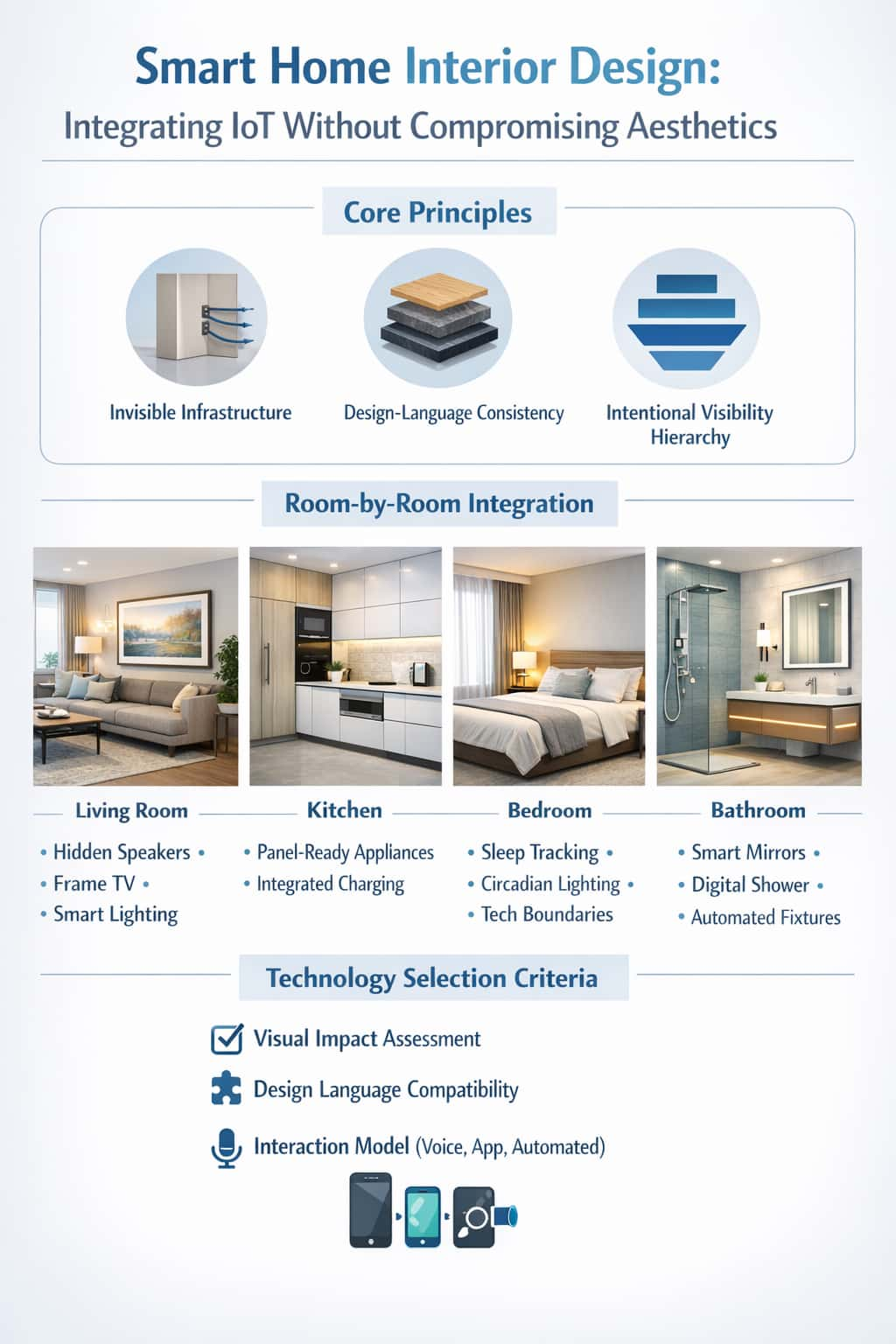
Principle 1: Invisible Infrastructure
The most sophisticated smart homes hide their technological infrastructure entirely, creating an experience where technology serves without announcing itself.
Concealed Wiring and Power
- Plan infrastructure during new construction or major renovations
- Utilize wall cavities, crown molding channels, and furniture integration
- Implement centralized power distribution to eliminate visible adapters
- Design custom enclosures that complement architectural elements
Integrated Mounting Solutions
- Recessed sensors that sit flush with surfaces
- Ceiling-mounted equipment hidden in architectural details
- Furniture-integrated charging and connectivity
- Mirror and artwork mounting systems with hidden tech
Unified Control Surfaces
- Custom switch plates that match existing hardware
- Touch panels that double as decorative elements
- Voice control as the primary interface, eliminating visual controls
- Mobile apps that replace wall-mounted hardware
Principle 2: Design-Language Consistency
Successful integration requires selecting devices that share a cohesive aesthetic vocabulary with your home’s design.
Material Harmony
- Choose devices in materials that complement your palette: brushed brass, matte black, white ceramic, natural wood
- Avoid the default “tech aesthetic” of glossy black plastic when possible
- Consider custom skins or wraps for devices that must remain visible
- Specify finishes during construction for permanent installations
Scale and Proportion
- Select sensors and controls sized appropriately for their locations
- Avoid oversized devices in intimate spaces
- Consider miniaturization options for critical visible elements
- Balance technology presence with human-scale design
Architectural Integration
- Design custom millwork that incorporates technology
- Coordinate device placement with lighting, HVAC, and other systems
- Use technology to enhance rather than compete with focal points
- Consider sight lines and visual weight in placement decisions
Principle 3: Intentional Visibility Hierarchy
Not all technology needs to be hidden. Some devices can become intentional design elements when properly executed.
Statement Technology
- High-design speakers that serve as sculptural objects
- Beautifully crafted smart displays with gallery modes
- Designer lighting fixtures with integrated intelligence
- Art installations that incorporate interactive technology
Seamless Integration
- Televisions that appear as mirrors or artwork when off
- Projection systems that eliminate visible screens
- Climate controls integrated into custom furniture
- Security cameras disguised as decorative objects
Layered Experience
- Design spaces that feel traditionally furnished at first glance
- Reveal technology functionality through interaction rather than appearance
- Create moments of surprise and delight through hidden capabilities
- Maintain human-centered spaces with technology as supporting cast
Room-by-Room Integration Strategies
Living Room: The Connected Sanctuary
The living room presents unique challenges as both a technology hub and primary relaxation space.
Television Integration
- Frame TVs with art displays when not in use
- Motorized artwork that reveals screens
- Projector systems with hidden screens
- Custom cabinetry that conceals displays
Audio Solutions
- Invisible speakers built into walls and ceilings
- Decorative speakers that complement furnishings
- Subwoofers integrated into furniture
- Multi-room audio with zone-specific design
Lighting Design
- Smart lighting that mimics natural daylight patterns
- Circadian rhythm lighting for wellbeing
- Scene-based lighting for different activities
- Hidden LED strips for accent and ambient illumination
Climate and Air Quality
- Integrated HVAC with minimal visible vents
- Air purifiers concealed in millwork
- Humidity and air quality sensors hidden in decor
- Automated window treatments for thermal management
Kitchen: The Intelligent Heart
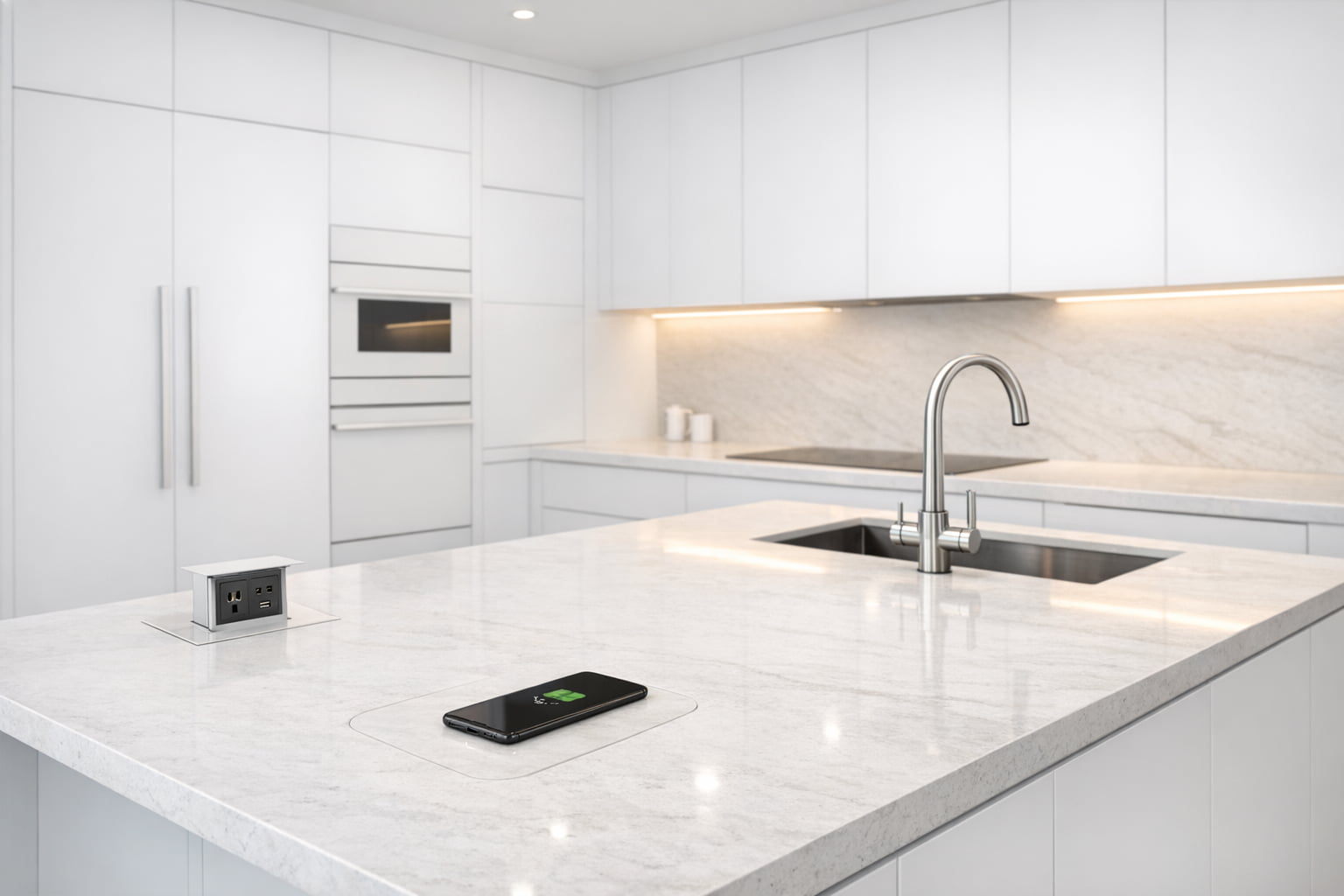
Kitchens demand the most sophisticated integration, balancing numerous appliances with clean design.
Appliance Integration
- Panel-ready appliances that accept cabinet fronts
- Unified control interfaces for multiple devices
- Smart faucets with pull-out spray and voice control
- Integrated charging for kitchen devices
Lighting Strategy
- Task lighting precisely positioned for work zones
- Under-cabinet lighting integrated into toe kicks
- Ambient lighting that adjusts throughout the day
- Accent lighting for display areas
Power and Connectivity
- Pop-up outlets hidden in countertops
- USB charging integrated into drawer organizers
- Wireless charging built into surfaces
- Centralized device storage and charging stations
Inventory and Management
- Smart refrigerators with internal cameras
- Pantry sensors for inventory tracking
- Voice assistants for hands-free operation
- Integrated recipe displays and meal planning
Bedroom: The Tech-Retreat Balance
Bedrooms require the most careful technology integration to maintain their role as sleep sanctuaries.
Sleep Technology
- Non-invasive sleep tracking (under-mattress sensors)
- Smart lighting that supports circadian rhythms
- Automated climate control for optimal sleep temperature
- White noise and sound masking systems
Lighting Control
- Gradual wake-up lighting
- Multiple scene settings (reading, relaxing, dressing)
- Automated blackout with smart shades
- Minimal visible controls (voice or app-based)
Climate Management
- Zoned HVAC for individual preferences
- Air purification for allergen control
- Humidity management for comfort
- Radiant heating for silent operation
Technology Boundaries
- Designated device charging stations outside sleeping area
- Automated “sleep mode” that disables notifications
- Circadian lighting that eliminates blue light at night
- Physical switches for complete technology disconnection
Bathroom: The Connected Spa
Bathrooms offer opportunities for luxurious technology integration when executed thoughtfully.
Smart Fixtures
- Digital showers with precise temperature control
- Smart mirrors with integrated displays
- Automated faucets for hygiene and water conservation
- Heated floors with programmable schedules
Climate and Comfort
- Exhaust fans with humidity sensors
- Towel warmers integrated into design
- Ambient heating for cold surfaces
- Aromatherapy diffusers with smart controls
Lighting Design
- Color-temperature adjustable vanity lighting
- Motion-activated night lighting
- Waterproof fixtures for shower zones
- Scene lighting for different moods
Privacy and Security
- Automatic privacy glass
- Secure storage for devices
- Water leak detection and shutoff
- Occupancy-based automation
Advanced Integration Techniques
The Invisible Home Network
Modern smart homes require robust connectivity that shouldn’t compromise aesthetics.
Network Infrastructure
- Enterprise-grade WiFi with distributed access points
- Hardwired ethernet to stationary devices
- Mesh networks that eliminate visible routers
- Centralized network equipment in utility spaces
Power Distribution
- Whole-home power monitoring and management
- Backup power systems integrated into design
- USB-C power delivery built into surfaces
- Wireless charging embedded in furniture
Control Architecture
- Centralized control systems with distributed interfaces
- Voice control as primary interaction method
- Mobile apps for secondary control
- Minimal wall-mounted interfaces
Custom Integration Solutions
For truly invisible technology, custom solutions often outperform consumer products.
Bespoke Millwork
- Custom cabinetry designed around technology
- Furniture with integrated connectivity
- Architectural elements that conceal equipment
- Decorative panels that provide access to hidden systems
Professional Integration
- Custom programming for seamless operation
- Unified interfaces across multiple systems
- Automated scenes that anticipate needs
- Remote monitoring and maintenance
High-End Components
- Invisible speakers with audiophile quality
- Custom lighting fixtures with smart controls
- Designer security systems
- Integrated climate solutions
Technology Selection Criteria
Evaluating Aesthetic Integration
When selecting smart home devices, apply these criteria:
Visual Impact Assessment
- How visible will this device be in its installed location?
- Does its design complement or compete with surrounding elements?
- Can it be concealed or integrated into existing features?
- What is its visual footprint relative to its functional importance?
Design Language Compatibility
- Does the device share material finishes with the home?
- Is its form factor appropriate for the space?
- Can it be customized to match specific design requirements?
- Does it offer multiple aesthetic options?
Interaction Model
- Can the device be controlled without visible interfaces?
- Does it offer voice, app, and automated control?
- Are indicator lights dimmable or disable-able?
- Does it support presence and context awareness?
Balancing Form and Function
The most successful integrations satisfy both aesthetic and functional requirements:
Performance Standards
- Technology must deliver promised functionality reliably
- Response times should be immediate and consistent
- Integration with other systems should be seamless
- Maintenance and updates should be manageable
Aesthetic Standards
- Technology should enhance rather than detract from spaces
- Visible elements should be intentional design choices
- Infrastructure should be completely concealed when possible
- Overall design should feel cohesive and considered
Implementation Strategies
New Construction Opportunities
Building a smart home from the ground up offers maximum integration potential.
Pre-Construction Planning
- Engage technology designers alongside architects
- Plan infrastructure before structural elements are complete
- Specify integrated systems rather than retrofit solutions
- Design for future expansion and upgrades
Infrastructure Installation
- Run comprehensive low-voltage wiring throughout
- Install distributed equipment racks in utility spaces
- Plan for adequate power and cooling in equipment locations
- Create accessible pathways for future modifications
Finish Coordination
- Select devices during design development phase
- Coordinate switch plates, outlets, and visible elements
- Design custom millwork around technology requirements
- Plan furniture layouts with technology integration
Renovation Strategies
Existing homes require creative approaches to technology integration.
Minimally Invasive Techniques
- Wireless technologies that eliminate new wiring
- Surface-mounted systems that complement architecture
- Furniture-based solutions for rental properties
- Battery-powered devices with long lifespans
Strategic Infrastructure
- Focus wiring investments on high-impact locations
- Use wireless where running cables is impractical
- Plan visible elements as intentional design features
- Phase installation to spread costs over time
Retrofit Products
- Smart switches that fit existing electrical boxes
- Wireless sensors with extended battery life
- Plug-in devices for flexible placement
- Self-contained systems requiring minimal installation
Future-Proofing Your Smart Home
Technology Evolution Considerations
Smart home technology evolves rapidly. Design for adaptability:
Modular Systems
- Choose platforms with upgrade paths
- Avoid proprietary systems with limited compatibility
- Design infrastructure that outlasts specific devices
- Plan for wireless protocol evolution
Infrastructure Capacity
- Install more wiring than currently needed
- Ensure adequate power for future devices
- Plan cooling and ventilation for equipment spaces
- Create accessible pathways for future modifications
Aesthetic Timelessness
- Focus on classic design over trendy tech aesthetics
- Choose neutral finishes that won’t date quickly
- Prioritize invisible solutions over visible gadgets
- Invest in architectural integration that adds lasting value
Emerging Technologies to Consider
Matter Protocol
- New industry standard for device compatibility
- Simplifies integration across brands
- Likely to become baseline requirement
AI Integration
- Predictive automation based on behavior patterns
- Natural language processing for voice control
- Computer vision for context awareness
Energy Management
- Grid-interactive homes for sustainability
- Battery storage integration
- Solar and renewable energy coordination
Health and Wellness
- Air quality monitoring and management
- Circadian lighting as standard
- Sleep optimization technology
Budget Considerations
Investment Priorities
Allocate smart home budgets strategically:
High-Impact Investments
- Integrated lighting systems (transforms spaces daily)
- Climate control (comfort and energy savings)
- Security systems (peace of mind)
- Audio systems (enjoyment value)
Aesthetic Priorities
- Custom millwork for concealment
- High-design visible devices
- Professional integration services
- Unified control systems
Cost-Saving Strategies
- Phase implementation over time
- Prioritize rooms with highest usage
- Choose scalable platforms
- Consider DIY for simple installations
ROI Beyond Dollars
Smart home investments return value in multiple ways:
Energy Efficiency
- Automated climate control reduces utility costs
- Smart lighting minimizes electricity usage
- Water monitoring prevents waste and damage
Time Savings
- Automated routines reduce daily tasks
- Voice control speeds interactions
- Remote management eliminates trips home
Wellbeing Benefits
- Circadian lighting improves sleep
- Air quality management supports health
- Security systems provide peace of mind
Property Value
- Integrated smart homes command premium prices
- Quality infrastructure is lasting investment
- Modern amenities attract buyers
Common Mistakes to Avoid
Design Errors
Technology-First Planning
- Selecting devices before considering spaces
- Allowing visible tech to dominate rooms
- Ignoring sight lines and visual weight
- Choosing function over form inappropriately
Inconsistent Implementation
- Mixing incompatible systems and aesthetics
- Visible infrastructure in some areas but not others
- Different control methods in different rooms
- Technology that feels “added on” rather than designed in
Over-Automation
- Automating functions that benefit from human control
- Creating complex systems that are difficult to use
- Prioritizing novelty over utility
- Technology for technology’s sake
Technical Errors
Insufficient Infrastructure
- Inadequate network coverage
- Insufficient power for devices
- No upgrade pathways
- Poor equipment locations
Proprietary Systems
- Vendor lock-in limits future options
- Discontinued products leave gaps
- Incompatibility with new devices
- Expensive proprietary maintenance
Poor Integration
- Devices that don’t communicate
- Multiple apps for basic functions
- Inconsistent user experiences
- Manual workarounds for simple tasks
The Future of Aesthetic Smart Homes
Evolving Standards
As smart home technology matures, aesthetic integration is becoming standard expectation rather than premium feature:
Design-Forward Products
- Major manufacturers prioritizing aesthetics
- Designer collaborations becoming common
- Customization options expanding
- Invisible technology becoming default
Professional Integration
- Smart home designers as recognized specialty
- Architectural technology consultants
- Integration standards and certifications
- Design-focused installation practices
Consumer Expectations
- Technology as invisible infrastructure
- Aesthetic integration as baseline requirement
- Seamless experience as standard
- Design-forward as competitive advantage
The Ultimate Smart Home Vision
The future smart home will be completely indistinguishable from a beautifully designed traditional home, until it responds to your needs before you articulate them, maintains perfect comfort without visible equipment, and enhances your life while remaining entirely invisible.
This vision is achievable today with thoughtful planning, quality components, and professional integration. The key is approaching smart home technology not as gadgets to be displayed, but as infrastructure to be experienced.
Conclusion: Designing Your Connected Home
Smart home interior design represents the intersection of technology and artistry. By prioritizing aesthetics from the outset, selecting devices that complement rather than compete with your design vision, and implementing technology as invisible infrastructure, you can create spaces that are both highly functional and beautifully human-centered.
The most sophisticated smart homes don’t look smart, they simply work beautifully, anticipating needs, enhancing comfort, and operating so seamlessly that the technology itself becomes forgettable while its benefits become indispensable.
Whether building new or renovating existing spaces, the principles outlined in this guide provide a framework for integrating IoT technology without compromising aesthetics. The result is a home that serves you intelligently while remaining a sanctuary of beauty and comfort.
In today’s evolving homes, smart technology should enhance the way a space feels—not dominate it. True success lies in creating interiors where innovation is seamlessly integrated, allowing comfort, functionality, and aesthetics to coexist effortlessly. At Instyle Deco Paris, we approach every project through the lens of refined interior design in bangkok, ensuring that IoT solutions are thoughtfully embedded into the space—hidden where necessary, and beautifully expressed where appropriate—so the home remains warm, elegant, and human-centered.
Ultimately, a well-designed smart home is not defined by the number of devices it contains, but by how naturally it supports everyday living. By combining advanced technology with a design-first philosophy, Instyle Deco Paris delivers spaces that feel intuitive, timeless, and visually cohesive. As a trusted interior designer bangkok, we help homeowners transform their spaces into intelligent environments that elevate both lifestyle and design—proving that modern living can be both connected and beautifully understated.