
The hotel lobby serves as the first and last impression for guests—a space that either creates friction or flows seamlessly into the hospitality experience. In an era where guest expectations continue to rise, lobby design has evolved from mere functional necessity to strategic differentiator.
Research shows that 78% of hotel guests form their overall impression of a property within the first 15 minutes of arrival. The lobby experience during this critical window determines whether guests feel welcomed, confused, or frustrated. Properties that master lobby flow enjoy higher satisfaction scores, increased return visits, and stronger online reviews.
This guide explores the principles of lobby flow design, examining how spatial planning, technology integration, and human-centered design create guest journeys that feel intuitive, welcoming, and memorable.
Understanding Guest Psychology in Lobby Spaces
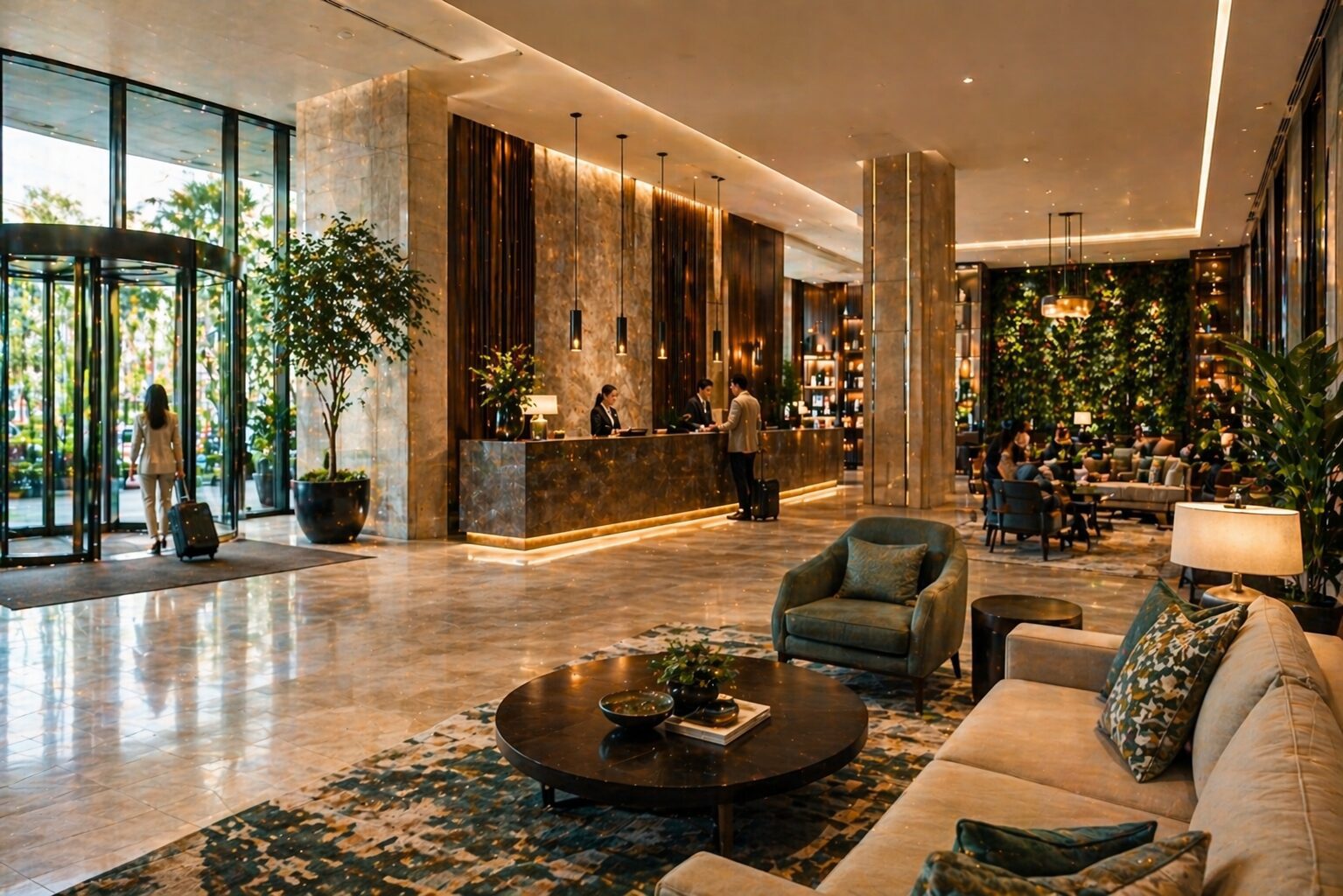
The Arrival Mindset
Guests entering a hotel lobby experience a unique psychological state:
- Transition anxiety: Moving from travel mode to relaxation mode
- Information seeking: Needing clarity about next steps
- Vulnerability: Unfamiliar environment, tired from journey
- Expectation setting: Looking for cues about property quality
Effective lobby design addresses these psychological needs through clear wayfinding, intuitive layouts, and welcoming atmosphere.
The Three-Zone Lobby Concept
Modern lobby design organizes space into three functional zones:
| Zone | Purpose | Guest Need | Design Response |
| Arrival/Transition | Entry and orientation | Wayfinding, reassurance | Clear sightlines, welcoming staff presence |
| Service/Transaction | Check-in and assistance | Efficiency, information | Streamlined desks, technology integration |
| Social/Linger | Relaxation and waiting | Comfort, ambiance | Seating, amenities, atmosphere |
Successful lobbies seamlessly connect these zones while maintaining distinct functional clarity.
Zone 1: The Arrival Experience
Entry Design Principles
The Threshold Moment
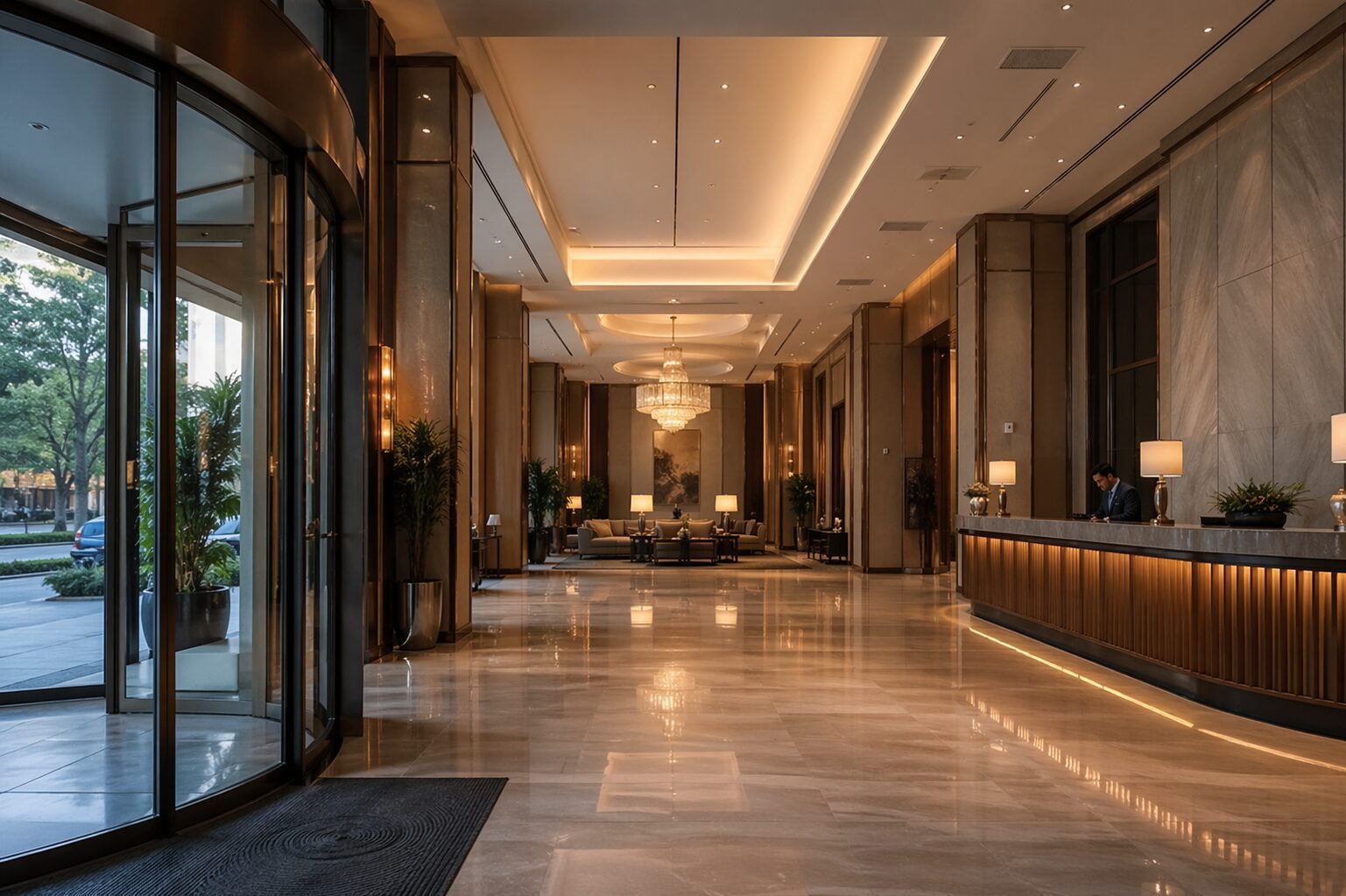
The transition from outside to inside should feel like entering a sanctuary. Key elements include:
- Generous entry width: Minimum 2.4 meters for comfortable group passage
- Weather protection: Overhangs or canopies for rain/sun shelter
- Visual transparency: Glass elements that reveal the lobby interior
- Lighting transition: Gradual brightness adjustment from exterior to interior
Doorman vs. Self-Entry Balance
Properties must balance automated convenience with human warmth:
- Luxury properties: Staffed entry with personalized greeting
- Boutique hotels: Hybrid approach with technology and staff
- Limited service: Clear self-entry with immediate wayfinding
Wayfinding and Orientation
Visual Hierarchy
Guests should immediately understand where to go:
- Primary focal point: Reception desk visible from entry
- Secondary cues: Elevators, elevators, amenities clearly marked
- Tertiary information: Restrooms, business center, fitness facilities
Signage Best Practices:
Place primary directional signs at 15-meter intervals
- Use universal symbols supplemented with text
- Maintain consistent height (1.5-1.7 meters for eye-level reading)
- Illuminate signs for 24-hour visibility
The 30-Second Rule
Guests should locate reception within 30 seconds of entry. Design elements that support this:
- Direct sightlines from entrance to reception
- Contrasting materials or colors highlighting the desk
- Lighting that draws attention to service areas
- Elimination of visual clutter blocking views
Luggage and Mobility Considerations
Circulation Width Standards:
- Primary pathways: 1.8-2.4 meters (allows two wheelchairs to pass)
- Secondary corridors: 1.2-1.5 meters
- Clear turning radius: 1.5 meters for wheelchairs
Luggage Flow Design:
- Dedicated bell stand area near entrance
- Clear path from entry to elevators without crossing reception
- Smooth flooring transitions (no thresholds that catch wheels)
- Adequate space for luggage carts to maneuver
Zone 2: The Service Experience
Reception Desk Design
The Command Position
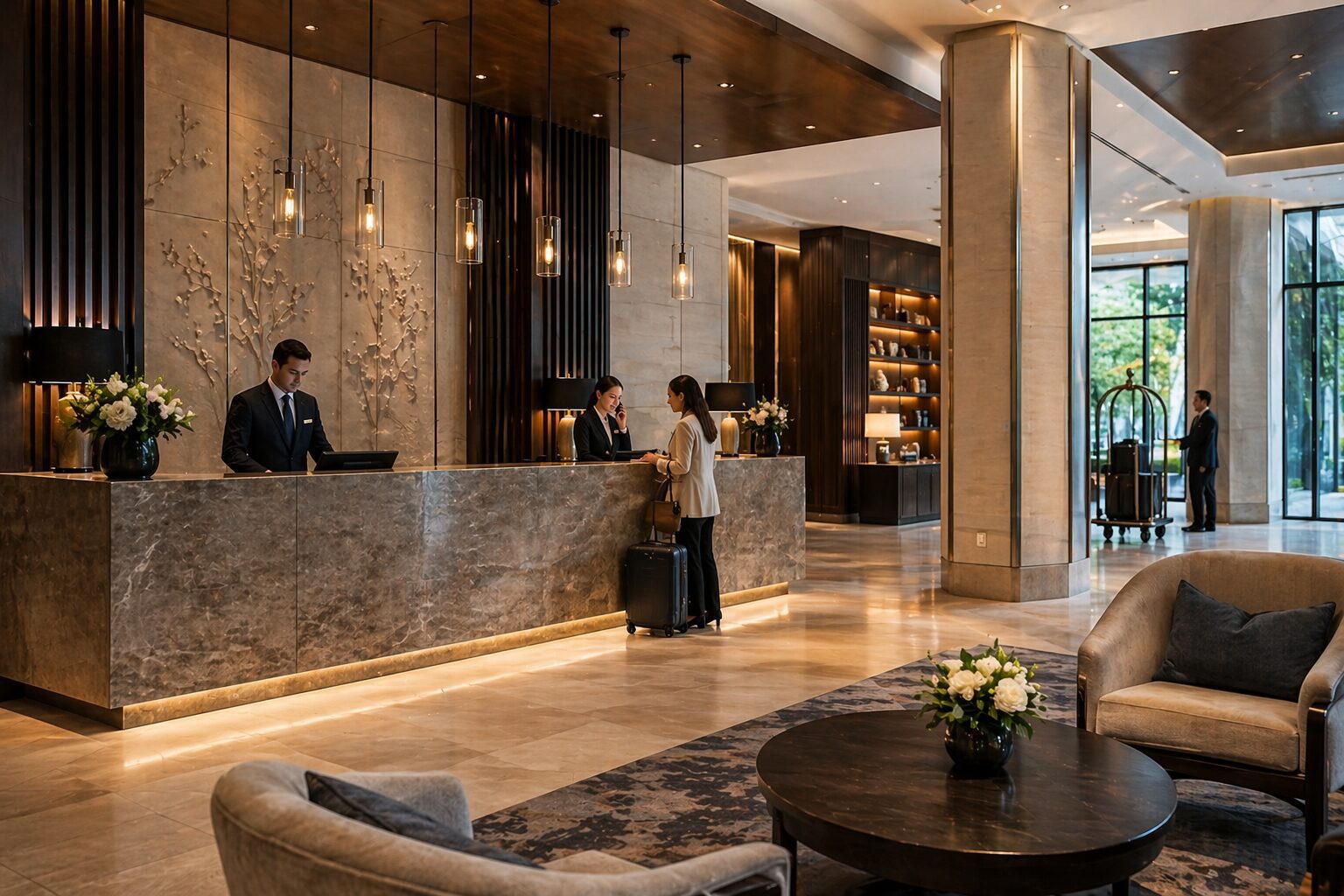
Reception should occupy the lobby’s “command position”—visible from entry while maintaining oversight of the entire space.
Desk Configuration Options:
| Configuration | Best For | Advantages | Considerations |
| Linear counter | Limited service, budget properties | Space efficient, simple | Can feel transactional |
| Pod style | Boutique, lifestyle hotels | Personalized, approachable | Requires more floor space |
| Dual-height | Full-service properties | Accessibility, privacy | Complex construction |
| Floating island | Large lobbies | 360-degree service | Requires substantial space |
Height and Accessibility:
- Standard counter height: 1.1 meters
- Accessible counter sections: 0.76 meters
- Staff work surface: 0.72-0.76 meters
- Transaction ledge: 0.15 meters above counter
Check-In Flow Optimization
The 5-Minute Standard
Industry research indicates guest satisfaction drops significantly when check-in exceeds 5 minutes[^2^]. Design elements that support efficient service:
Technology Integration:
- Mobile check-in stations for pre-registered guests
- Self-service kiosks for simple transactions
- Tablet-based registration for mobile staff
- Digital key delivery systems
Queue Management:
- Single-line queue (fairer than multiple lines)
- Clear waiting area with comfortable seating
- Estimated wait time displays
- Staff visibility to acknowledge waiting guests
Staff Positioning:
- Sufficient workspace for 2-3 staff during peak periods
- Easy access to back-of-house without crossing guest areas
- Sightlines to entrance for greeting arriving guests
- Proximity to concierge and bell services
Concierge and Guest Services
Location Strategy:
The concierge desk should be:
- Adjacent to reception but distinct
- Positioned to intercept guests seeking assistance
- Equipped with comfortable guest seating
- Visible from main lobby areas
Service Integration:
- Shared computer systems between reception and concierge
- Communication tools for staff coordination
- Access to reservation systems and local information
- Storage for luggage, packages, and guest items
Zone 3: The Social Experience
Seating Arrangements
Furniture Grouping Principles:
Effective lobby seating creates natural gathering spaces:
- Intimate clusters: 2-4 seats for private conversations
- Solo seating: Individual chairs for business travelers
- Communal areas: Larger groupings for social interaction
- Flexible arrangements: Movable furniture for events
Spacing Guidelines:
- 1.8-2.4 meters between seat groups (conversation privacy)
- 0.9-1.2 meters between seats within groups
- Clear pathways (1.2 meters minimum) between furniture and circulation
Seating Types by Function:
| Seating Type | Purpose | Typical Placement |
| Lounge chairs | Extended waiting, relaxation | Near windows, away from high traffic |
| Sofas | Groups, families | Central social areas |
| Bar stools | Quick stops, business | Near lobby bar or café |
| Work stations | Business travelers | Quiet corners with power access |
| Perching seats | Brief waits | Near reception, elevators |
Amenities and Features
The Lobby as Living Room
Modern hotel lobbies function as extensions of guest rooms:
Technology Amenities:
- Abundant power outlets (USB and standard)
- High-speed Wi-Fi with simple login
- Business center workstations
- Printing and faxing services
- Device charging stations
Food and Beverage:
- Lobby bar or café
- Grab-and-go market
- Coffee station
- Water stations with fruit infusions
Comfort Features:
- Fireplace or fire feature (real or electric)
- Water features (fountains, aquariums)
- Reading materials and newspapers
- Board games or activity items
- Fresh flowers or plants
Lighting Design
Layered Lighting Approach:
| Layer | Purpose | Fixtures | Brightness |
| Ambient | General illumination | Recessed ceiling, cove lighting | 20–30 footcandles |
| Task | Reading, work | Table lamps, floor lamps | 30–50 footcandles |
| Accent | Feature highlighting | Spotlights, wall washers | Varies by feature |
| Decorative | Atmosphere, style | Chandeliers, pendants | Aesthetic priority |
Circadian Lighting:
- Brighter, cooler light in morning (alertness)
- Warmer, dimmer light in evening (relaxation)
- Automated systems that adjust throughout the day
Technology Integration
Digital Touchpoints
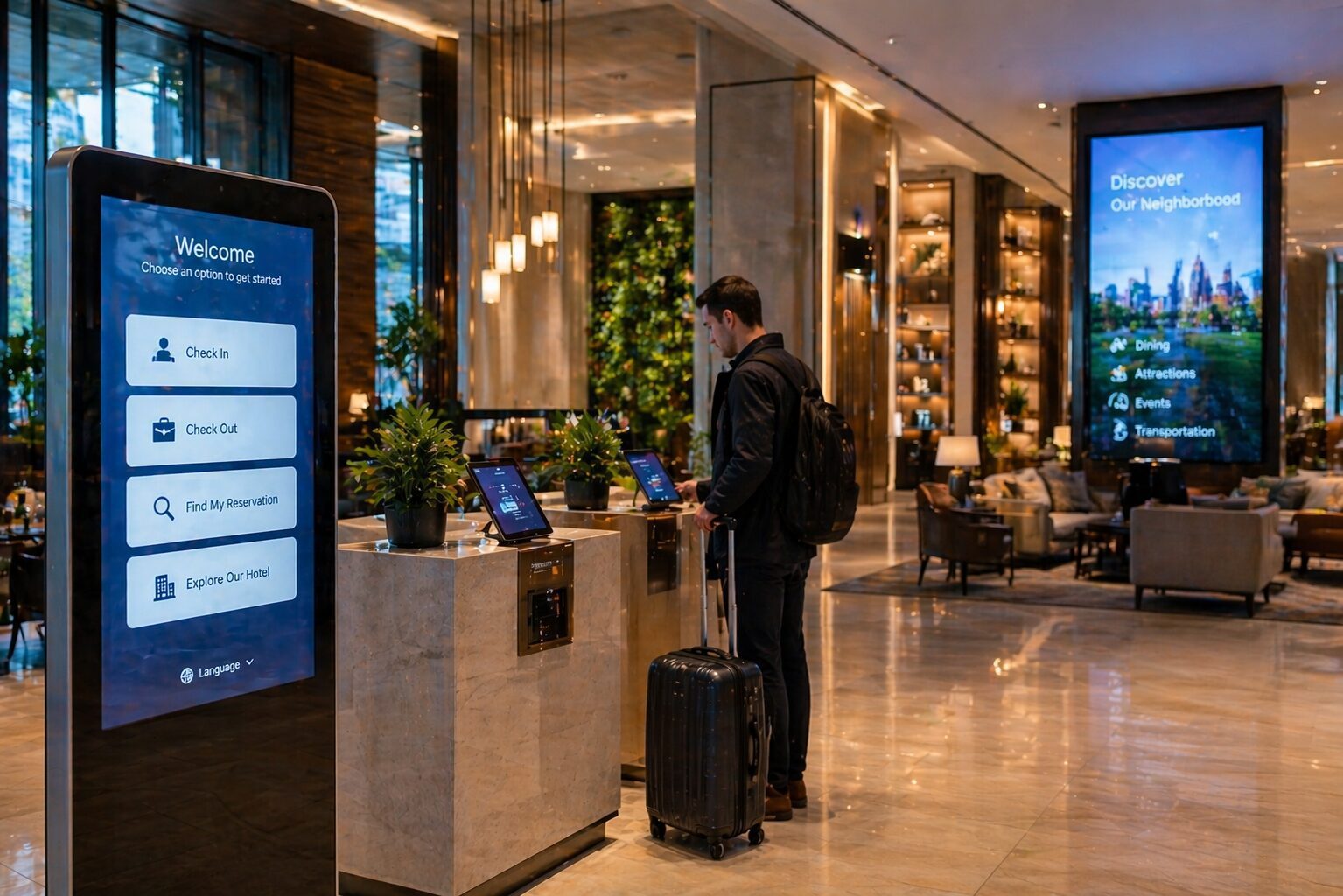
Self-Service Options:
Modern guests expect technology that speeds service:
- Mobile check-in: Skip the desk entirely
- Kiosk check-in: Reduce queue pressure
- Digital concierge: Touchscreen local recommendations
- Room controls: Adjust temperature, lighting from lobby
- Service requests: Housekeeping, maintenance via app
Implementation Best Practices:
- Place technology where staff can assist if needed
- Ensure interfaces are intuitive (test with non-tech users)
- Maintain traditional options for guests who prefer them
- Keep technology updated and functioning
The Back-of-House Tech Layer
Property Management Integration:
Seamless guest experiences require invisible technology:
- PMS integration: Real-time room status updates
- Housekeeping communication: Instant room-ready notifications
- Guest recognition systems: Preference recall for repeat visitors
- Analytics platforms: Track flow patterns and bottlenecks
Staff Communication Tools:
- Wireless headsets for coordination
- Tablet-based task management
- Instant messaging systems
- Alert systems for VIP arrivals
Sensory Design Elements
Acoustic Management
The Sound of Hospitality
Lobby acoustics significantly impact guest perception:
Noise Sources to Manage:
- HVAC systems (target: NC 30-35)
- Elevator machinery
- Kitchen and bar operations
- Street noise from entrances
- Guest conversations (echo control)
Acoustic Treatments:
- Sound-absorbing ceiling materials
- Upholstered furniture and drapery
- Carpeting in seating areas
- Water features (mask background noise)
- Background music (consistent volume, appropriate genre)
Scent Marketing
Olfactory Branding:
Scent creates powerful emotional connections:
- Signature fragrances: Unique to property brand
- Seasonal variations: Adjust for holidays or local events
- Subtle application: Noticeable but not overwhelming
- Consistent delivery: Even distribution throughout space
Common Hotel Scent Profiles:
- Citrus and herbal (fresh, energizing)
- Vanilla and amber (warm, comforting)
- Green tea and bamboo (calming, Asian properties)
- Local botanicals (destination-specific)
Temperature and Air Quality
Comfort Standards:
- Temperature: 20-22°C (68-72°F)
- Humidity: 40-60%
- Air changes: 6-8 per hour
- CO2 monitoring: Maintain below 1000 ppm
Thailand-Specific Considerations:
- Enhanced dehumidification for tropical climate
- Air filtration for urban pollution
- Temperature zoning (cooler near entrances)
- Natural ventilation options when weather permits
Flow Patterns and Circulation
The Guest Journey Map
Typical Lobby Touchpoints:
- Entry (0-30 seconds)
-
- Door approach
- Threshold crossing
- Initial orientation
- Reception (2-5 minutes)
-
- Queue or approach
- Transaction
- Key/room information
- Transition (1-2 minutes)
-
- Elevator lobby
- Wayfinding to amenities
- Luggage handling
- Departure (3-5 minutes)
-
- Check-out transaction
- Luggage retrieval
- Exit sequence
Circulation Design Principles
Separation of Flows:
| Flow Type | Characteristics | Design Response |
| Guest arrival | Luggage, uncertainty, fatigue | Clear sightlines, welcoming staff |
| Guest departure | Time pressure, luggage | Efficient checkout, easy exit |
| In-house guests | Familiarity, purpose | Direct routes to elevators/amenities |
| Staff operations | Efficiency, speed | Back-of-house corridors, service elevators |
| Visitor traffic | Brief stays, meetings | Separate seating, clear signage |
Avoiding Conflicts:
- Separate arrival and departure flows when possible
- Distinguish guest and visitor areas
- Minimize crossing paths between different flow types
- Provide clear differentiation through flooring, lighting, or signage
Design for Different Property Types
Luxury Hotels
Characteristics:
- Generous space allowances (lobby = 10-15% of total floor area)
- High staff-to-guest ratios
- Extensive seating and amenities
- Art and design as focal points
- Personalized service emphasis
Flow Priorities:
- Greeting rituals and welcome sequences
- Privacy for VIP guests
- Seamless luggage handling
- Multiple service touchpoints
Boutique Hotels
Characteristics:
- Smaller scale, intimate atmosphere
- Design-forward aesthetic
- Local cultural integration
- Limited but efficient service
Flow Priorities:
- Immediate staff connection
- Efficient use of compact space
- Unique arrival experiences
- Social atmosphere creation
Business Hotels
Characteristics:
- Function over form
- Speed and efficiency emphasis
- Technology integration
- Limited social spaces
Flow Priorities:
- Rapid check-in/check-out
- Business service accessibility
- Efficient elevator access
- Minimal wait times
Resort Properties
Characteristics:
- Indoor-outdoor transitions
- Leisure pace and atmosphere
- Activity information centers
- Luggage and equipment handling
Flow Priorities:
- Vacation mindset transition
- Activity booking and information
- Pool and beach access routes
- Group arrival management
Measuring Lobby Flow Success
Quantitative Metrics
Operational Data:
- Average check-in time
- Queue lengths and wait times
- Staff utilization rates
- Guest traffic patterns (heatmap analysis)
- Elevator wait times
Guest Feedback:
- Satisfaction scores (lobby-specific questions)
- Online review sentiment analysis
- Mystery shopper evaluations
- Complaint categories and frequency
Qualitative Assessment
Observation Studies:
- Guest behavior mapping
- Confusion points identification
- Staff-guest interaction quality
- Bottleneck identification
Staff Feedback:
- Operational pain points
- Guest question patterns
- Space utilization effectiveness
- Improvement suggestions
Common Lobby Flow Mistakes
1. Insufficient Reception Visibility
Problem: Guests cannot locate check-in upon entry.
Solution: Ensure reception is visible from the main entrance; use lighting and design elements to draw attention.
2. Inadequate Queuing Space
Problem: Lines spill into circulation paths or seating areas.
Solution: Design dedicated queue areas with sufficient depth for peak periods.
3. Conflicting Circulation Paths
Problem: Arriving guests, departing guests, and visitors cross paths creating congestion.
Solution: Separate flows through spatial planning or timing.
4. Neglected Technology Integration
Problem: Technology added as an afterthought rather than integrated design element.
Solution: Plan digital touchpoints during initial design; ensure they complement rather than clutter the space.
5. One-Size-Fits-All Seating
Problem: Seating doesn’t accommodate different guest needs (solo business traveler vs. family group).
Solution: Provide variety in seating types and arrangements.
Future Trends in Lobby Design
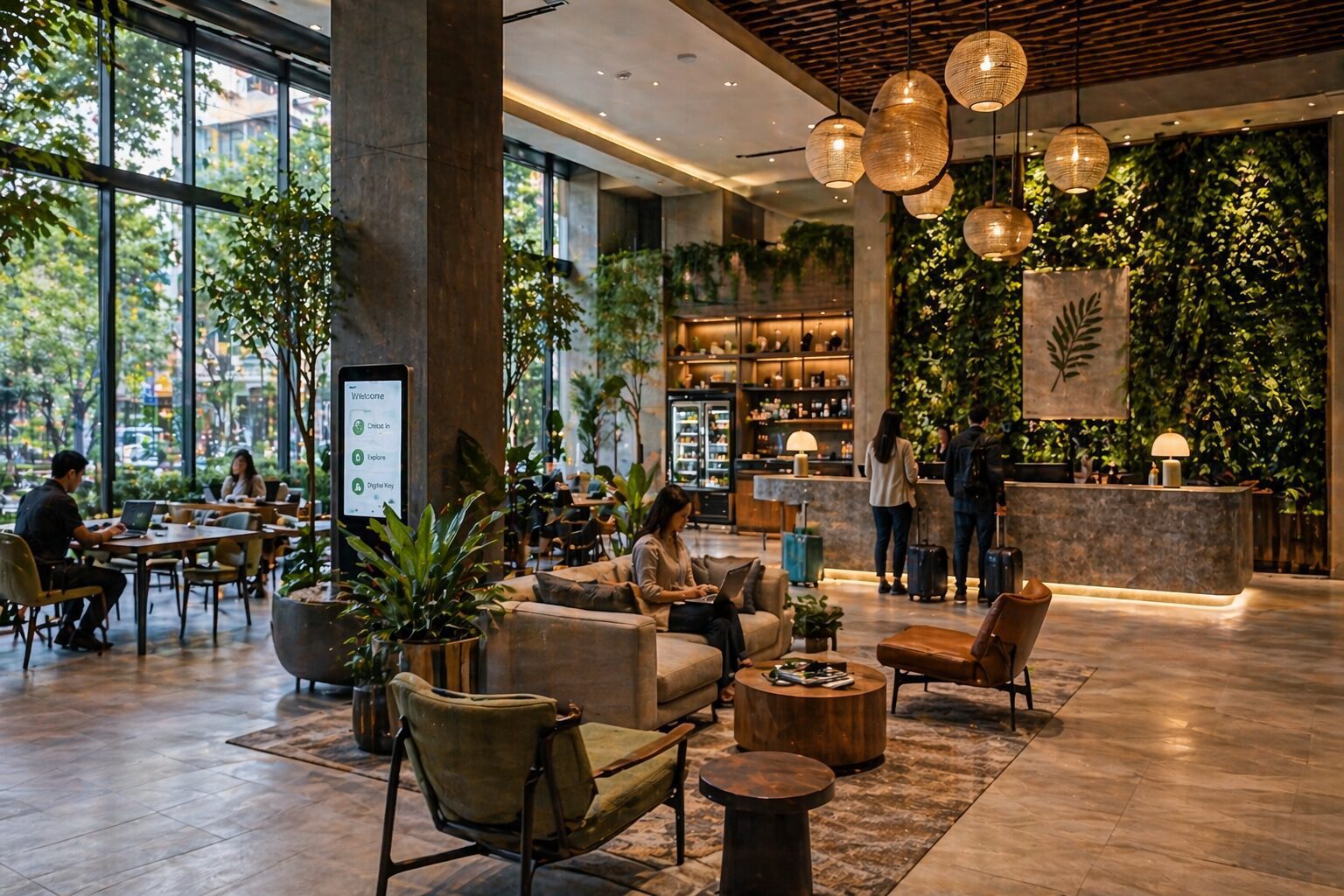
Contactless Service
Post-pandemic expectations include:
- Mobile-first check-in
- Digital room keys
- Voice-activated controls
- Reduced touchpoints
Flexible Spaces
Multi-functional lobbies that adapt:
- Movable furniture for events
- Day-to-night transitions
- Work space by day, social space by evening
- Pop-up retail or food concepts
Sustainability Features
Environmental consciousness in design:
- Natural ventilation systems
- Living walls and biophilic elements
- Sustainable materials
- Energy-efficient lighting and HVAC
Local Integration
Lobbies that reflect destination:
- Local art and cultural elements
- Regional food and beverage offerings
- Community gathering spaces
- Neighborhood information and connections
Conclusion: The Lobby as Strategic Asset
Hotel lobby design directly impacts guest satisfaction, operational efficiency, and brand perception, making it far more than just a transitional space. The most successful lobbies balance functionality with warmth, efficiency with hospitality, and technology with human connection, creating memorable first impressions that influence guest loyalty and overall revenue performance. For hotel developers and operators, prioritizing lobby flow design from the earliest planning stages is essential, especially when supported by expert interior design in Bangkok. Firms like Instyle Deco Paris help transform hotel lobbies into strategic hospitality assets by designing elegant, functional, and welcoming spaces that reflect both brand identity and guest expectations.