
The Heart of the Thai Home
The kitchen holds special significance in Thai culture—a space where family gathers, where aromatic curries simmer for hours, and where the complex balance of sweet, sour, salty, and spicy flavors comes to life. In Bangkok’s modern homes, kitchen design must balance traditional cooking needs with contemporary space constraints and lifestyle demands.
Bangkok presents unique challenges for kitchen design. Condominiums often offer compact spaces of 6-10 square meters, while traditional townhouses may have larger but awkwardly configured kitchens. The tropical climate demands ventilation and cooling considerations, and the prevalence of wok cooking requires powerful exhaust systems.
This guide explores kitchen layouts optimized for Bangkok homes, considering Thai cooking practices, space efficiency, and modern lifestyle needs.
Understanding Thai Cooking Requirements
The Five Essential Work Zones
Thai cooking requires specific spatial considerations:
| Zone | Function | Thai Cooking Needs | Space Requirements |
|---|---|---|---|
| Prep Zone | Washing, chopping, marinating | Large cutting surfaces, proximity to sink | 1.2-1.5m counter space |
| Cook Zone | Wok cooking, frying, boiling | High-BTU burners, powerful ventilation | 0.9-1.2m per cook |
| Steam Zone | Rice cooking, steaming | Rice cooker placement, steam management | Counter space near cooktop |
| Storage Zone | Ingredients, utensils, equipment | Spice storage, wok storage, bulk items | 3-4m linear cabinetry |
| Clean Zone | Washing, drying, waste | Large sink, dish drying, trash separation | 1.5-2m total length |
Heat and Ventilation Considerations
Wok Cooking Requirements:
- High-heat cooking (up to 15,000 BTU for home woks)
- Significant steam and oil vapor production
- Rapid temperature changes
- Frequent tossing and stirring movements
Ventilation Standards:
- Minimum 600 CFM exhaust for wok cooking
- Hood coverage extending 150mm beyond cooktop edges
- Ducted ventilation preferred over recirculating
- Make-up air provision for powerful exhaust
Kitchen Layout Types for Bangkok Homes
1. The Galley Kitchen (Two Parallel Counters)
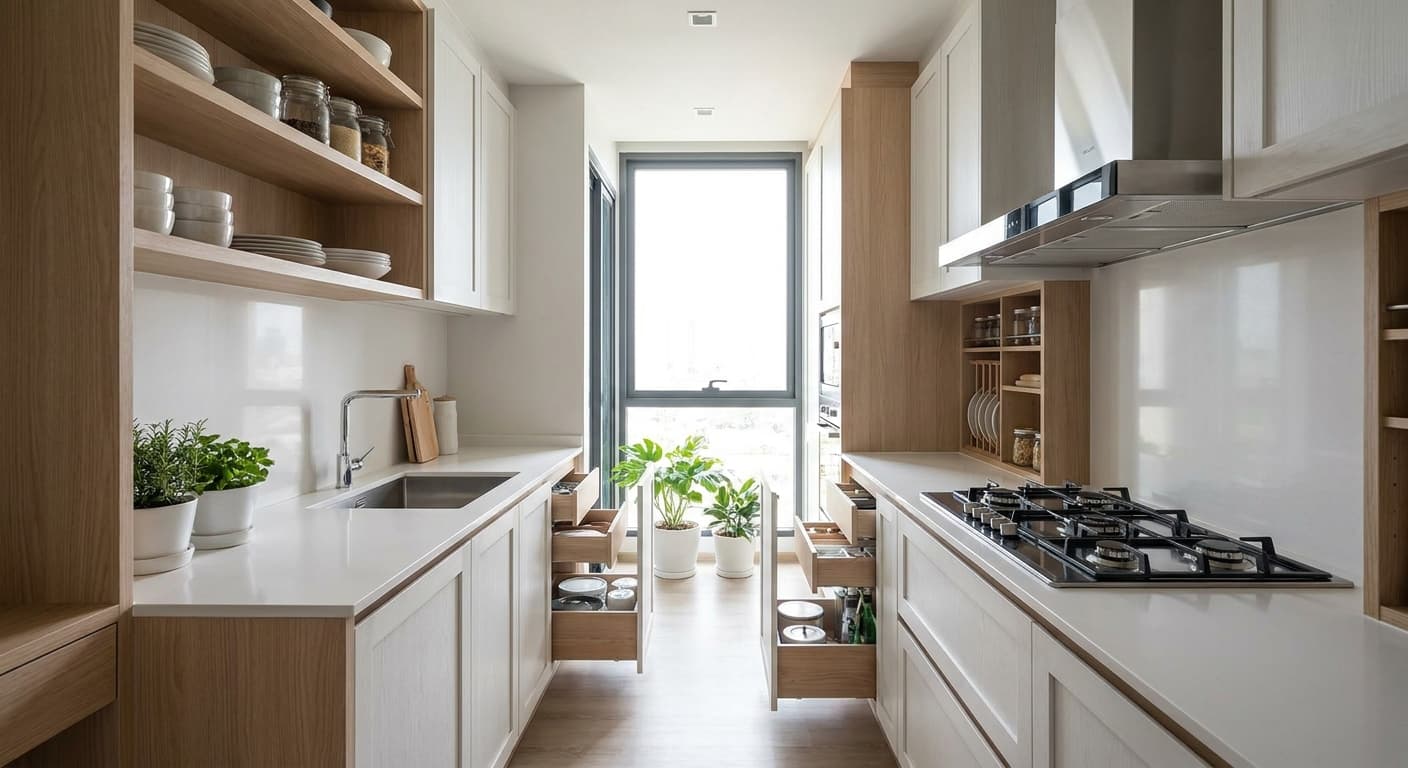
Best For: Narrow spaces, condominiums 6-8 sqm
Layout Specifications:
- Two parallel counters 1.2-1.5 meters apart
- Work triangle compressed linearly
- Maximum efficiency in minimal space
Thai Cooking Adaptations:
- One side dedicated to wet prep (sink, washing)
- Opposite side for dry prep and cooking
- Powerful ventilation at cooktop end
- Open shelving for frequently used spices
Bangkok Condo Application:
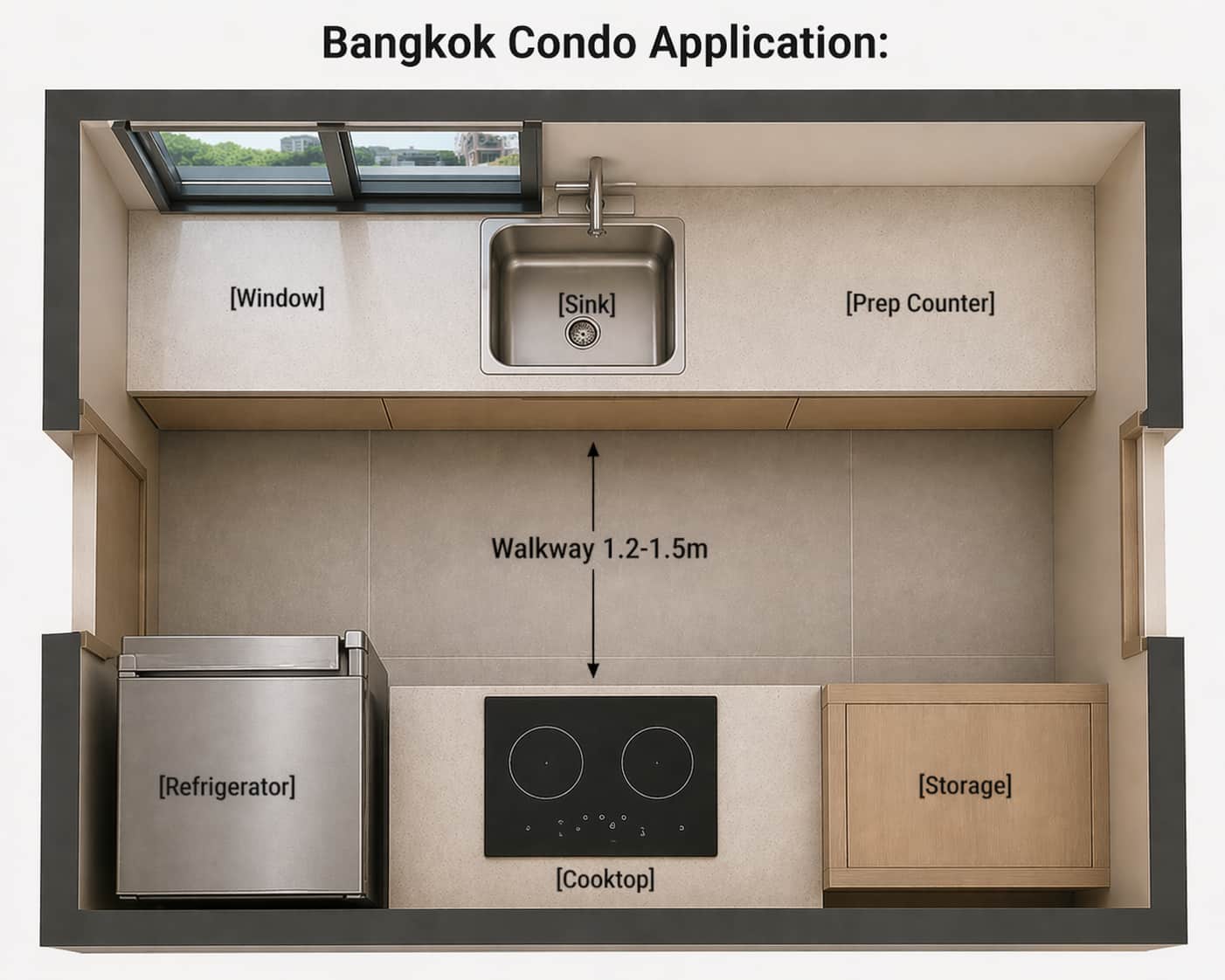
- [Window] [Sink] [Prep Counter]
- [Walkway 1.2-1.5m]
- [Refrigerator] [Cooktop] [Storage]
Advantages:
- Efficient work flow
- Compact footprint
- Easy ventilation ducting
- Cost-effective cabinetry
Challenges:
- Limited counter space
- Single cook capacity
- Traffic flow constraints
2. The L-Shaped Kitchen
Best For: Corner spaces, open-plan layouts, 8-12 sqm
Layout Specifications:
- Two perpendicular counter runs
- Corner optimization with lazy susan or lemans unit
- Natural work triangle formation
Thai Cooking Adaptations:
- Longer leg for primary prep and cooking
- Shorter leg for storage and appliances
- Corner space for rice cooker and small appliances
- Peninsula option for casual dining
Bangkok Townhouse Application:
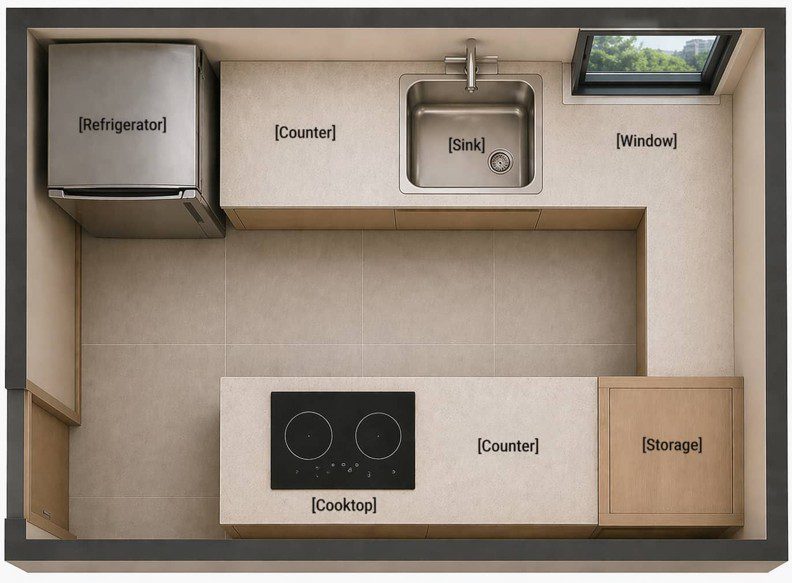
- [Refrigerator] [Counter] [Sink] [Window]
- [Corner]
- [Cooktop] [Counter] [Storage]
Advantages:
- Flexible space utilization
- Multiple work zones
- Social interaction possible
- Good for open-plan living
Challenges:
- Corner storage complexity
- Requires more space than galley
- Ventilation routing may be complex
3. The U-Shaped Kitchen
Best For: Dedicated kitchen rooms, 10-15 sqm
Layout Specifications:
- Three connected counter runs
- Enclosed work area
- Maximum storage and counter space
Thai Cooking Adaptations:
- Central cooktop with prep on both sides
- Abundant storage for Thai cooking equipment
- Space for multiple family members cooking together
- Dedicated appliance garage for small equipment
Traditional Thai Home Application:
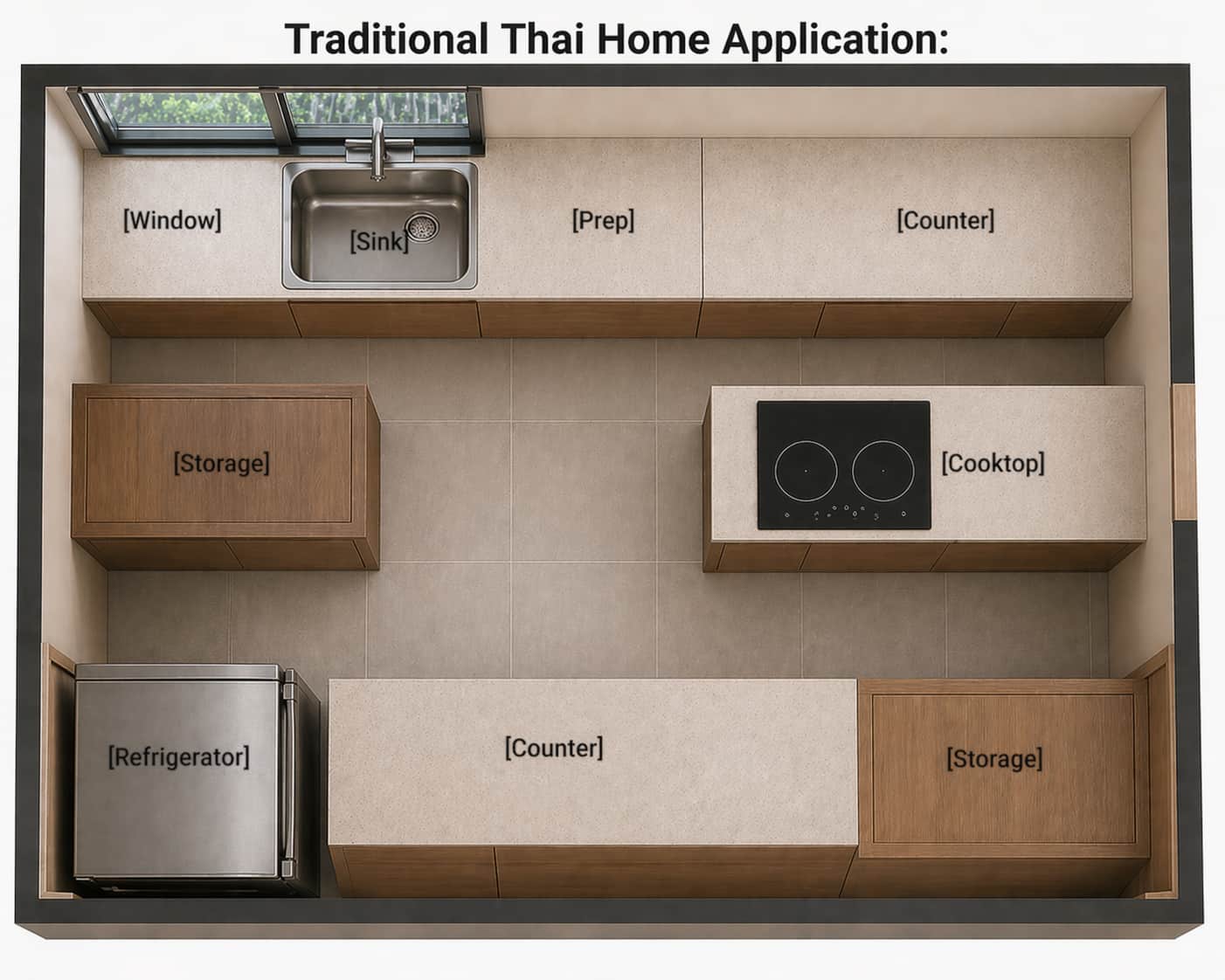
- [Window] [Sink] [Prep] [Counter]
- [Storage][Cooktop]
- [Refrigerator] [Counter] [Storage]
Advantages:
- Maximum efficiency
- Multiple cooks possible
- Abundant storage
- Clear work zones
Challenges:
- Requires significant space
- Can feel enclosed
- Corner cabinets add cost
4. The Island Kitchen
Best For: Large open-plan spaces, 15+ sqm
Layout Specifications:
- Perimeter counters plus central island
- Island serves multiple functions
- Social and cooking space combined
Thai Cooking Adaptations:
- Island cooktop with downdraft ventilation
- Prep sink in island for secondary work zone
- Breakfast bar for casual dining
- Display space for decorative Thai ceramics
Luxury Bangkok Condo Application:
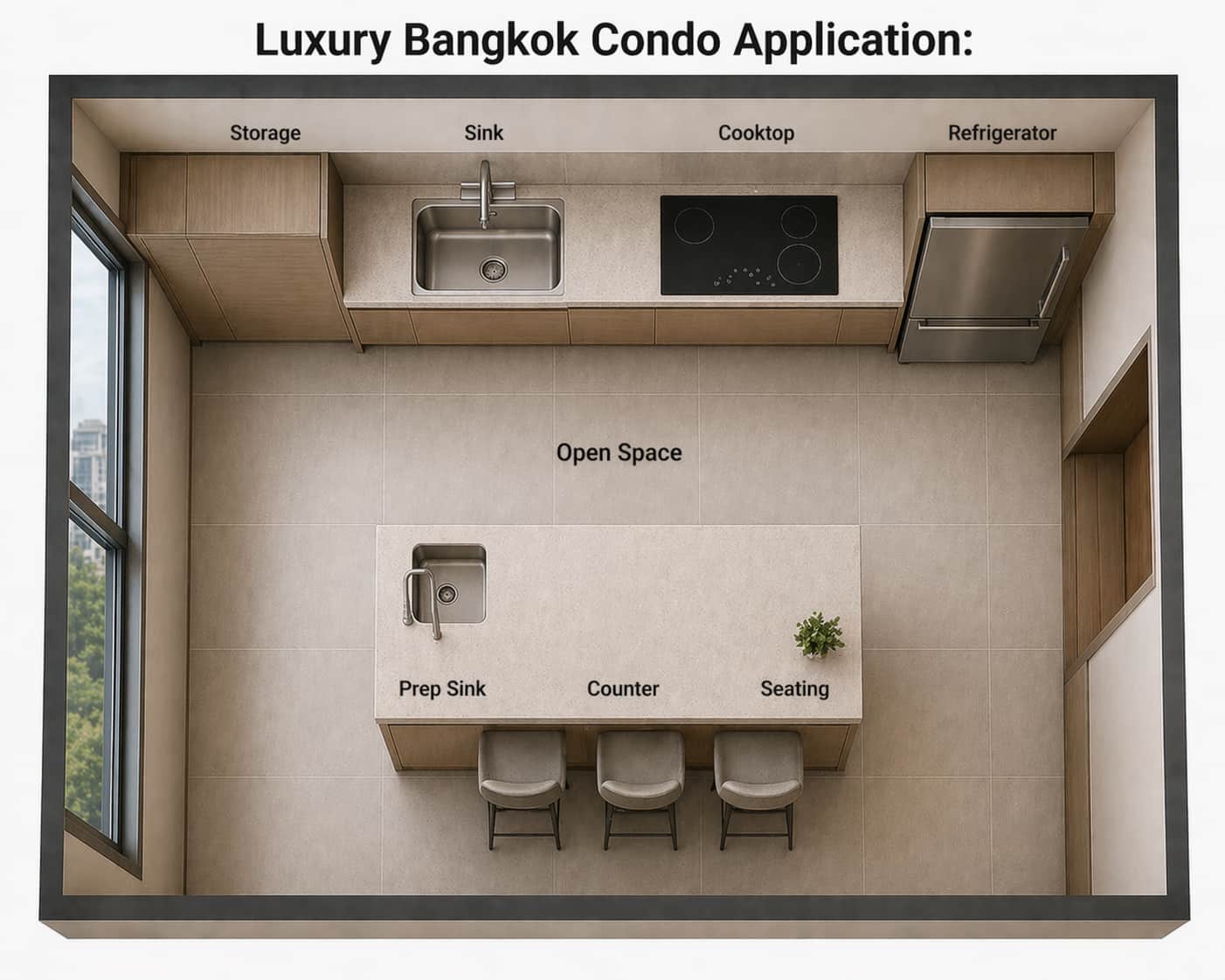
- [Perimeter: Storage-Sink-Cooktop-Refrigerator]
- [Open Space]
- [Island: Prep Sink-Counter-Seating]
Advantages:
- Social cooking environment
- Multiple work zones
- Flexible functionality
- Modern aesthetic
Challenges:
- Requires substantial space
- Ventilation complexity for island cooktops
- Higher construction costs
Space-Efficient Solutions for Bangkok Condos
Compact Appliance Selection
Refrigerators:
- Bottom-freezer models (better access to fresh items)
- Counter-depth for space efficiency
- 250-350L capacity for 1-2 person households
- 400-550L for families
Cooktops:
- 60cm width minimum for Thai cooking
- Three-burner minimum (wok burner + two standard)
- Gas preferred for wok cooking control
- Induction as alternative (faster, cleaner, safer)
Range Hoods:
- Wall-mounted chimney style (600-900mm width)
- Under-cabinet for space savings
- Minimum 600 CFM for Thai cooking
- Ducted ventilation essential
Vertical Storage Solutions
Wall-Mounted Systems:
- Magnetic knife strips
- Hanging pot racks
- Wall-mounted spice racks
- Pegboard systems for utensils
Tall Cabinetry:
- Floor-to-ceiling pantries
- Pull-out larder units
- Corner carousel systems
- Appliance garages
Overhead Storage:
- Ceiling-mounted pot racks
- Suspended shelving
- Under-cabinet lighting with integrated storage
Multi-Functional Furniture
Folding and Extendable Elements:
- Drop-leaf counter extensions
- Fold-down prep tables
- Nesting stools and chairs
- Rolling islands
Hidden Storage:
- Toe-kick drawers
- Window seat storage
- Stair-adjacent pantries
- Built-in banquettes
Material Selection for Bangkok’s Climate
Countertop Materials
| Material | Pros | Cons | Best Application |
|---|---|---|---|
| Quartz | Non-porous, stain-resistant, low maintenance | Heat sensitive, higher cost | Primary prep areas |
| Granite | Heat resistant, durable, natural beauty | Requires sealing, can stain | Cooktop surrounds |
| Stainless Steel | Hygienic, heat proof, professional look | Shows scratches, fingerprints | Professional kitchens |
| Solid Surface | Seamless, repairable, versatile | Heat sensitive, scratches | Budget-conscious projects |
| Tile | Heat proof, affordable, design options | Grout maintenance, uneven surface | Backsplashes, accents |
Cabinetry Materials
Moisture-Resistant Options:
- Marine-grade plywood (best for tropical climate)
- Medium-density fiberboard (MDF) with moisture-resistant treatment
- Solid wood with proper sealing (teak, rubberwood)
- Aluminum frame systems with glass or acrylic panels
Finish Considerations:
- Gloss finishes (easier cleaning, reflect light)
- Matte finishes (hide fingerprints, modern aesthetic)
- Thermofoil (seamless, moisture-resistant)
- Lacquer (durable, high-gloss option)
Flooring Options
Thai Kitchen Requirements:
- Water resistance
- Slip resistance when wet
- Easy cleaning
- Comfort underfoot
Recommended Materials:
- Porcelain tile (durable, water-resistant, cool underfoot)
- Luxury vinyl tile (comfortable, affordable, easy install)
- Epoxy flooring (seamless, extremely durable)
- Polished concrete (industrial aesthetic, very durable)
Lighting Design for Thai Kitchens
Layered Lighting Approach
Task Lighting:
- Under-cabinet LED strips (3000-4000K color temperature)
- Pendant lights over islands (750-900mm above counter)
- Recessed downlights over work areas
- Minimum 500 lux on work surfaces
Ambient Lighting:
- Ceiling-mounted fixtures
- Cove lighting for soft glow
- Dimmable controls for flexibility
- Natural light maximization
Accent Lighting:
- Interior cabinet lighting
- Toe-kick lighting for night navigation
- Display lighting for decorative items
- Backsplash illumination
Thai Cooking Considerations:
- High CRI (Color Rendering Index 90+) for accurate food color assessment
- Heat-resistant fixtures near cooktops
- Easy-clean surfaces (grease accumulation)
- Motion sensors for hands-free operation
Ventilation Strategies
The Importance of Proper Exhaust
Thai cooking produces significant smoke, steam, and odors. Inadequate ventilation leads to:
- Grease accumulation on surfaces
- Persistent cooking odors
- Poor indoor air quality
- Mold and mildew growth
Exhaust System Design
Ducted Systems (Preferred):
- Direct outdoor exhaust of cooking fumes
- No filter maintenance (except grease filters)
- Most effective for Thai cooking
- Requires exterior wall access or vertical ducting
Recirculating Systems (When Ducting Impossible):
- Charcoal filters require regular replacement
- Less effective for heavy cooking
- Suitable for light cooking only
- Not recommended for wok cooking
Make-Up Air:
- Powerful exhaust (600+ CFM) requires air replacement
- Window or door openings
- Dedicated make-up air ducts
- Prevents negative pressure issues
Natural Ventilation
Cross-Ventilation Design:
- Position windows on opposite walls when possible
- Use of transom windows above doors
- Courtyard access for traditional Thai homes
- Ceiling fans for air circulation
Storage Solutions for Thai Cooking
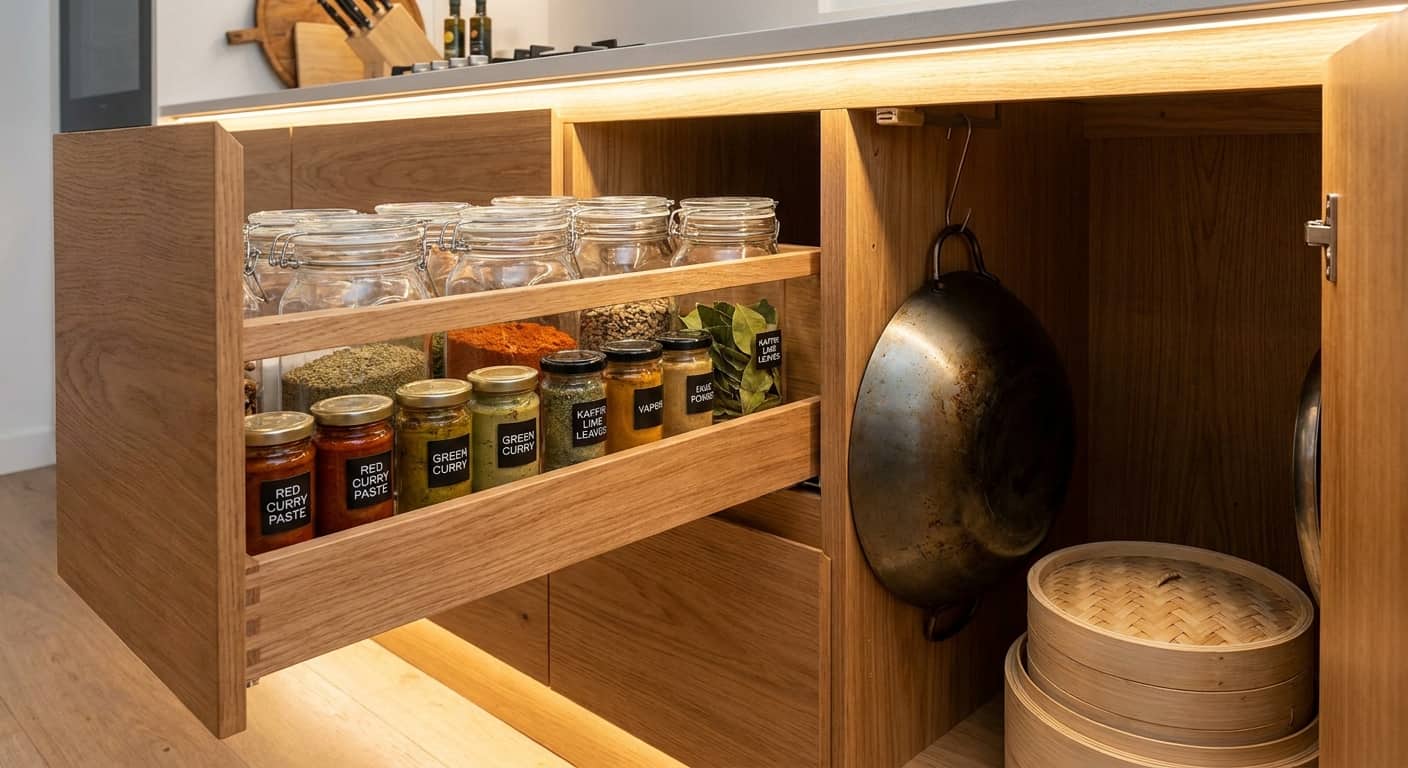
Spice and Ingredient Storage
Thai Kitchen Essentials:
- 15-20 regular spices and spice blends
- Multiple curry pastes (red, green, yellow, massaman)
- Fermented ingredients (fish sauce, shrimp paste)
- Fresh herbs (galangal, lemongrass, kaffir lime)
- Coconut milk and cream
Storage Solutions:
- Pull-out spice racks near cooktop
- Refrigerated drawers for fresh herbs
- Airtight containers for dry goods
- Lazy susans for corner storage
- Labeling systems for quick identification
Wok and Equipment Storage
Wok Storage:
- Hanging racks for carbon steel woks
- Cabinet storage with protective liners
- Lid storage solutions
- Seasoning oil accessibility
Small Appliance Storage:
- Rice cooker (daily use, countertop or pull-out shelf)
- Blender/food processor (weekly use, cabinet storage)
- Mortar and pestle (traditional, display or drawer)
- Steamer baskets (nested storage)
Pantry Design
Dry Goods Storage:
- Jasmine rice (bulk storage, 10-25kg capacity)
- Noodles (various types, organized by use)
- Canned coconut milk and curry pastes
- Dried mushrooms and seafood
Organization Systems:
- Clear containers for visibility
- First-in-first-out rotation
- Climate control (cool, dry environment)
- Pest prevention measures
Ergonomics and Workflow
The Work Triangle
Classic Kitchen Triangle:
- Sink to refrigerator: 1.2-2.7 meters
- Refrigerator to cooktop: 1.2-2.7 meters
- Cooktop to sink: 1.2-2.7 meters
- Total perimeter: 4-7.5 meters
Thai Cooking Adaptations:
- Add rice cooker as fourth point
- Consider prep area as separate zone
- Account for multiple simultaneous tasks
- Include serving/plating area
Counter Height Standards
Primary Counter: 900mm (standard)
Prep Counter: 900-950mm (taller users)
Seating Counter: 1050mm (bar height)
Accessible Counter: 750-800mm (wheelchair access)
Reach Zones
Primary Zone (Easy Reach):
- 600-1200mm from floor
- Daily use items
- No bending or stretching required
Secondary Zone (Moderate Reach):
- 300-600mm and 1200-1800mm
- Weekly use items
- Some bending or reaching acceptable
Tertiary Zone (Storage):
- Below 300mm and above 1800mm
- Occasional use items
- Requires bending or step stool
Budget Considerations
Cost Breakdown by Category
| Category | Budget (THB) | Mid-Range (THB) | Premium (THB) |
|---|---|---|---|
| Cabinetry | 50,000-100,000 | 150,000-300,000 | 400,000+ |
| Countertops | 20,000-50,000 | 60,000-120,000 | 150,000+ |
| Appliances | 30,000-80,000 | 100,000-200,000 | 300,000+ |
| Plumbing | 10,000-20,000 | 25,000-50,000 | 75,000+ |
| Electrical | 10,000-20,000 | 25,000-40,000 | 60,000+ |
| Ventilation | 15,000-30,000 | 40,000-80,000 | 100,000+ |
| Installation | 20,000-40,000 | 50,000-100,000 | 150,000+ |
Total Kitchen Budget Ranges:
- Budget: 155,000-340,000 THB
- Mid-Range: 450,000-890,000 THB
- Premium: 1,235,000+ THB
Cost-Saving Strategies
Without Compromising Function:
- Keep existing layout (avoid plumbing relocation)
- Standard cabinet sizes (reduce custom work)
- Mid-range appliances (reliable without luxury)
- Tile backsplashes (affordable, durable)
- Open shelving (reduces upper cabinet costs)
Common Mistakes in Bangkok Kitchen Design
1. Inadequate Ventilation
Mistake: Installing standard range hoods insufficient for Thai cooking.
Solution: Size ventilation for wok cooking (600+ CFM), ensure ducted exhaust when possible.
2. Insufficient Counter Space
Mistake: Prioritizing appliance space over prep area.
Solution: Minimum 1.2m continuous prep counter; prioritize prep space over storage.
3. Poor Traffic Flow
Mistake: Kitchen becomes thoroughfare to other rooms.
Solution: Design dedicated kitchen circulation; avoid cross-traffic through work triangle.
4. Inadequate Lighting
Mistake: Single overhead fixture providing poor task illumination.
Solution: Layered lighting with under-cabinet task lights, minimum 500 lux on work surfaces.
5. Insufficient Storage for Thai Cooking
Mistake: Standard storage doesn’t accommodate woks, large pots, bulk rice.
Solution: Plan storage specifically for Thai cooking equipment and ingredients.
Conclusion: Creating Efficient Bangkok Kitchens
Effective kitchen design in Bangkok requires balancing traditional Thai cooking needs with modern space constraints and lifestyle demands. The best layouts prioritize ventilation, provide adequate prep space, and organize storage around the specific requirements of Thai cuisine.
Whether working with a compact condominium galley kitchen or a spacious family home, the principles remain consistent: clear work zones, efficient circulation, proper ventilation, and appropriate storage. By understanding these fundamentals and adapting them to specific space constraints, Bangkok homeowners can create kitchens that honor culinary traditions while meeting contemporary needs.
For homeowners looking to elevate their interior design Bangkok projects with a kitchen that is both beautiful and highly functional, Instyle Deco Paris offers a refined design approach tailored to modern city living. By combining lifestyle-led planning with elegant material selection and space-conscious design solutions, Instyle Deco Paris helps transform kitchens into polished, efficient spaces that feel seamless, inviting, and genuinely suited to the way people live and cook in Bangkok.
*This guide provides general principles for kitchen layout design. For specific project consultation and customized solutions, professional design services are recommended.*