
Eco-friendly materials are no longer just a design trend. They are becoming a practical choice for homeowners, designers, and businesses that want interiors to look good, last longer, and feel healthier.
In places like Bangkok and Southeast Asia, material choice matters even more. Heat, humidity, and daily wear can affect flooring, furniture, paint, textiles, and finishes. Choosing the right sustainable materials can help create interiors that are stylish, durable, and better suited to tropical living.
Why Do Eco-Friendly Materials Matter in Modern Design?
Eco-friendly materials reduce environmental impact while creating healthier indoor spaces.
According to the United Nations Environment Programme, the buildings and construction sector uses around 32% of global energy and contributes about 34% of global carbon dioxide emissions. This means the materials used in homes, offices, hotels, restaurants, and commercial spaces can make a real difference.
Interior materials affect the environment through production, transportation, installation, maintenance, and disposal. By choosing better materials, homeowners and designers can reduce waste, improve indoor air quality, and create spaces that are more comfortable to live and work in.
Sustainable materials also offer practical value. Many last longer, need less frequent replacement, and bring natural warmth into a space. This is especially useful in tropical interiors, where humidity and heat can quickly expose poor material choices.
What Makes a Material Eco-Friendly?
An eco-friendly material is responsibly sourced, safe, durable, and lower impact over time.
A material is not automatically sustainable just because it is called “green” or “natural.” The real question is how it is sourced, made, used, maintained, and disposed of.
Key qualities to look for include:
- Renewable sourcing: Made from fast-growing, responsibly managed, or recycled materials.
- Low embodied energy: Requires less energy to produce and transport.
- Non-toxic composition: Contains fewer harmful chemicals.
- Low VOC content: VOC stands for volatile organic compounds, which are chemicals that can evaporate into indoor air from paints, adhesives, sealants, varnishes, furniture, and some manufactured materials.
- Durability: Lasts longer and reduces replacement waste.
- Recyclability or biodegradability: Can be reused, recycled, composted, or safely broken down.
- Local availability: Can be sourced nearby to reduce transportation impact.
For homeowners, this simply means choosing materials that are safer, longer-lasting, and better for the environment.
Why Is Bamboo a Good Eco-Friendly Material for Interiors?
Bamboo is renewable, versatile, and works well in many modern interiors.
Bamboo is a fast-growing grass, not a hardwood tree. This makes it a renewable option when it is responsibly grown and processed. It also has a clean, natural look that suits minimalist, tropical, and modern interiors.
Bamboo is commonly used for flooring, cabinetry, wall panels, furniture, and decorative finishes.
Bamboo can be used for floors, cabinets, furniture, and wall finishes.
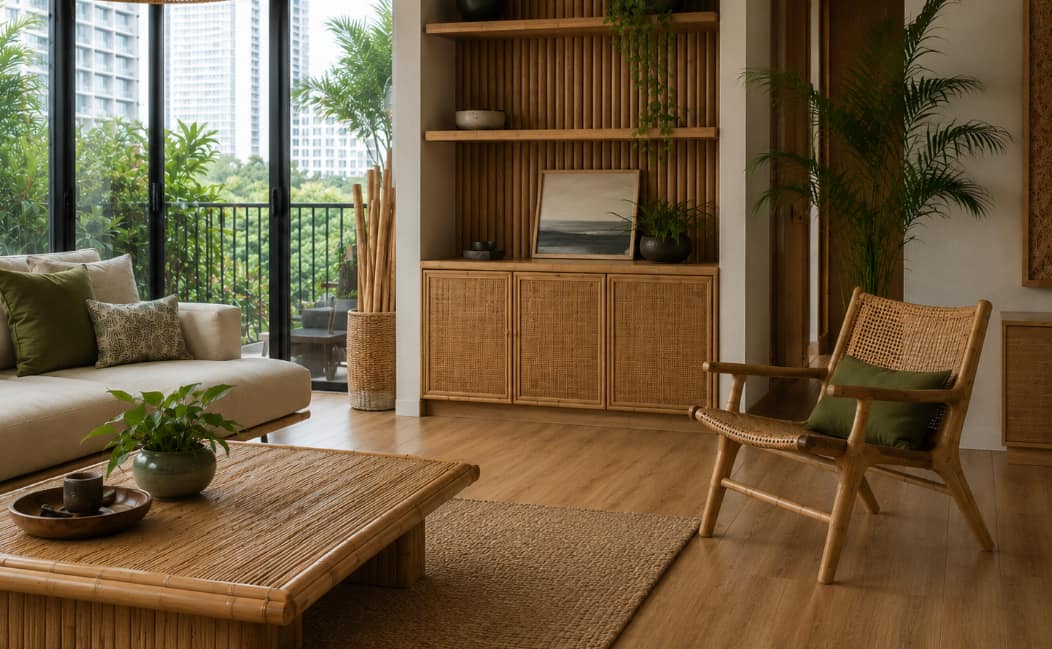
Bamboo flooring gives interiors a warm but modern look. When properly treated, it can handle everyday use in homes, offices, and hospitality spaces.
Bamboo panels and plywood also work well for cabinets, shelves, wardrobes, and built-in furniture. For walls, bamboo veneers and woven panels can add texture without making the room feel heavy.
Bamboo performs well in humid climates when properly treated.
Bamboo can suit Bangkok’s humid climate, but it must be sealed and installed correctly. Without proper treatment, natural materials can swell, attract pests, or wear down faster.
For better long-term results, choose bamboo from reliable suppliers and avoid products that make vague sustainability claims without proof.
Bamboo is often more affordable than hardwood.
Bamboo is often cheaper than many hardwood options, especially when sourced locally or regionally. However, quality matters. Certified or responsibly sourced bamboo is usually the better long-term choice.
How Can Reclaimed Wood Support Sustainable Interiors?
Reclaimed wood reduces waste by giving old timber a second life.
Reclaimed wood comes from old buildings, boats, furniture, warehouses, pallets, or other structures. Instead of harvesting new timber, existing wood is reused in new interiors. This makes it a strong choice for spaces that need warmth, character, and a more sustainable story.
Reclaimed wood can come from old buildings, boats, pallets, and furniture.
Old structural beams can become tables, shelves, flooring, or ceiling features. Timber from boats can provide durable wood with weathered character. Pallets, crates, barrels, and old furniture can also be refinished into useful design elements.
Reclaimed wood works well for feature walls, floors, beams, and furniture.
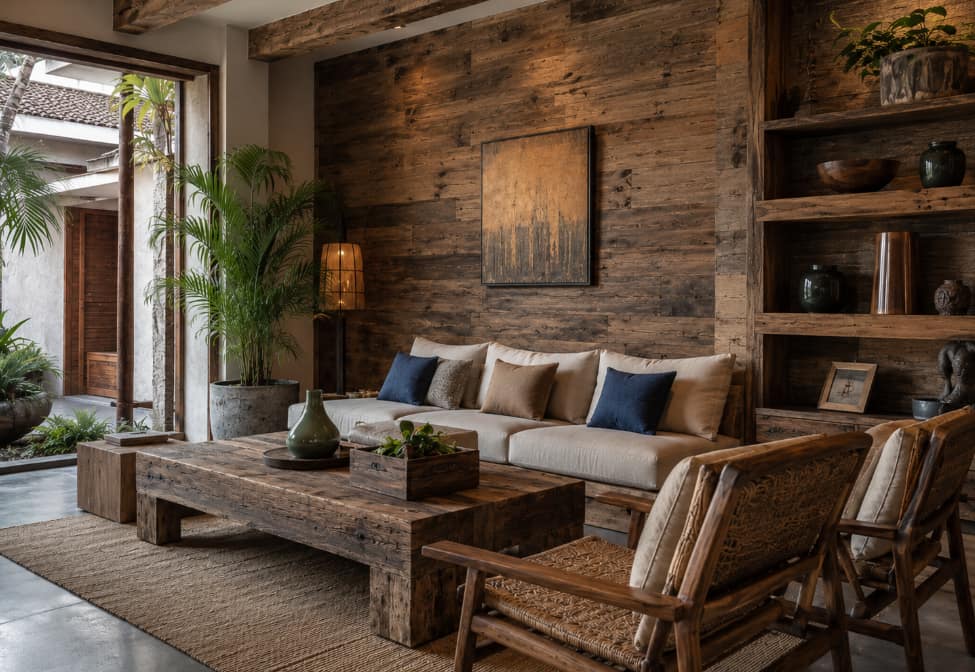
Reclaimed wood adds depth to modern interiors. It is especially useful in spaces that feel too plain or cold.
In Bangkok and Southeast Asia, reclaimed teak is often valued for its strength, age, and cultural connection. It can work beautifully in homes, cafés, hotels, and boutique commercial spaces.
Reclaimed wood helps reduce waste.
Using reclaimed wood lowers demand for new timber and keeps usable materials out of landfills. It also supports circular design, where materials are reused instead of discarded.
Why Is Cork Considered a Renewable Interior Material?
Cork is harvested from tree bark without cutting the tree down.
Cork comes from the bark of cork oak trees. According to the Rainforest Alliance, cork oak trees can regenerate their bark, and the bark can usually be harvested every 9 to 12 years after maturity.
This makes cork renewable when it is harvested responsibly.
Cork is useful for flooring, walls, and decorative details.
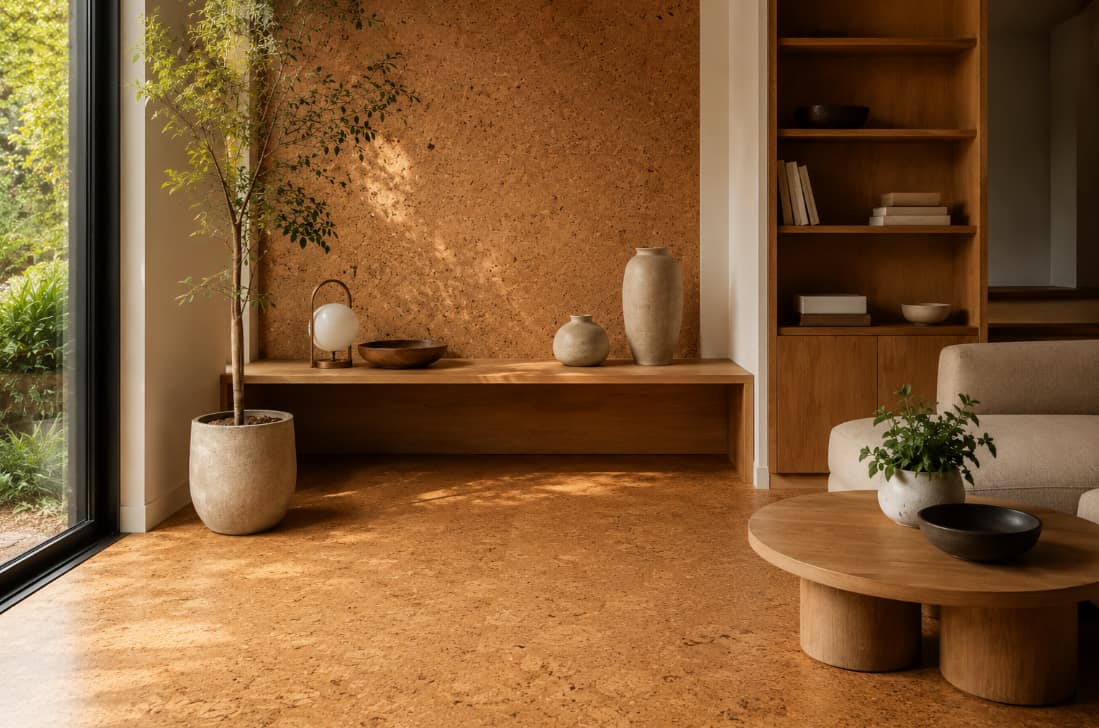
Cork is soft, warm, lightweight, and naturally textured. It works well for flooring because it feels comfortable underfoot and helps reduce noise.
Cork wall panels can also add texture and sound absorption, making them useful for offices, bedrooms, reading corners, and hospitality interiors.
Cork can work in humid interiors when sealed properly.
Cork contains suberin, a natural waxy substance that helps resist moisture. However, it still needs proper sealing and installation in humid climates like Bangkok.
When installed well, cork can be a practical and comfortable material for selected interior areas.
Cork adds comfort and sound absorption.
Cork is a good option for spaces where comfort matters. It feels softer than stone or tile and can help make rooms quieter and warmer in appearance.
Why Are Recycled Glass and Terrazzo Popular in Modern Interiors?
Recycled glass terrazzo is durable, customisable, and easy to maintain.
Terrazzo is made by mixing chips of glass, stone, marble, or other materials with a cement or resin binder. When recycled glass is used, it gives waste material a new purpose.
Its speckled look can be subtle or bold, making it suitable for many modern interiors.
Terrazzo works well for countertops, floors, backsplashes, and feature walls.
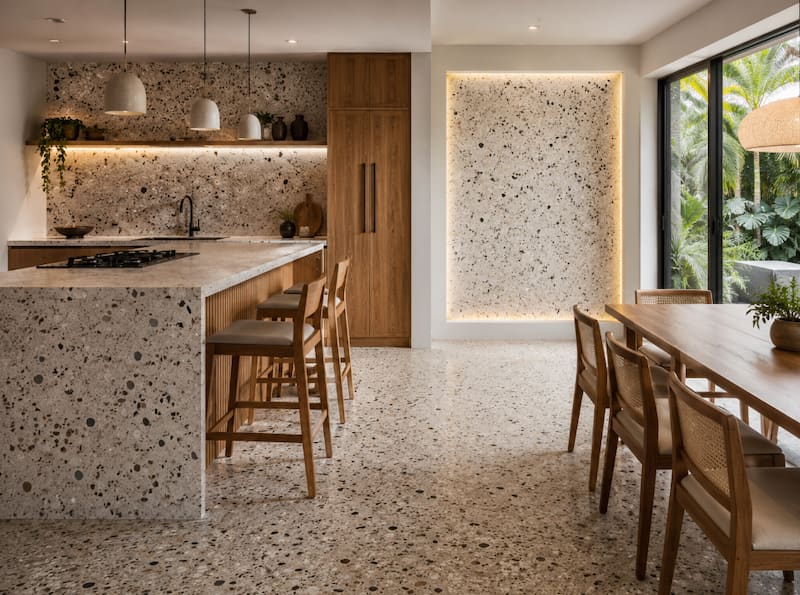
Recycled glass terrazzo can be used in kitchens, bathrooms, lobbies, floors, vanities, and feature walls. It is especially useful in areas that need both durability and visual interest.
Recycled glass terrazzo reuses waste glass.
The main sustainability benefit of recycled glass terrazzo is that it reuses glass that might otherwise be discarded. It also lasts for many years with proper care, reducing the need for frequent replacement.
Terrazzo suits tropical climates.
Terrazzo is hardwearing, easy to clean, and suitable for warm climates. It also feels cooler underfoot than many softer flooring materials, making it practical for tropical interiors.
Is Natural Stone an Eco-Friendly Material?
Natural stone can be eco-friendly when it is local, durable, and used responsibly.
Stone can have a higher environmental impact during extraction and transport. However, when it is locally sourced and used in long-lasting applications, it can still be a responsible choice.
Its biggest advantage is durability. A well-selected stone surface can last for decades.
Southeast Asia offers granite, marble, and laterite.
Regional stone options can reduce long-distance transportation. Thai granite can be used for flooring, countertops, stairs, and architectural features.
Marble from Thailand or nearby countries can reduce transport impact compared to imported stone from farther regions. Laterite, known for its red-orange colour, has also been used in Thai architecture for centuries.
Sustainable stone should be local, durable, and efficiently used.
Choose stone from local or regional sources where possible. Prioritise durable varieties, practical finishes, and efficient use of offcuts.
Honed or textured finishes can also hide wear better than glossy surfaces, making them more suitable for everyday interiors.
Why Are Organic Textiles and Natural Fibers Useful in Interiors?
Natural fibers are breathable, tactile, and suitable for soft furnishings.
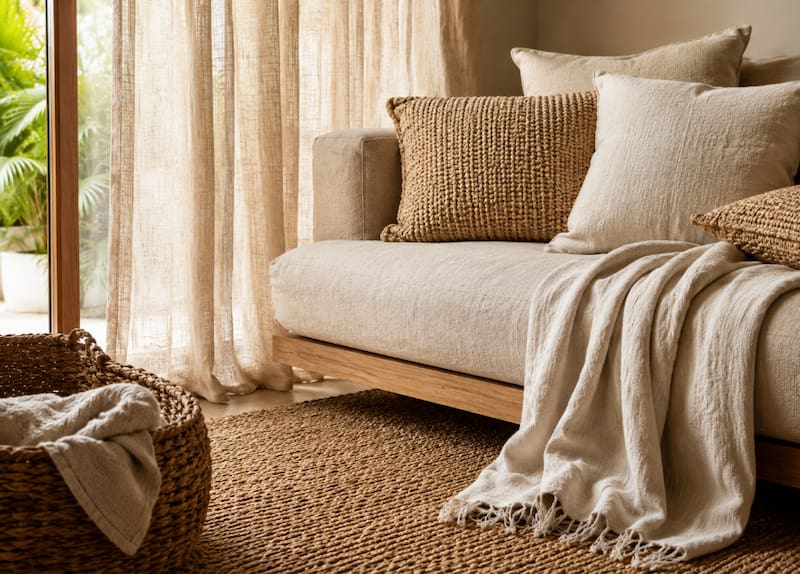
Textiles affect sustainability through farming, dyeing, chemical treatment, use, and disposal. This includes curtains, rugs, upholstery, cushions, bedding, and soft furnishings.
Natural fibers can be a better choice than synthetic materials when they are responsibly sourced and used in the right spaces.
Hemp and organic cotton are breathable and versatile.
Hemp is durable and can be grown with fewer inputs than many conventional crops. Organic cotton avoids the synthetic pesticides and fertilisers commonly used in conventional cotton farming.
According to Textile Exchange, conventional cotton production can be chemically intensive, with pesticides and synthetic fertilisers contributing to soil and water impacts.
Hemp and organic cotton work well for upholstery, curtains, bedding, cushions, and decorative fabrics. They are also breathable, which is useful in humid climates.
Linen is breathable and moisture-wicking.
Linen is made from flax and is known for its relaxed texture and airy feel. It is also moisture-wicking, meaning it helps move moisture away from the surface.
This makes linen a strong choice for tropical and resort-style interiors.
Jute and sisal suit dry, well-ventilated areas.
Jute and sisal are plant-based fibers often used in rugs, carpets, and woven accessories. They add natural texture and warmth to simple interiors.
However, they should be used carefully in humid spaces because some natural fiber rugs can absorb moisture.
Why Should Designers Choose Low-VOC Paints and Finishes?
Low-VOC paints reduce airborne chemicals and improve indoor air quality.
VOC stands for volatile organic compounds. These are chemicals that can evaporate into the air from paints, varnishes, adhesives, sealants, cleaning products, wood preservatives, and some furniture materials.
In simple terms, VOCs are one reason freshly painted rooms or newly renovated spaces may have a strong chemical smell. The U.S. Environmental Protection Agency, also known as the EPA, identifies paints, solvents, cleaners, disinfectants, and air fresheners as common sources of VOCs.
Low-VOC paints contain fewer airborne chemicals than conventional paints. Zero-VOC paints are designed to release very little or almost none. For homeowners, this can mean fewer strong smells and better indoor comfort after renovation.
Modern interiors can use plant-based, recycled-content, or low-VOC paints.
Plant-based paints use natural oils, resins, minerals, and pigments. Recycled-content paints reuse recovered post-consumer paint. Low-VOC conventional paints are also widely available and can still offer strong performance.
The best choice depends on the room, finish, budget, and durability needs.
Natural oil finishes protect wood while preserving its texture.
Natural oil finishes, such as tung oil, linseed oil, and hemp oil, penetrate the wood instead of forming a plastic-like layer on top.
They protect the surface while keeping the natural look and feel of the wood. They can also be refreshed without fully sanding and refinishing the surface.
How Can Recycled Metal and Hardware Support Sustainable Design?
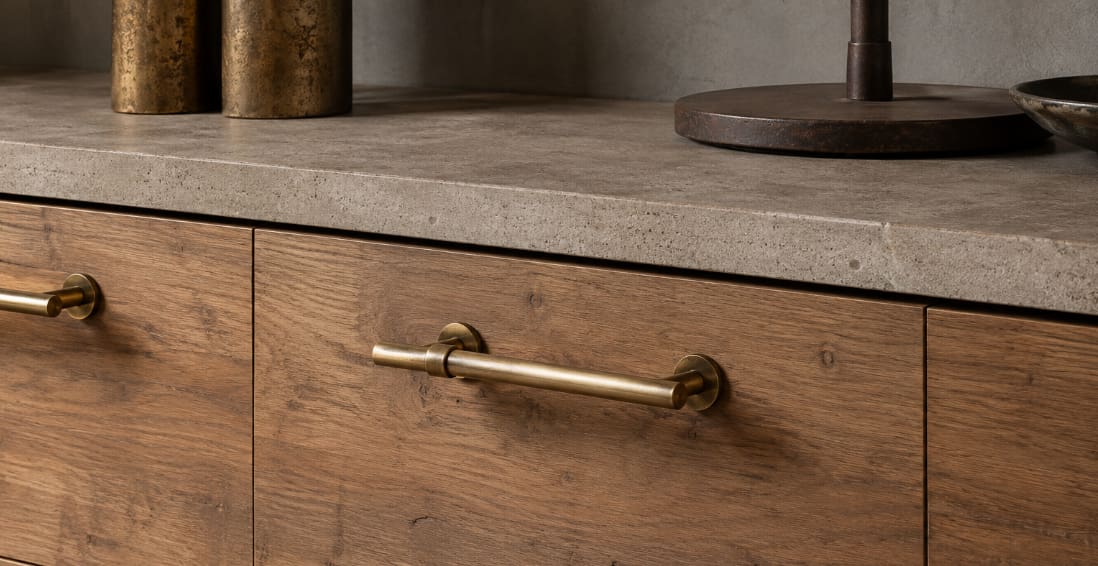
Recycled metal is strong, durable, and repeatedly recyclable.
Metal is commonly used for handles, lighting, furniture frames, shelves, fixtures, and decorative details. Aluminium, brass, and steel can often be recycled many times without losing usefulness.
Recycled metal works well for hardware, lighting, frames, and accents.
Recycled brass or bronze handles can add detail to cabinets and wardrobes. Recycled metal lights can create a strong visual impact, while aluminium and steel can be used for furniture frames and shelving.
Regional sourcing reduces transport impact.
Thailand has an established metalworking industry, which creates opportunities to source hardware and fixtures locally. This can reduce transport impact while supporting local makers and manufacturers.
How Do Eco-Friendly Materials Compare in Performance and Maintenance?
Eco-friendly materials perform best when matched to the space and climate.
Not every sustainable material suits every room. Bamboo and cork can work well in humid climates when sealed properly, while natural fiber rugs should be used carefully in damp areas.
| Material | Durability | Tropical Climate Suitability | Maintenance |
| Bamboo | Long-lasting when treated | Good to excellent | Low to moderate |
| Reclaimed wood | Very long-lasting with treatment | Good with sealing | Moderate |
| Cork | Long-lasting with care | Good with sealing | Low |
| Recycled glass terrazzo | Very durable | Good | Very low |
| Natural stone | Extremely durable | Good | Low |
| Organic textiles | Depends on use | Good for breathable areas | Moderate |
| Low-VOC paint | Similar to quality paint | Good | Low |
What Is the Cost-Benefit Value of Eco-Friendly Materials in Tropical Climates?
Eco-friendly materials can offer better long-term value in hot and humid spaces.
Some sustainable materials may cost more upfront, but they can last longer and perform better over time. This is especially important in tropical climates, where poor-quality materials can warp, stain, smell, or break down faster.
Moisture-resistant materials help reduce early damage.
Bamboo, cork, and treated reclaimed wood can perform well in humid interiors when sealed and maintained properly. This can help reduce swelling, mould, and early replacement.
Eco-friendly materials can improve indoor comfort.
Cork can support insulation, while stone and terrazzo can feel cooler underfoot. Low-VOC paints and finishes can also improve indoor air quality.
These materials will not replace air conditioning, but they can help create a more comfortable interior.
Low-VOC materials support healthier interiors.
Low-VOC materials reduce the amount of chemicals released into indoor air. The Harvard T.H. Chan School of Public Health’s COGfx Study found that cognitive function test scores improved in green building environments with enhanced ventilation compared with conventional building environments.
This supports the idea that healthier interiors can improve comfort and performance.
How Can You Source Eco-Friendly Materials in Southeast Asia?
Choose local suppliers, check documents, and verify certifications.
Bangkok and Southeast Asia now offer more access to sustainable interior materials. However, buyers should still check whether sustainability claims are backed by proper documentation.
Buyers should look for local and regional material options.
Look for Thai bamboo, reclaimed wood specialists, regional stone suppliers, and reliable cork importers. Thailand, Vietnam, Myanmar, and nearby countries also offer stone options that may reduce transport emissions compared to long-distance imports.
Certifications help confirm sustainability claims.
Useful certifications include:
- FSC Forest Stewardship Council: Confirms responsible sourcing for wood, bamboo, and forest-based products.
- Cradle to Cradle: Focuses on circular design, reuse, safety, and material recovery.
- Green Label Thailand: A local environmental certification for selected products in Thailand.
- ISO 14001: Shows that a manufacturer has an environmental management system.
How Should Homeowners and Designers Start Using Eco-Friendly Materials?
Start with high-impact areas like flooring, paint, countertops, and textiles.
Sustainable design does not have to happen all at once. It is often better to begin with the materials that affect the largest surfaces, indoor air quality, and long-term durability.
Flooring, paint, countertops, and textiles should come first.
Flooring covers a large area, so it has a strong impact on the look and performance of a space. Paint and finishes affect indoor air quality. Countertops need to be durable because they are used daily. Textiles are close to occupants and may be replaced more often.
Sustainable upgrades can be done in phases.
Start with low-VOC paints and sealers for quick indoor air quality improvements. Then consider flooring, cabinetry, built-in furniture, and soft furnishings over time.
This makes sustainable renovation more realistic and budget-friendly.
Conclusion
Eco-friendly materials are no longer niche choices. Many now offer strong durability, comfort, appearance, and long-term value. For tropical climates like Bangkok, the best materials are those that can handle humidity, heat, and daily use while supporting healthier indoor spaces. Choosing sustainable materials does not mean sacrificing style. Bamboo, reclaimed wood, cork, recycled glass terrazzo, local stone, natural fibers, recycled metal, and low-VOC finishes can all create interiors that feel warm, modern, and practical.
For homeowners and businesses looking to bring sustainable design ideas into real spaces, we at Instyle Deco Paris provide interior design and bespoke custom furniture services in Bangkok. With our design background and local project experience, we help clients create interiors that are stylish, functional, and suited to their lifestyle or business needs. From residential homes and condos to offices, restaurants, hotels, and commercial spaces, our team supports each stage of the design process, including concept development, 3D design, renovation planning, and custom furniture creation. For clients searching for Bangkok interior design services, we aim to deliver personalised interiors that balance elegance, comfort, and practical everyday use.
Frequently Asked Questions
What Is the Most Sustainable Flooring Option for Humid Climates?
Cork and bamboo can both work well when properly manufactured, sealed, and maintained. Cork offers comfort and sound absorption, while bamboo provides a harder surface for higher-traffic spaces.
What Does VOC Stand For?
VOC stands for volatile organic compounds. These are chemicals that can evaporate into the air from products such as paint, varnish, adhesives, sealants, cleaning products, and some furniture materials.
How Can I Verify Sustainability Claims From Material Suppliers?
Look for certifications such as FSC, Cradle to Cradle, Green Label Thailand, or ISO 14001. Also ask suppliers for documents showing material origins, manufacturing processes, and environmental standards.
Which Eco-Friendly Materials Work Best for Kitchen Countertops?
Recycled glass terrazzo, local granite, and properly sealed reclaimed wood can all work well. Terrazzo offers durability, granite provides natural strength, and reclaimed wood adds warmth when correctly protected.