
Online Office Interior Design: How Remote Workplace Design Works
Today, an office can be professionally designed without an interior designer being physically present. Through online office interior design, we can understand a space, develop layouts, select materials, improve lighting, and visualize the final environment remotely.
Digital resources such as Instyle Online Services can also help clients explore ideas and organize inspiration before developing their workplace concept.
As an interior designer, however, I believe successful workplace design starts with something more important than furniture or trends: the person using the space.
A beautiful desk is meaningless if it becomes uncomfortable after two hours. A minimalist office fails if it feels cold. And adding several plants does not automatically make a workplace biophilic.
The real question is: How should this space make someone feel while they work?
What Is Online Office Interior Design?
Online office interior design is a remote process where an interior designer creates a functional and visually considered workplace using measurements, photographs, floor plans, video consultations, mood boards, layouts, and 3D visualizations.
The process usually begins by understanding how the client actually works.
Do they spend most of the day at a computer? Are video meetings frequent? Is concentration difficult? Do they need storage, privacy, or space to move?
These questions help us design around real human behavior, rather than simply filling an empty room.
How Does Remote Workplace Design Work?
A remote office design project generally follows four main stages:
- Discovery: Understanding working habits, practical requirements, style, brand, and budget.
- Space Assessment: Reviewing room measurements, windows, doors, electrical points, photographs, and existing furniture.
- Space Planning: Determining the best positions for workstations, storage, meeting areas, circulation, and quiet zones.
- Design & Visualization: Developing furniture, materials, lighting, colors, plants, mood boards, floor plans, and 3D visuals.
Accurate information is particularly important when designing remotely. A beautiful 3D rendering means little if the actual workspace is uncomfortable or impractical.
Modern Minimalist Office Design: Less Visual Noise
Modern minimalist office design remains an important workplace trend, but minimalism is becoming noticeably warmer.
The objective is no longer to create an empty white office. Instead, we remove unnecessary visual noise.
Clean furniture, concealed storage, controlled color palettes, natural wood, soft fabrics, and carefully selected decorative pieces can make an office feel calm without making it sterile.
For home offices, good storage is particularly valuable. Being able to put laptops, documents, and equipment away creates a psychological separation between working time and personal time.
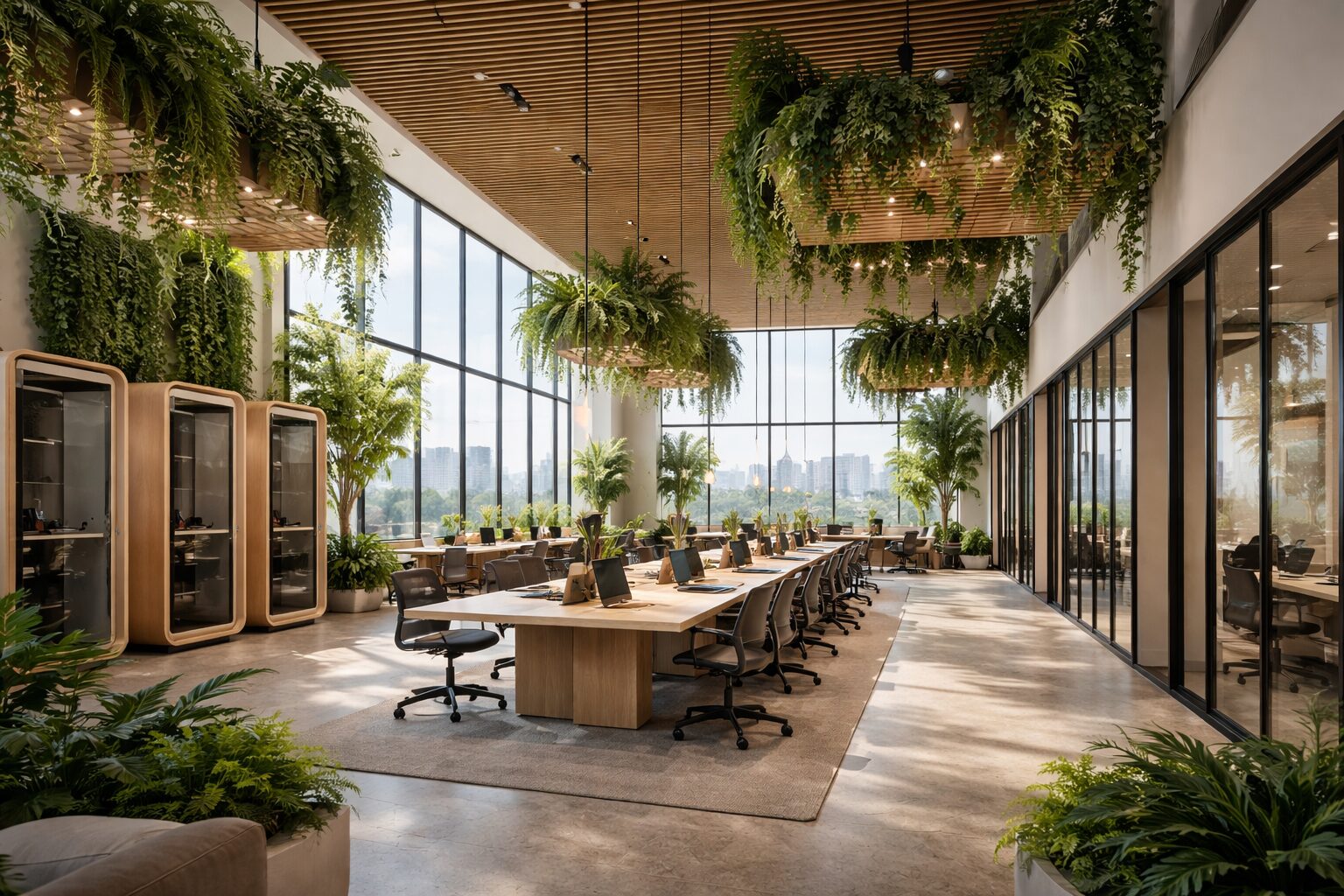
Biophilic Design: More Than Adding Plants
Biophilic office design is another major direction in contemporary workplace interiors.
However, biophilia is much more than placing plants around a desk.
It is about reconnecting people with nature through daylight, greenery, natural materials, outdoor views, organic forms, textures, airflow, and nature-inspired colors.
Research has associated exposure to natural elements in workplaces with benefits related to employee well-being and stress.
As a designer, I prefer biophilic elements to feel integrated rather than decorative. One healthy plant positioned where a person can see it throughout the working day can be more meaningful than filling a room with greenery simply because it is fashionable.
Timber, cork, stone, linen, muted greens, clay tones, and warm natural textures can also introduce a sense of nature without overwhelming the space.
Ergonomics Before Appearance
One of the biggest mistakes in office design is creating a workspace primarily for photographs.
A chair can look beautiful and still be uncomfortable. A tiny desk can appear elegant but become frustrating during a full working day.
Human-centered office design must consider the body first.
Chair support, desk height, monitor position, lighting, keyboard placement, accessibility, and movement should be considered before decorative styling.
I also like to give people opportunities to change position. A standing area, reading chair, small collaborative table, or simply enough space to stretch can make the working environment feel less restrictive.
Acoustics and Technology Matter Too
Noise is often forgotten because we cannot see it.
Minimalist interiors containing many hard surfaces can create echoes and distractions. Rugs, curtains, upholstered furniture, bookshelves, screens, and acoustic panels can soften sound while simultaneously making an office feel warmer.
Technology requires the same attention.
Power outlets, monitors, charging points, webcams, routers, and cables should feel integrated into the room rather than added as an afterthought.
The best workplace technology is often the technology you barely notice.
A More Human Workplace
The future of workplace design is becoming more personal.
Rather than designing identical desks for identical workers, we are increasingly thinking about comfort, flexibility, nature, personality, acoustics, movement, and individual working habits.
This is where remote interior design can become surprisingly personal.
Do you concentrate better in warm light? Do you need silence? Do you enjoy seeing greenery while working? Do certain colors help you feel calmer?
The answers influence the design.
FAQ About Online Office Interior Design
Can an office really be designed completely online?
Yes. Measurements, photographs, video, floor plans, digital meetings, and 3D visualization can provide enough information for many office design projects. More complex construction work may still require local professionals to inspect site conditions.
Is biophilic design suitable for a small home office?
Yes. Biophilic design does not require a large space. Natural daylight, one carefully positioned plant, timber, natural textures, and a view toward greenery can make a noticeable difference.
Does minimalist office design have to be white?
No. Minimalism is about reducing unnecessary visual clutter. Warm neutrals, earthy colors, greens, natural wood, and textured fabrics can create a minimalist space with personality.
What makes an office feel human?
Comfort, natural light, appropriate proportions, personal objects, tactile materials, acoustic control, greenery, and opportunities for movement all contribute to a more human workplace.
Final Thoughts
Online office interior design works when technology supports human needs rather than replacing human thinking.
Modern minimalism can create calm. Biophilic design reconnects the workplace with nature. Ergonomics supports the body, while good lighting, acoustics, and thoughtful technology improve everyday comfort.
But trends should never determine the entire design.
As an interior designer, my approach is simple: design the human experience first, then design the office around it.
Whether the designer is physically inside the room or working remotely, a successful office should not simply look impressive when completed. It should still feel comfortable, natural, and personal on an ordinary Monday morning.
FAQ About Online Office Interior Design
What is online office interior design?
Online office interior design is a remote design service where an interior designer uses measurements, photos, floor plans, video consultations, mood boards, and 3D visualization to create a functional and attractive workspace without needing to visit the location.
Can an office really be designed completely online?
Yes. Many offices and home workspaces can be designed remotely using accurate measurements, photographs, videos, and floor plans. Projects involving structural changes may still require a local architect, contractor, or other qualified professional.
Is biophilic design suitable for a small home office?
Yes. Biophilic office design works particularly well in small spaces. Natural daylight, one or two well-positioned plants, wood finishes, natural textures, and views of greenery can create a stronger connection with nature without overcrowding the room.
What is modern minimalist office design?
Modern minimalist office design focuses on simplicity, functionality, clean lines, organized storage, and reduced visual clutter. Modern minimalism can also incorporate warm colors, natural materials, soft fabrics, and plants to prevent the workplace from feeling cold or sterile.
How can I make my remote workspace more comfortable?
Start with ergonomics. Choose a supportive chair, position the monitor correctly, provide appropriate task lighting, organize cables, reduce distracting noise, and leave enough room to move and change posture throughout the working day.
What makes an office design human-centered?
Human-centered office design starts with the needs of the person using the space. Comfort, natural light, acoustics, ergonomics, privacy, movement, personal preferences, and emotional well-being are considered before purely decorative decisions.
What information does an online interior designer need?
An online interior designer will typically need accurate room measurements, photographs, window and door locations, electrical points, existing furniture dimensions, working requirements, preferred design style, and an approximate budget.
Can minimalist and biophilic design be combined?
Absolutely. In fact, they work naturally together. A minimalist biophilic office can combine uncluttered layouts and simple furniture with plants, natural wood, daylight, organic textures, and earthy colors to create a workplace that feels calm, modern, and connected to nature.