
Office fit out costs in the Americas rose 5.5% year-over-year in 2025, averaging $149 per square foot. Yet despite this significant investment, 40% of office fit out projects fail to meet their original objectives. The gap between expectation and reality often stems from misunderstanding what office fit out actually involves and how it differs from simple renovation.
This guide provides a comprehensive framework for understanding office fit out categories, costs, processes, and current trends. Whether you are a facilities manager planning a 50,000 square foot corporate headquarters, a startup founder designing your first office, or a property developer preparing speculative space, you will find actionable guidance for delivering a successful project.
What Is an Office Fit Out?
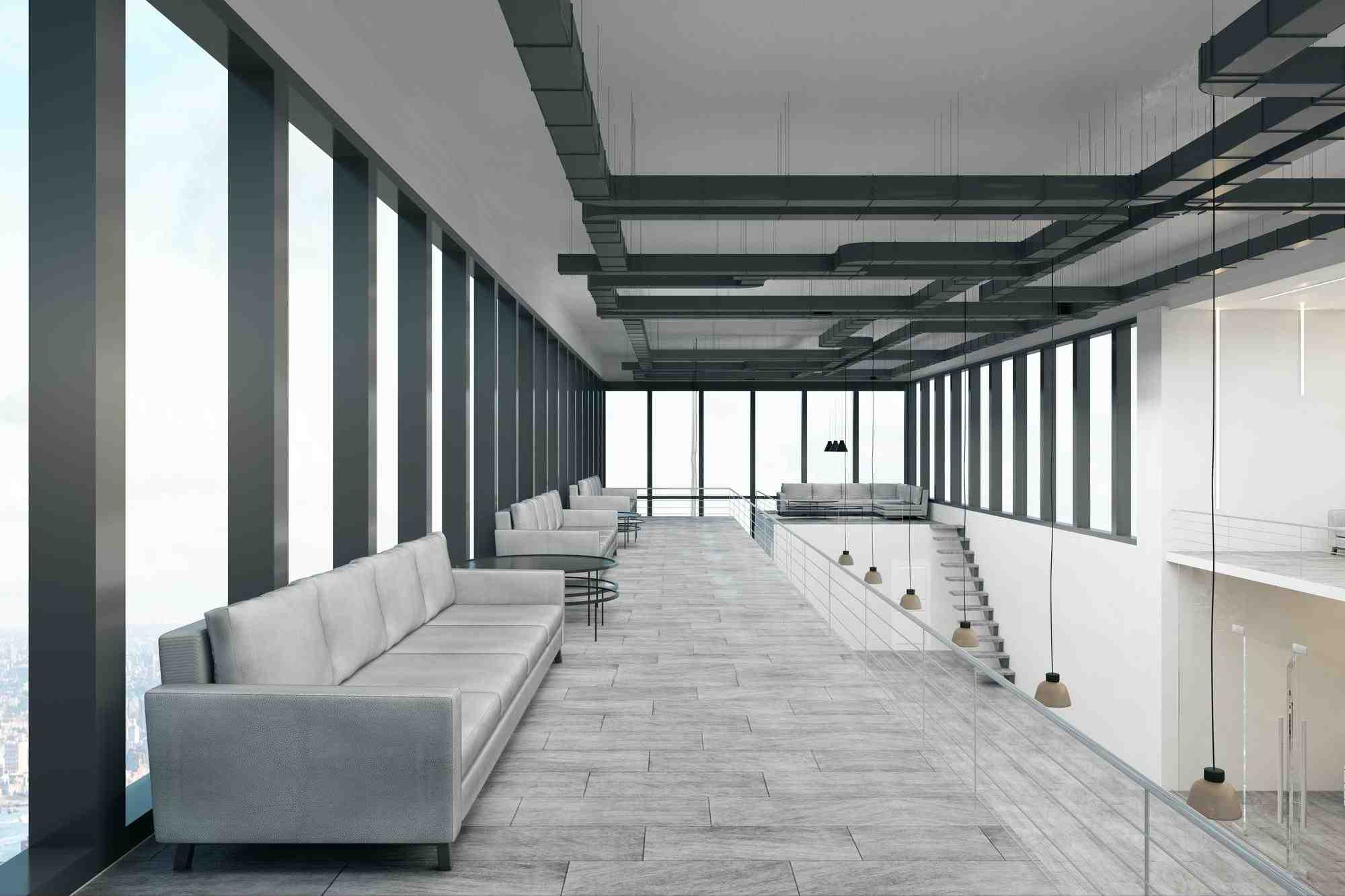
An office fit out is the process of making an interior space ready for occupation. Unlike renovation, which implies improving an existing workspace, fit out typically refers to preparing a raw or partially completed space for use.
What Is the Difference Between Fit Out, Renovation, and Refurbishment?
Understanding the distinctions helps you communicate with contractors and set appropriate budgets.
| Term | Definition | Typical Scope | Timeline |
|---|---|---|---|
| Fit Out | Preparing a new or shell space for first occupation | M&E installation, finishes, furniture | 8-20 weeks |
| Renovation | Updating an existing occupied space | Refresh finishes, replace furniture, minor M&E | 4-12 weeks |
| Refurbishment | Comprehensive update of existing space | Significant M&E changes, layout alterations, new finishes | 6-16 weeks |
Fit out applies to new buildings, shell spaces, or conversions. Renovation refreshes existing offices. Refurbishment falls between, involving substantial changes without starting from shell.
Why Fit Out Matters for Business Performance?
The Leesman Index, which measures workplace effectiveness, shows that quality workplaces increase productivity by 20% and employee satisfaction by 70%[^3^]. Conversely, poor workplace design costs organizations through reduced collaboration, higher staff turnover, increased sick days, and difficulty attracting talent.
JLL research indicates that 62% of companies now undertake fit out projects specifically to align physical space with organizational workflows and culture[^4^].
When to get a Fit Out?
You should consider an office fit-out in the following scenarios:
- Relocating to a New Space: Adapting a raw or semi-finished unit for full business use can significantly enhance operational efficiency. JLL research shows that 62% of businesses fit out new offices to better align with staff workflows and company culture.
- Growth and Reconfiguration: As your company expands, modifying layouts to accommodate staff growth or new departments becomes essential. Studies suggest organizations that regularly adapt their workspace to business growth improve space utilization by 25–30%.
- Rebranding Efforts: An office fit-out can help update interiors to reflect a new corporate identity, aligning the physical space with your brand.
- Technology Integrations: Upgrading infrastructure to include smart lighting or collaborative AV systems can significantly enhance workplace functionality. Smart office tech adoption is forecasted to grow by 11.1% CAGR through 2026.
What Are the Four Main Categories of Office Fit Out?
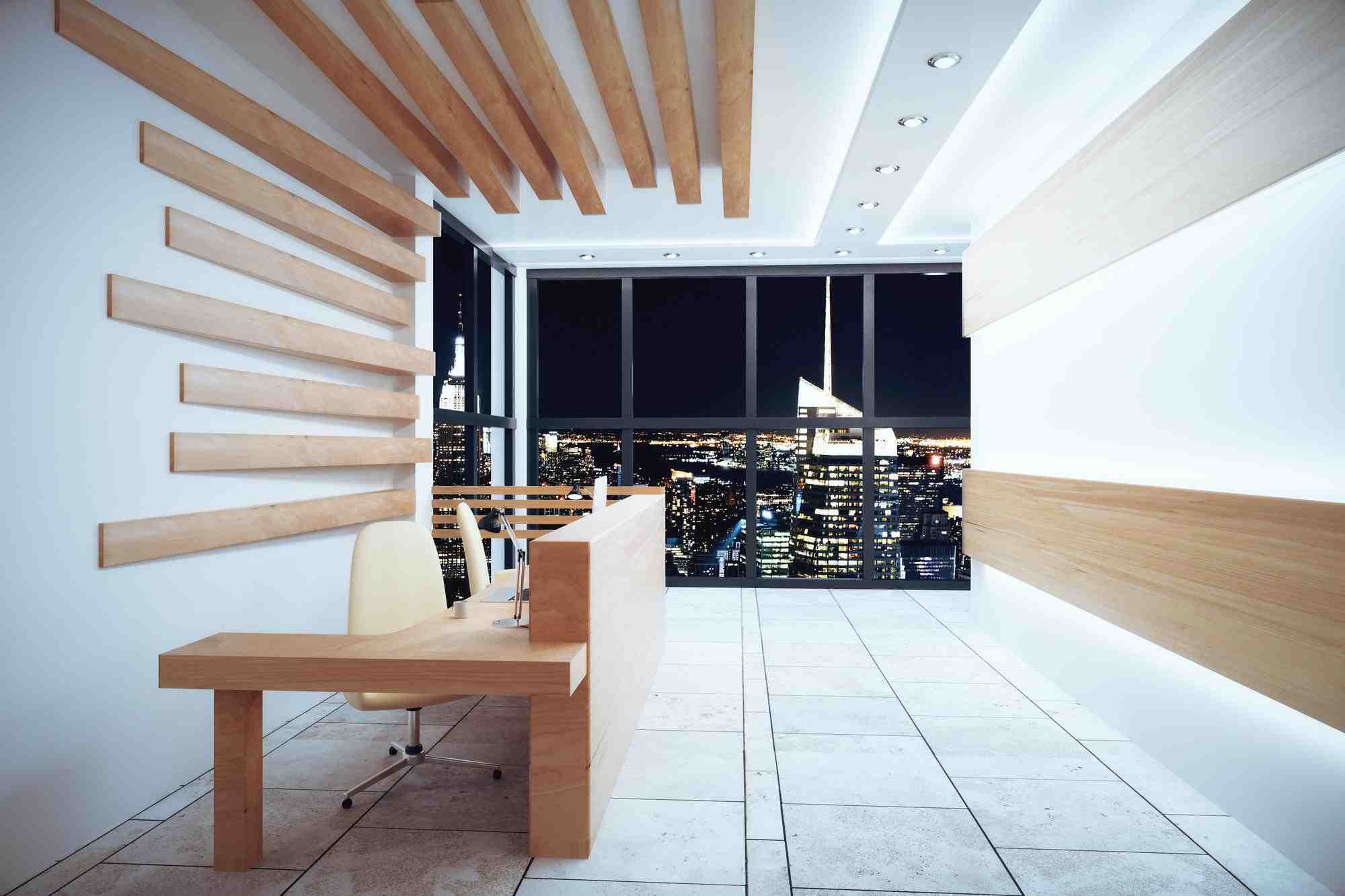
Shell and Core
Definition: The base building structure provided by developers, including the building envelope, structural elements, and basic services to the perimeter of each floor.
What is Included:
- Structural frame and floor slabs
- Building envelope (walls, roof, windows)
- Basic weatherproofing
- Common areas (lobbies, stairwells, elevators)
- Services to the floor plate boundary (risers for electrical, HVAC, plumbing)
What is NOT Included:
- Internal partitions, floor finishes, ceilings, lighting, HVAC distribution within the space, power and data outlets
Category A (Cat A) Fit Out
Definition: The basic functional finish of a building, creating a workable space that meets building regulations but lacks personalization.
What is Included:
- Raised access flooring or floor finishes
- Suspended ceilings with basic lighting
- Basic mechanical and electrical services
- Fire detection and suppression systems
- Air conditioning and ventilation
- Basic toilet facilities
- Blinds or basic window treatments
Typical Timeline: 8-12 weeks | Typical Cost: $50-80 per square foot
Category A+ (Cat A+) Fit Out
Definition: Sometimes called “plug and play,” Cat A+ adds furniture, basic branding, and functional amenities to Cat A, creating an immediately occupiable space.
What is Included (in addition to Cat A):
- Furniture (desks, chairs, storage)
- Basic kitchen/breakout facilities
- Simple branding (reception signage, basic color scheme)
- IT infrastructure (data cabling, basic AV)
- Some meeting room facilities
Typical Timeline: 10-14 weeks | Typical Cost: $80-120 per square foot
Category B (Cat B) Fit Out
Definition: The full customization of a space to meet specific tenant requirements, reflecting brand identity, culture, and operational needs.
What is Included:
- Space Planning: Layout optimized for workflows and team structures
- Branding: Colors, materials, graphics reflecting organizational identity
- Technology: AV systems, collaboration tools, IT infrastructure
- Furniture: Ergonomic, task-appropriate workstations and meeting spaces
- Amenities: Kitchens, breakout areas, wellness rooms, event spaces
- Specialized Spaces: Labs, studios, trading floors, client suites
- Sustainability Features: Energy efficiency, biophilic elements, wellness certifications
Typical Timeline: 12-20 weeks | Typical Cost: $120-200+ per square foot
2026 Office Fit Out Costs by Region
| City | Cost per sq ft | YoY Change | Market Conditions |
|---|---|---|---|
| London | $178 | +5.5% | Highest global costs, skilled labor shortage |
| New York | $165 | +4.2% | Strong demand, union labor premiums |
| San Francisco | $158 | +3.8% | Tech sector recovery driving demand |
| Singapore | $125 | +6.1% | Asia Pacific hub, rising costs |
| Dubai | $98 | +7.2% | Rapid growth, competitive market |
| Bangkok | $65 | +4.5% | Emerging market, lower labor costs |
JLL’s 2025 Global Fit-Out Cost Guide reports Americas average fit out costs at $149 per square foot, with a 5.5% year-over-year increase[^1^].
Can you Fit Out an Existing Office?
Yes, existing spaces can undergo refurbishment-based fit-outs that enhance aesthetics, comfort, and functional layout. These upgrades can range from minor cosmetic changes to complete redesigns, depending on objectives such as boosting productivity, improving sustainability, or supporting hybrid work models.
What’s Included in an Office Fit-Out?
An office fit-out typically encompasses the following elements:
- Space Analysis and Planning: Designing the layout for desks, meeting rooms, and communal areas.
- Internal Partitioning and Walls: Installing internal walls or glass partitions to create functional spaces.
- Flooring and Ceilings: Laying appropriate office flooring and suspended ceilings with integrated lighting.
- Lighting and Electrical Systems: Fitting lighting, power points, data cabling, and IT infrastructure.
- HVAC Systems: Implementing heating, ventilation, and air conditioning tailored to office needs.
- Furniture Installation: Supplying and arranging desks, chairs, and storage solutions.
- Branding and Aesthetics: Incorporating the company’s brand identity into the interior design.
What Is the Step-by-Step Office Fit Out Process?

Phase 1: Strategy and Briefing (Months 1-2)
- Needs Assessment: Analyze current space utilization, team collaboration requirements, client interaction needs, growth projections, and technology infrastructure requirements.
- Workplace Strategy: Develop a strategic brief addressing space standards, workstyle support, brand expression, sustainability targets, wellness priorities, and budget parameters.
- Stakeholder Alignment: Engage C-suite for strategic alignment, department heads for operational requirements, IT for technology infrastructure, HR for culture and change management, and Finance for budget approval.
Phase 2: Design Development (Months 2-4)
- Concept Design: Designers develop initial concepts including space planning options, aesthetic direction, material palettes, lighting concepts, and brand integration.
- Technical Design: Develop detailed floor plans, reflected ceiling plans, lighting layouts, power and data plans, mechanical and electrical drawings, joinery details, and specifications.
- Approvals and Permits: Submit for building control/regulatory approval, fire safety compliance, accessibility compliance, and landlord approvals.
Phase 3: Construction and Fit Out (Months 4-8)
- Contractor Selection: Procure contractors through competitive tender, negotiated single-source, or design and build.
- Build Phase: Strip out (1-2 weeks) → M&E first fix (2-4 weeks) → Drywall and partitions (2-3 weeks) → Flooring (1-2 weeks) → Ceilings (1-2 weeks) → M&E second fix (2 weeks) → Joinery and finishing (2-4 weeks) → Decoration (1-2 weeks)
Phase 4: Handover and Occupation (Month 8+)
- Snagging and Defects: Document all defects, agree rectification timeline, verify all systems operational, test fire safety and security systems.
- Furniture Installation: Receive and inspect deliveries, install workstations and storage, configure meeting rooms.
- IT and AV Commissioning: Install network infrastructure, configure collaboration technology, test video conferencing.
- Staff Onboarding: Orientation tours, technology training, new workplace protocols, feedback collection.
Key Stakeholders in an Office Fit-Out
A successful office fit-out requires collaboration among various professionals:
- Project Manager: Oversees the entire project, ensuring timelines and budgets are met.
- Interior Designer: Creates the design concept, focusing on aesthetics and functionality.
- Architect: Ensures structural integrity and compliance with building codes.
- Contractors and Subcontractors: Handle the physical construction and installations.
- IT Specialists: Set up technological infrastructure, including networking and communication systems.
- Furniture Suppliers: Provide and install office furniture tailored to the design.
| Role | Primary Responsibilities | When Engaged |
|---|---|---|
| Client/Occupier | Define requirements, approve designs, fund project, accept completed space | Throughout |
| Architect | Design leadership, spatial planning, aesthetic direction, regulatory compliance | Months 1-4 |
| Interior Designer | Material selection, furniture specification, brand integration | Months 2-5 |
| M&E Engineer | Mechanical, electrical, plumbing design, energy efficiency, systems integration | Months 2-6 |
| Project Manager | Schedule, budget, coordination, risk management, stakeholder communication | Throughout |
| Cost Consultant/QS | Budget management, tender analysis, cost reporting, change control | Throughout |
| Contractor | Construction execution, quality, safety, subcontractor management | Months 4-8 |
Effective communication among these stakeholders is crucial to address challenges and ensure a cohesive outcome.
What Compliance and Regulations Should Be Considered in an Office Fit Out?
Building Regulations
Building regulations vary by jurisdiction but typically cover:
- Structural Safety: Floor loading capacity, structural modifications, fire resistance
- Fire Safety: Escape route widths, fire door specifications, fire detection and alarm systems, sprinkler coverage
- Accessibility: Wheelchair access routes, door widths, accessible toilet facilities, hearing loops
- Energy Efficiency: Insulation standards, lighting efficiency, HVAC efficiency
CDM Regulations (Construction Design and Management)
In the UK and similar jurisdictions, CDM regulations impose duties on all project participants:
- Client Duties: Appoint competent designers and contractors, allow adequate time and resources, ensure welfare facilities
- Designer Duties: Eliminate hazards where possible, reduce risks from remaining hazards, provide information about residual risks
- Contractor Duties: Plan, manage, and monitor construction work, ensure site induction and training
How Do Sustainability and Certification Impact Office Fit Out Projects?
LEED Certification
Leadership in Energy and Environmental Design (LEED) is the world’s most widely used green building rating system.
LEED Rating Levels:
- Certified: 40-49 points
- Silver: 50-59 points
- Gold: 60-79 points
- Platinum: 80+ points
LEED certification typically adds 2-5% to fit out costs but delivers operational savings and marketability.
WELL Building Standard
WELL focuses on human health and wellness rather than purely environmental metrics.
WELL Concepts: Air quality, water quality, nourishment, light, movement, thermal comfort, sound, materials, mind, community
Biophilic Design Principles
Biophilic design integrates nature into the built environment:
- Direct Nature Connection: Living plants and green walls, natural light and views, water features, natural ventilation
- Indirect Nature Connection: Natural materials (wood, stone, natural fibers), nature imagery and colors, biomorphic patterns
Research shows biophilic elements reduce stress, improve cognitive function, and enhance wellbeing.
How Is Technology Integrated into Modern Office Fit Outs?
Smart Building Systems
Building Management Systems (BMS): Centralized control of HVAC, lighting, security; energy optimization; fault detection and diagnostics; remote monitoring and control.
Internet of Things (IoT): Occupancy sensors for space utilization tracking, environmental monitoring (temperature, air quality, light levels), predictive maintenance alerts, employee experience apps.
The smart office technology market is growing at 11.1% CAGR through 2026[^5^].
Space Utilization Technology
Organizations using space utilization data report 25-30% improvements in space efficiency[^4^].
AV and Collaboration Technology
Meeting Room Technology: Video conferencing systems (Zoom Rooms, Microsoft Teams Rooms), wireless presentation, interactive displays, room booking systems.
IT Infrastructure: Structured cabling (Cat 6A or fiber), Wi-Fi 6/6E coverage, Power over Ethernet (PoE) for flexibility, network security segmentation.
What Office Design Trends Are Shaping Workspaces in 2026?
Hybrid Work Adaptation
The post-pandemic workplace must support distributed teams:
- Video-enabled meeting rooms: Every meeting space needs hybrid capability
- Neighborhoods: Assigned team zones with unassigned individual seats
- Touchdown spaces: Brief work locations for visiting remote workers
- Space Planning Changes: Reduced individual desk ratios (1:2 or 1:3 rather than 1:1), increased collaboration space proportion
Wellness-Focused Spaces
Physical Wellness: Ergonomic furniture standards, sit-stand desks, fitness facilities, healthy food options
Mental Wellness: Quiet zones and focus rooms, meditation or prayer rooms, access to nature and outdoor space, natural light optimization
Activity-Based Working (ABW)
Rather than assigned desks, ABW provides varied settings for different activities:
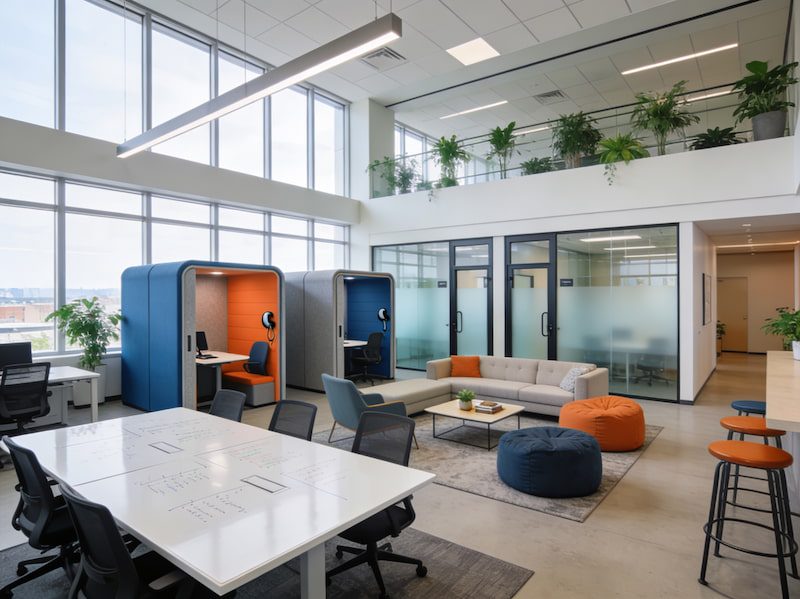
- Focus booths for concentrated work
- Phone rooms for private calls
- Collaboration tables for team work
- Lounge areas for informal interaction
Benefits include space efficiency (20-30% reduction in footprint), employee choice and autonomy, and better alignment of space to task.
Neurodiversity Considerations
Workplaces increasingly accommodate diverse cognitive needs:
- Sensory Considerations: Adjustable lighting, acoustic diversity, visual complexity control, scent-free policies
- Wayfinding: Clear, consistent signage, visual landmarks, multiple sensory cues, intuitive layouts
- Choice and Control: Variety of work settings, personal environmental control, retreat spaces for sensory regulation
How to Choose a Fit Out Contractor?
Selection Criteria
- Technical Capability: Relevant project experience, technical accreditations, quality management systems, BIM capability
- Financial Stability: Credit checks, financial references, bonding capacity, payment practices
- Health and Safety: Safety record, safety management systems, training programs, insurance coverage
- Resource Availability: Current workload, key personnel availability, subcontractor relationships, supply chain capacity
Due Diligence Checklist
- Review company accounts (3 years)
- Check credit rating
- Verify insurance coverage
- Review health and safety record
- Contact previous clients (3-5 references)
- Visit completed projects
- Verify professional accreditations
- Review quality management certification
- Assess BIM capability
- Evaluate sustainability credentials
What Can We Learn from Office Fit Out Case Studies?
JLL/EY Singapore Workplace Transformation
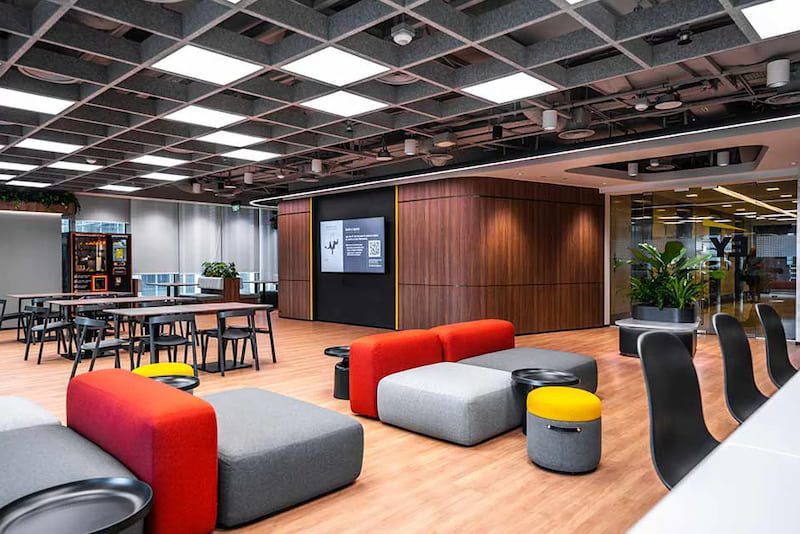
Client: EY Singapore | Project: 120,000 sq ft headquarters relocation
Approach: Activity-based working implementation, technology-enabled hybrid collaboration, wellness-focused amenities, sustainability certification (LEED Gold)
Outcomes:
- 35% space reduction through efficient design
- 90% employee satisfaction with new workplace
- 40% increase in cross-team collaboration
- 25% reduction in energy consumption
Tech Company Hybrid Office Adaptation
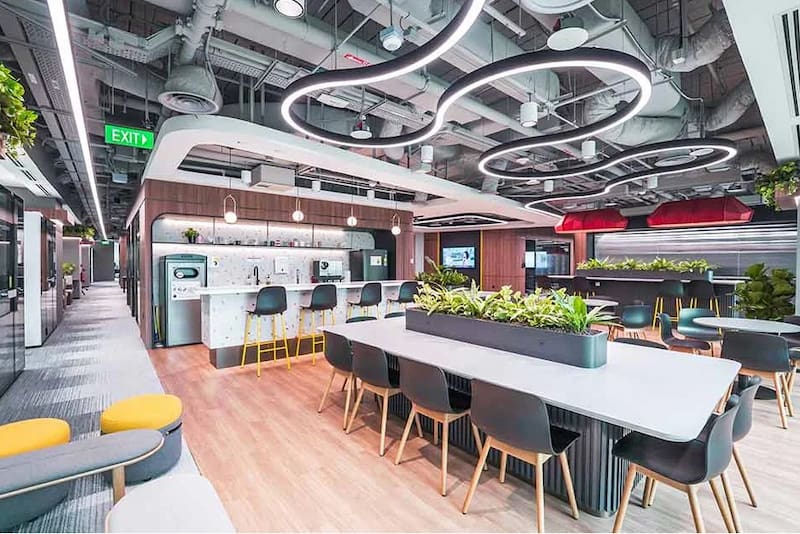
Client: Mid-size technology company (200 employees) | Project: Office redesign for hybrid work model
Approach: Reduced desk ratio (1:2.5), increased collaboration spaces, neighborhood-based team zones, enhanced video conferencing throughout
Outcomes:
- 30% real estate cost reduction
- Improved employee experience scores
- Better support for distributed teams
- Increased office utilization when people visit
Why Is Sustainability Important in Office Fit Outs?
Sustainability is becoming a central focus in office design, offering numerous benefits:
- Environmental Impact: Traditional office interiors can produce approximately 190 kg of CO₂ emissions and 77 kg of waste per square meter throughout their lifecycle. By adopting sustainable practices, such as using recycled materials and energy-efficient systems, businesses can significantly reduce their environmental footprint.
- Employee Well-being: Green office spaces have been shown to increase employee productivity by up to 11%, enhance indoor air quality, and decrease absenteeism. Incorporating natural light, plants, and non-toxic materials contributes to a healthier and more pleasant work environment.
- Cost Savings: While sustainable materials and technologies may have higher upfront costs, they often lead to long-term savings through reduced energy consumption and maintenance expenses. For instance, energy-efficient lighting and HVAC systems can lower utility bills and extend equipment lifespan.
Achieving a Successful Office Fit Out
1. Understand Your Team’s Needs
Start with a workplace analysis to observe how different teams operate. Do they prefer open collaboration zones, quiet pods, or hybrid work models? Use surveys, space utilization audits, and interviews to identify specific requirements. Design the layout to balance focus areas, team collaboration zones, hot-desking stations, and well-being facilities such as lounges or wellness rooms. Tailoring the environment to match how people work boosts engagement, retention, and efficiency.
2. Set Clear Objectives and Budget
Define the overarching goals of the fit-out early. Are you optimizing for space efficiency, brand expression, talent attraction, or future scalability? Each objective influences design decisions and budget allocation. Factor in all costs, including construction, furniture, IT systems, compliance, and contingencies (typically 10–15%) for unexpected changes. This proactive planning prevents overspending and ensures project continuity.
3. Involve Users Early
Incorporate feedback from end-users like employees, team leaders, and departmental heads during the early design phase. Avoid assumptions about how the space will be used. Leverage user personas, workflow mapping, and co-creation workshops to inform layouts and specifications. This inclusive approach enhances adoption rates, reduces change resistance, and fosters a sense of ownership.
4. Focus on Flexibility
Modern workspaces must be adaptable. Use modular partitions, movable furniture, and multi-use spaces to accommodate future changes in team size, structure, or technology. Consider activity-based working (ABW) and agile layouts to support varying work modes. A flexible design also supports hybrid models and evolving business strategies.
5. Select Quality Over Quantity
Invest in durable materials and ergonomic furnishings that withstand daily wear and tear. High-quality finishes not only reduce long-term maintenance and replacement costs but also elevate the perception of your brand. Prioritize items with warranty coverage, sustainability certifications, and proven performance in similar environments.
6. Monitor Fit-Out Milestones
Use structured project management tools like Gantt charts, Kanban boards, or software platforms (e.g., Asana, Trello, MS Project) to track tasks, deadlines, and dependencies. Establish progress checkpoints, conduct regular site inspections, and maintain transparent communication with your contractor. Monitoring ensures the fit-out stays on schedule, within budget, and aligned with the design vision.
7. Choose the Right Fit-Out Partner
When choosing a fit-out partner, look for one with a track record in your industry, solid client references, and a portfolio that aligns with your aesthetic and functional goals. Ensure they understand your business values, workflow culture, and brand aspirations. A strong partner offers design-to-delivery continuity, handles regulatory compliance, and navigates unexpected challenges with agility.
Conclusion
An office fit-out is not just about design, it’s a strategic investment in productivity, culture, and business growth. With thoughtful planning, data-driven decisions, and the right partners, you can create a space that supports your goals and inspires your team.
At Instyle Deco Paris, we prioritize your employees’ needs, sustainability, and operational flow, enabling businesses to create workspaces that fuel long-term growth. For those interested in getting a fit-out for their office, please contact us here. Otherwise, do check out our other blog on the 12 Interior Design Concepts for Versatile Coworking Spaces for further reading.
FAQ – Office Fit Out Questions
What is the difference between fit out and renovation?
Fit out prepares a new or shell space for first occupation, typically involving M&E installation, finishes, and furniture. Renovation updates an existing occupied space, refreshing finishes and replacing furniture without major structural changes. Fit out usually takes 8-20 weeks; renovation typically 4-12 weeks.
How much does office fit out cost per square foot?
Costs vary dramatically by region and specification:
- Cat A: $50–80 per sq ft
- Cat A+: $80–120 per sq ft
- Cat B: $120–200+ per sq ft
Regional variations are significant: London averages $178/sq ft, New York $165/sq ft, Singapore $125/sq ft, while Bangkok averages $65/sq ft.
What is included in Category A fit out?
Cat A includes basic functional elements: raised flooring or floor finishes, suspended ceilings with basic lighting, mechanical and electrical services, fire detection and suppression, air conditioning, basic toilet facilities, and window treatments. It creates a workable but generic space requiring further customization.
What is Category B fit out?
Cat B is full customization to meet specific tenant requirements, including space planning optimized for workflows, branding integration, technology and AV systems, ergonomic furniture, amenities (kitchens, breakout areas), and specialized spaces. Cat B reflects organizational culture and supports strategic objectives.
How long does an office fit out take?
Typical timelines:
- Cat A: 8–12 weeks
- Cat A+: 10–14 weeks
- Cat B: 12–20 weeks (complex projects may extend to 30+ weeks)
Full process including design and approvals typically takes 8-12 months from initial briefing to occupation.
What is the difference between Cat A and Cat B?
Cat A provides basic functional space (floors, ceilings, basic services) ready for occupation but generic. Cat B adds full customization including branding, furniture, technology, and specialized spaces reflecting organizational identity. Cat A is typically landlord-provided; Cat B is tenant-specific.
What is Cat A+ fit out?
Cat A+ (or “plug and play”) adds furniture, basic branding, and functional amenities to Cat A, creating an immediately occupiable space. It suits rapid occupation requirements, short-term leases, or companies wanting to avoid separate Cat B projects. Costs $80-120 per sq ft with 10-14 week timelines.
Who pays for office fit out – landlord or tenant?
It depends on lease negotiations:
- Landlord-provided: Common for long leases (10+ years) in competitive markets
- Tenant-funded: Typical for shorter leases or specific requirements
- Amortized: Landlord provides fit out, cost recovered through higher rent over lease term
- Contribution: Landlord contributes fixed amount, tenant funds excess
What does Shell and Core mean?
Shell and Core is the base building structure provided by developers, including the building envelope, structural elements, and basic services to the floor plate boundary. It does not include internal partitions, finishes, ceilings, or services distribution within the space.
Do I need planning permission for office fit out?
Internal fit out typically does not require planning permission but needs building control approval for structural changes, fire safety, and accessibility compliance. External changes (signage, windows) may require planning permission. Always check with local authorities.
What is the CDM regulations role?
Construction Design and Management (CDM) regulations impose health and safety duties on all construction project participants. Clients must appoint competent designers and contractors, allow adequate time and resources, and ensure welfare facilities. Designers must eliminate hazards and reduce risks.
How can I make my office fit out more sustainable?
Strategies include:
- Pursue LEED, WELL, or BREEAM certification
- Select low-carbon materials and recycled content
- Maximize energy efficiency in lighting and HVAC
- Incorporate biophilic design elements
- Design for disassembly and future adaptation
- Implement waste reduction during construction
What is biophilic office design?
Biophilic design integrates nature into the built environment through living plants, natural light, natural materials, nature views, and biomorphic patterns. Research shows biophilic elements reduce stress, improve cognitive function, and enhance employee wellbeing.
How do I choose a fit out contractor?
Evaluate contractors on:
- Relevant project experience
- Financial stability
- Health and safety record
- Resource availability
- Cultural fit
Conduct due diligence including credit checks, reference contacts, and site visits to completed projects. Use competitive tender or negotiated selection depending on project complexity.
What are common fit out mistakes to avoid?
Common pitfalls include:
- Underestimating timeline and not building contingency
- Scope creep from inadequate briefing
- Poor change management causing employee resistance
- Inadequate budgeting missing hidden costs
- Design-construction disconnect from poor communication
Prevention requires thorough planning, clear processes, and disciplined project management.